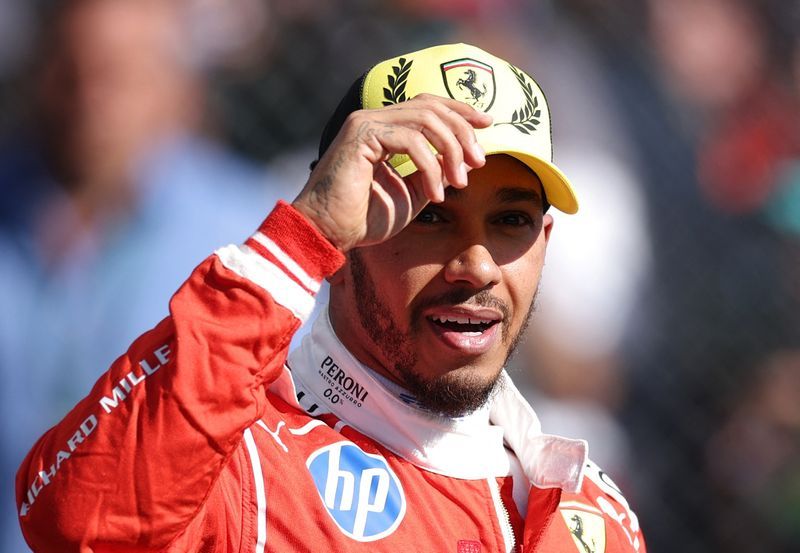
The Hungarian Grand Prix this weekend presents Ferrari with a genuine opportunity to capitalise on Lewis Hamilton's exceptional record at the Hungaroring, even as the reigning world champion's new team cautiously manages expectations ahead of Formula One's August break. Hamilton arrives in Budapest energised by recent results, having moved into second place in the championship standings after George Russell's dramatic spin into the gravel during last weekend's Belgian Grand Prix. The Mercedes driver's third scoreless finish of the season has opened the door for his former team's championship contender, who now sits 45 points behind Italian leader Kimi Antonelli.
The narrative dominating the paddock this week centres on Russell's alarming decline in competitiveness relative to his 19-year-old teammate at the Silver Arrows. The British driver, who entered the season as a title favourite carrying the sobriquet "Mr Consistency," now languishes 50 points behind Antonelli after accumulating three races without points. Russell's machinery appears fundamentally compromised, with telemetry revealing substantial time losses on the straightaway sections—a particular concern at high-speed circuits. By contrast, Antonelli has flourished with six victories from ten races, suggesting the problem lies with how Russell's specific car configuration is performing rather than any fundamental Mercedes design flaw. This disparity has become the paddock's primary talking point, with engineers and analysts scrutinising whether a setup imbalance or vehicle malfunction explains the widening gulf between the two drivers.
Hungary represents a contrasting challenge to the power-hungry layouts that have exposed Mercedes' recent engine deficit. The Hungaroring's tight, technical nature emphasises chassis balance, aerodynamic precision, and tyre management over the straight-line speed crucial elsewhere. This characteristic could potentially favour Ferrari's approach to the Budapest circuit, where mechanical grip and driver technique assume greater importance than raw horsepower. Consequently, Hamilton arrives as the clear favourite—his eight previous victories at the circuit constitute an unmatched record, and another triumph would equal his all-time tally of nine wins at any single venue, currently held by Silverstone. The seven-time world champion's most recent pole position came here in 2023, underlining his competitive comfort within these barriers.
Ferrari team principal Fred Vasseur adopted a notably restrained tone when addressing expectations, cautioning against overconfidence despite the circuit's apparent suitability to the Scuderia's characteristics. Vasseur acknowledged that while the engine power deficit should prove less consequential than at Spa, the team cannot assume victory will follow automatically. His measured language reflects a broader team philosophy of avoiding complacency after summer breaks have historically disrupted momentum. The Frenchman emphasised that each weekend requires fresh setup work and strategic thinking, with the Budapest layout demanding particular attention to aerodynamic balance and tyre preservation across the demanding race distance.
Charles Leclerc has emerged as Ferrari's form driver in recent weeks, securing victory at Silverstone and second place at Spa, while Hamilton recorded a Barcelona triumph followed by third and fourth-place finishes respectively in Britain and Belgium. This recent form suggests Ferrari possesses genuine competitive strength, though the gap between the marque's two drivers raises questions about whether Leclerc has found an optimal setup configuration that Hamilton has yet to fully exploit. The Monegasque's consistency over the past fortnight positions him as a serious contender, potentially challenging for podium positions regardless of Hamilton's historical advantages at this venue.
Kimi Antonelli's assessment that the Hungarian Grand Prix could develop into a four-way battle involving Mercedes, Red Bull, and McLaren reflects the unpredictable nature of circuits where horsepower matters less. Antonelli compared the Hungaroring to Monaco—a description resonating with drivers accustomed to circuits rewarding precision and smoothness over aerodynamic efficiency. The Italian emphasised the importance of assembling all elements cohesively, from qualifying performance through race management, across a track where marginal gains accumulate into meaningful advantages. His perspective underscores how championship battles remain fluid across different circuit characteristics, preventing any team from establishing insurmountable superiority.
McLaren's competitive position has improved substantially following recent upgrades, and the Woking team arrives in Budapest with additional modifications targeting enhanced performance. The British outfit is introducing a revised floor and aerodynamic components alongside continued testing of an experimental rear wing configuration. These developments represent incremental progress within the season's technical regulations, allowing teams to explore solutions within frozen design parameters. Meanwhile, McLaren will deploy reserve driver Leonardo Fornaroli—last year's Formula Two champion—for Friday morning practice sessions while Oscar Piastri rests, providing valuable track time for the young Italian talent.
Aston Martin's championship ambitions have been hampered by an extended delay in receiving competitive upgrades, with the team finally bringing a long-awaited chassis revision to Hungary. However, the ambitious engine upgrade supplied by Honda will not arrive until the August season resumption at Zandvoort, meaning the Dutch Grand Prix will mark Aston Martin's first opportunity to evaluate the new power unit's performance characteristics. This staggered approach to technical development reflects the logistical complexities of international motorsport, where components must be manufactured, tested, and delivered within continental Europe's compressed timelines.
For Malaysian and Southeast Asian Formula One enthusiasts, this weekend encapsulates the sport's capacity to generate unpredictable narratives across diverse circuit types. Hamilton's pursuit of an eighth Hungarian victory represents a personal milestone reflecting his exceptional career longevity and competitive consistency. Simultaneously, the Mercedes-Ferrari-McLaren-Red Bull competitive equilibrium suggests no team possesses decisive superiority entering the season's second half, maintaining genuine championship intrigue. The August break will allow teams to analyse the Hungarian results whilst implementing longer-term strategic modifications, making weekend's outcome potentially consequential for the campaign's ultimate trajectory.

