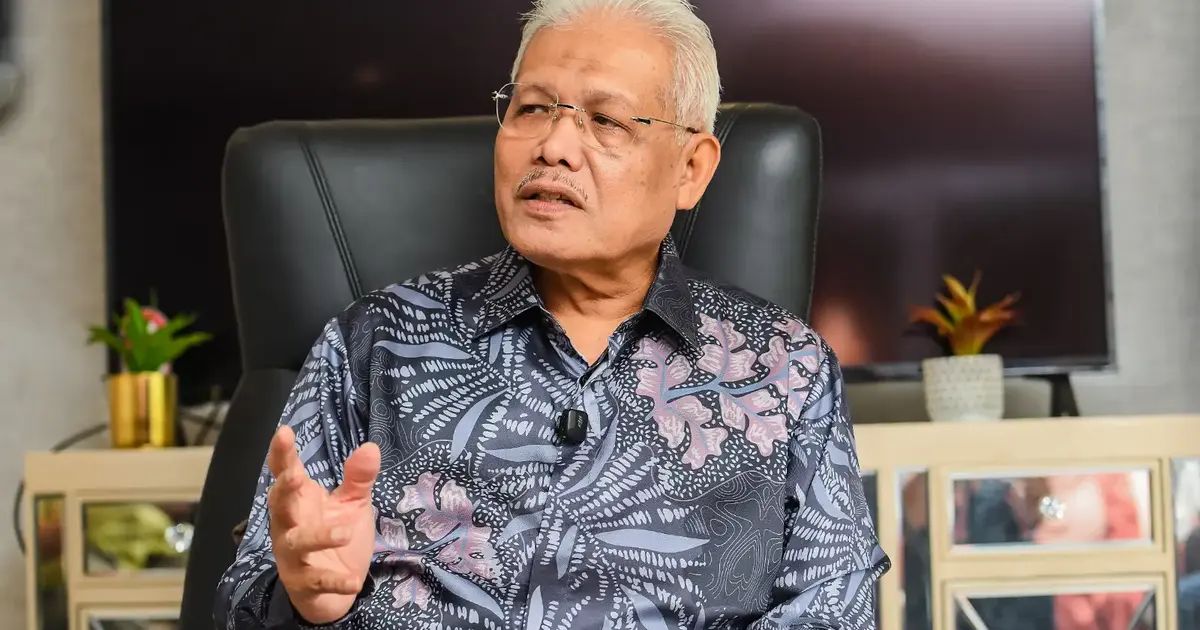
Perikatan Nasional's decision to bring Hamzah Zainudin back into the fold represents a calculated political manoeuvre aimed at reshaping public perceptions of the opposition coalition, according to political analysts monitoring developments within Malaysia's fractious party landscape. The PAS-led coalition is banking on Hamzah's political profile to counter perceptions that Perikatan has drifted too far rightward in recent years, with party strategists viewing him as essential to their campaign architecture for the anticipated general election.
Hamzah, whose career spans multiple administrations and coalition alignments, has long cultivated an image as a pragmatist willing to work across ideological boundaries. This reputation makes him particularly valuable to Perikatan's communications strategy, which has increasingly struggled to appeal beyond its core support base. By positioning him as a public face of the coalition, Perikatan leadership believes they can broaden their electoral appeal to moderate voters who have grown concerned about the direction of Malaysian politics under the current government.
The strategic calculation extends beyond simple personality politics. Analysts point out that Perikatan's internal dynamics have become more heavily influenced by PAS's religious-leaning platform over recent years, a shift that has alienated significant voter segments, particularly urban professionals and non-Malay communities. Hamzah's reintegration offers the coalition a mechanism through which to communicate a more inclusive, technocratic vision that emphasises economic competence and administrative efficiency rather than cultural or religious grievances.
Peikatan's leadership recognises that GE16 will be fought on multiple fronts simultaneously, requiring a coalition capable of projecting different messages to different constituencies. Hamzah's presence as a leading figure allows the coalition to present a face that appeals to traditionally moderate-leaning voters who might otherwise default to voting for the incumbent government or fragmenting their support across independent candidates. This division of labour within the opposition narrative—where some figures emphasise Islamic values while others champion secular-liberal concerns—has become standard practice in Malaysian opposition politics.
The timing of Hamzah's return carries particular significance given recent polling trends and demographic shifts within the electorate. Younger voters increasingly cite dissatisfaction with perceptions of Islamic conservatism in politics as a factor influencing their voting decisions, particularly in urban centres. By deploying a figure associated with non-ideological governance, Perikatan hopes to capture this growing segment without simultaneously alienating the religious-conservative base that delivers crucial votes in rural constituencies.
Analysts also note that Hamzah's return reflects internal power negotiations within Perikatan's leadership structure. The move signals to coalition partners and internal stakeholders that the coalition remains flexible and willing to accommodate different perspectives on governance. This flexibility, while sometimes appearing contradictory or opportunistic, has become essential for maintaining coalition cohesion in an environment where individual parties retain significant autonomy and leverage.
The moderate narrative that Perikatan seeks to project through Hamzah also serves defensive political purposes. Competing against an incumbent government that has itself attempted to position itself as moderate and inclusive, the opposition must find ways to differentiate its vision while avoiding the perception of extremism that could undermine its viability as an alternative government. Hamzah's reputation provides political cover for the coalition's more ideologically driven components, allowing them to operate within coalition structures while the overall public messaging remains palatable to centrist voters.
Yet observers caution that this strategy carries inherent risks. Observers note that voters have become increasingly sophisticated in detecting what they perceive as political theatre or contradiction between different coalition figures' public statements and underlying policy positions. Should Hamzah's prominence within Perikatan be perceived as cosmetic rather than substantive—failing to translate into actual policy influence or genuinely modified party positions—the manoeuvre could backfire by reinforcing voter cynicism about opposition authenticity.
The broader implications extend to Malaysia's political ecosystem beyond immediate electoral calculations. Hamzah's return underscores how opposition coalitions must constantly recalibrate their public positioning to remain electorally competitive, balancing ideological coherence with pragmatic appeals to diverse voter constituencies. For Southeast Asian observers monitoring Malaysian democratic dynamics, this repositioning reflects the region's broader pattern of political coalitions fragmenting and reconstituting themselves around personality-driven leadership and carefully curated public images rather than enduring programmatic commitments or institutional stability.