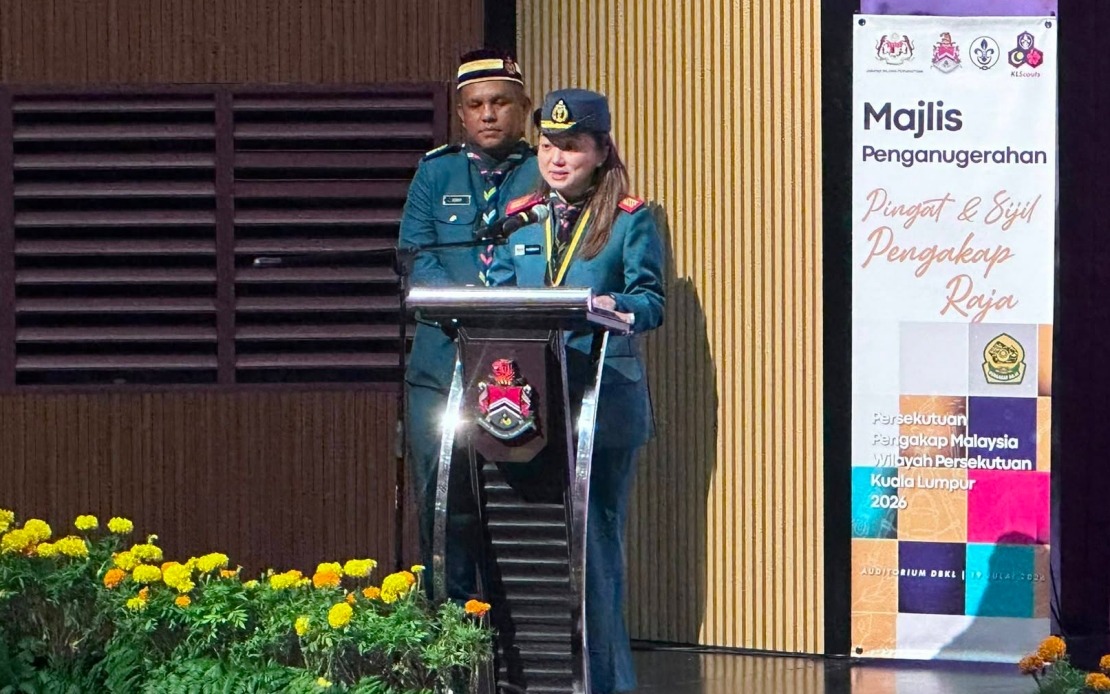
Hannah Yeoh, the Minister in the Prime Minister's Department overseeing the Federal Territories, has been formally proclaimed president of the Federal Territories State Scouts Council in a ceremony held at Kuala Lumpur City Hall. The appointment marks her official leadership role within one of Malaysia's most established youth development organisations, positioning her to influence the direction of scouting initiatives across Kuala Lumpur, Labuan, and Federal Territory of Putrajaya.
The proclamation ceremony, which took place on July 19, formed part of the broader 2026 Kuala Lumpur Federal Territory King's Scout Medal and Certificate Presentation Ceremony. This dual occasion underscored the significance of recognizing both institutional leadership and individual achievement within the scouting movement. The timing of the announcement during a medal ceremony reflects the government's effort to connect ministerial support with tangible rewards for young scouts who have demonstrated exceptional commitment to their organisation's values and programmes.
Immediately upon taking office, Yeoh signalled her commitment to expanding scouting's reach by announcing a ministerial allocation of RM20,000 dedicated to strengthening activities across the Federal Territories. She articulated a two-pronged funding strategy: RM10,000 directed towards the Kuala Lumpur Federal Territory branch of the Scouts Association of Malaysia specifically to develop school holiday programming, and an additional RM10,000 earmarked for training initiatives targeting young people who face barriers to participation in conventional scouting programmes. This differentiated approach acknowledges that while some youths have ready access to scouts, others require targeted interventions and additional support structures to engage meaningfully.
The funding allocation carries implications beyond simple budget disbursement. By explicitly addressing participation gaps, Yeoh's approach suggests an understanding that scouting's role extends beyond serving already-engaged communities to actively reaching marginalised or underrepresented youth segments. The emphasis on school holiday programming aligns with Malaysia's education calendar and recognises the practical constraints young people face during term time, while the separate training budget signals acknowledgment that some youths require foundational preparation before joining traditional scout units.
Kuala Lumpur City Hall Executive Director Rosli Nordin received concurrent appointment as chairman of the Kuala Lumpur Federal Territory State Scouts Council, establishing a clear administrative structure linking municipal governance with scouting oversight. This arrangement institutionalises coordination between city administration and youth development, potentially facilitating greater integration of scouting activities within municipal planning and resources. The dual appointment structure mirrors common governance patterns where government officers hold leadership roles across multiple public institutions.
The ceremony itself celebrated substantial individual achievement within the scouting movement. Fifty-eight young scouts received King's Scout Certificates, representing Malaysia's highest scouting award and testament to extraordinary dedication across multiple dimensions of development. Recipients must demonstrate prowess in leadership capabilities, technical skills acquisition, personal resilience, meaningful community contribution, and comprehensive understanding of scouting's foundational principles and ethical framework. The certificate functions not merely as ceremonial recognition but as formal validation of these youths' readiness to serve as exemplary leaders within their communities and society broadly.
Beyond the King's Scout recipients, an additional 183 scout leaders received recognition through Chief Scout's Commendation Certificates and Federal Territories Scouts Wangsa Certificates—75 and 108 recipients respectively. This substantial recognition of adult leaders underscores scouting's dependence on dedicated volunteers and paid staff who maintain programme quality and facilitate youth development. The magnitude of these award ceremonies suggests active, thriving scouting structures across the Federal Territories with consistent production of capable leaders at multiple levels.
The King's Scout award carries particular symbolic weight within Malaysian scouting circles. Beyond recognising individual achievement, it represents the scouting movement's commitment to producing disciplined, principled young leaders grounded in service orientation. Recipients emerge as exemplars embodying integrity alongside practical competence, forming a cohort of young Malaysians positioned to influence their peers and contribute positively to national development. This cultivation of character-driven leadership represents scouting's most distinctive contribution to youth development.
The ceremony's attendance by Major General Datuk Prof Dr Mohd Zin Bidin in his capacity as Chief Scout of Malaysia, alongside Dewan Rakyat Speaker Tan Sri Johari Abdul serving on the National Scout Council, reflected the movement's integration within Malaysia's governance and institutional landscape. Their presence signified governmental recognition of scouting's importance to national youth policy and social development objectives. Such high-level participation reinforces the movement's legitimacy and symbolic importance beyond its immediate membership.
Yeoh's assumption of the presidency occurs as Malaysian scouting navigates contemporary challenges including competition from alternative youth activities, evolving parental expectations regarding child development, and the necessity to demonstrate tangible outcomes justifying continued investment and participation. Her commitment of immediate funding and her institutional position within the federal government apparatus position her to advocate for scouting's interests within policy discussions. The RM20,000 allocation, while modest in absolute budgetary terms, signals political will to prioritise scouting alongside competing demands for youth investment.
The expansion of funding toward previously underserved youth populations aligns with broader Malaysian policy discussions regarding inclusive social development and ensuring disadvantaged communities access quality developmental opportunities. By earmarking resources specifically for training programmes reaching beyond current scout populations, the Federal Territories government acknowledges that institutional investment should extend to communities currently marginalised from scouting's benefits. This philosophy reflects evolving expectations that youth development initiatives demonstrate equity-conscious approaches alongside traditional service delivery to engaged populations.
Moving forward, Yeoh's leadership will likely emphasise increasing scouting participation rates, improving programme quality, and securing sustainable funding mechanisms beyond annual ministerial allocations. Her background in political leadership and cross-community engagement may bring fresh perspectives to scouting governance. The organisation will benefit from sustained political attention, though long-term programme success ultimately depends on maintaining volunteer enthusiasm, managing competing recreational options, and demonstrating scouting's enduring relevance to Malaysian families across diverse socioeconomic contexts.

