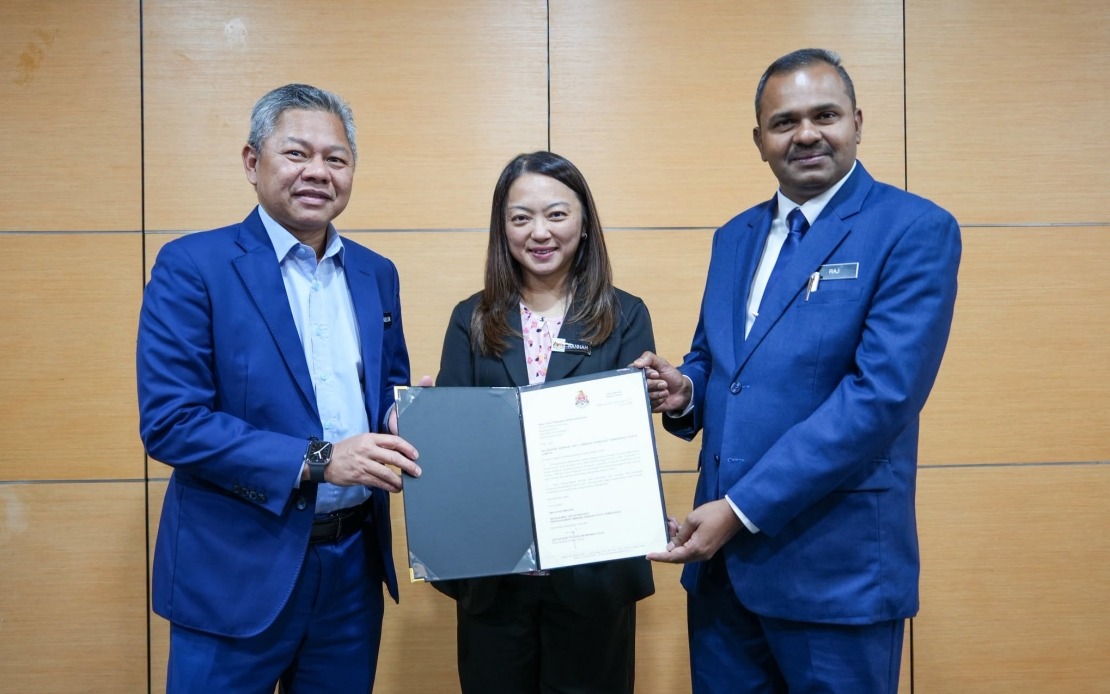
Federal Territories Minister Hannah Yeoh has offered her congratulations to S. Thiyagaraj, a retired prison officer, following his appointment to the Kuala Lumpur City Advisory Board. The appointment letter was formally presented by Kuala Lumpur's Mayor, Datuk Seri Fadlun Mak Ujud, in a ceremony that Hannah witnessed on June 29. The minister's gesture underscores the government's commitment to drawing upon the experience and expertise of public servants who have dedicated their careers to nation-building across different sectors.
In her remarks, Hannah emphasised the importance of Thiyagaraj bringing his full professional capabilities to the role. She expressed confidence that the new board member would execute his responsibilities with the rigour and integrity expected of someone who has spent nearly two decades in law enforcement. The minister's statement reflects a broader institutional confidence in the transition of experienced public servants into advisory positions where their accumulated wisdom can benefit urban governance.
Thiyagaraj's professional journey spans 18 years of service within Malaysia's correctional system, from 2005 until his retirement in 2023. During this tenure, he rose to the rank of Assistant Superintendent of Prisons and specialised in technical intelligence and investigative work. This background suggests his appointment represents a deliberate effort to introduce expertise in security, institutional management, and analytical thinking into the city's governance framework—domains that increasingly intersect with urban planning and public safety considerations.
The Kuala Lumpur City Advisory Board serves a foundational function within the capital's administrative hierarchy. Operating as a consultative body, it provides strategic counsel and policy recommendations to the Mayor on issues spanning city development, administrative efficiency, and implementation of federal capital initiatives. The board's advisory nature means its value depends entirely on the quality of perspectives members bring and their capacity to synthesise diverse viewpoints into actionable insights for the municipal leadership.
Hannah's characterisation of the board's role emphasised transparency and responsiveness—qualities increasingly central to public expectations of city governance in Malaysia. She noted that advisory board members shoulder considerable responsibility in strengthening the mechanisms through which Kuala Lumpur's administration operates. This framing situates the appointment within a larger institutional narrative about improving municipal performance and rebuilding public confidence in urban administrative institutions.
The composition of advisory bodies carries significance beyond their formal remit. By appointing individuals with diverse career backgrounds and expertise, the Kuala Lumpur City Hall signals its recognition that contemporary urban challenges demand input from professionals trained in varied disciplines. Thiyagaraj's background in correctional administration and investigative intelligence represents an unconventional but potentially valuable addition to a board typically dominated by urban planners, architects, and business leaders.
For Thiyagaraj himself, the appointment represents a continuation of public service following his departure from the Prisons Department. Rather than withdrawing into retirement, he transitions into an advisory capacity where his institutional knowledge and professional networks can continue benefiting the Malaysian state. Such appointments also reflect broader trends across Southeast Asia toward leveraging retiring senior officials as knowledge-holders within governance structures, rather than allowing their expertise to exit the public system entirely.
Hannah's statement carries an implicit message about merit-based appointment processes within federal institutions. By publicly welcoming Thiyagaraj and highlighting his professional credentials, she reinforces the principle that government positions should be filled based on capability and track record rather than patronage. In the Malaysian context, where such principles have periodically come under scrutiny, explicit ministerial endorsements of appointment decisions serve an important governance communication function.
The broader context of this appointment touches on concerns within Malaysia regarding the effectiveness and representativeness of urban governance structures. Kuala Lumpur, as the federal capital and economic hub, faces mounting pressures related to infrastructure development, environmental sustainability, traffic management, and social inclusion. An advisory board that can synthesise perspectives from both traditional governance expertise and unconventional backgrounds may be better positioned to address these multifaceted challenges.
Thiyagaraj's entry into the advisory board also potentially opens conversations about how Malaysia's security and law enforcement agencies interface with urban planning and development. Issues such as public safety in city centres, crime prevention through environmental design, and emergency response preparedness increasingly occupy the attention of municipal authorities globally. Bringing correctional and security expertise into advisory discussions on city governance reflects recognition of these intersecting concerns.
The appointment process and ministerial acknowledgement also signal administrative continuity and institutional stability within Kuala Lumpur's governance apparatus. Regular appointments to advisory structures, coupled with transparent communication about new members' qualifications, help maintain public awareness of and confidence in the mechanisms through which the capital is managed. For residents and stakeholders, such announcements provide visibility into how leadership positions are being filled and what expertise is being brought into decision-making processes.
Looking forward, Thiyagaraj's tenure on the advisory board will likely be evaluated based on the substantive contributions he makes to discussions on city development and administrative efficiency. The real test of any advisory appointment lies not in the announcement but in the quality and impact of counsel provided during board deliberations. His technical background in intelligence and investigation may prove particularly relevant as Kuala Lumpur grapples with data-driven governance approaches and evidence-based policy making—increasingly important frameworks for modern city administration.

