A collaboration between the Johor State Government and Harvard University will introduce advanced leadership training to 100 secondary school students starting next year, marking a significant step in bringing world-class educational programming to the state. The initiative, known as the Program for Scientifically-Inspired Leadership (PSIL), represents an effort to equip Johor's brightest young minds with competencies increasingly sought by global employers and universities. Aznan Tamin, chairman of the State Education and Information Committee, announced that the partnership had progressed to an implementation phase, with formal rollout expected in January 2027 across two participating institutions.
The PSIL framework, originally developed by Harvard University in 2019, centres on four core pillars that distinguish it from conventional secondary education approaches. The curriculum prioritises active learning over passive instruction, requiring students to engage directly with problems and develop solutions through guided exploration. Critical thinking forms the second pillar, encouraging learners to question assumptions and evaluate evidence rigorously. Effective communication—both written and oral—comprises the third component, recognising that even brilliant ideas require clear articulation to influence others. Leadership development, the programme's namesake focus, rounds out the framework by cultivating decision-making abilities, ethical reasoning, and the capacity to inspire and organise peers.
Two schools have been selected as pioneers for the Johor implementation: SMK Tasek Utara and SMK Seri Kota Puteri 2. The selection of these institutions reflects consideration of existing capacity, student demographics, and infrastructure capabilities necessary to support the programme's interactive pedagogy. Between them, the schools will identify 100 students—likely spanning upper secondary years—to participate in enhanced coursework and learning experiences designed around PSIL principles. This cohort approach allows for meaningful programme delivery while maintaining manageable class sizes and teacher-student ratios conducive to the active learning methods central to the curriculum.
Beyond direct student participation, the collaboration extends professional development opportunities to 40 teachers across SRBJ institutions. These educators will participate in intensive workshops focused on active learning pedagogy, equipping them with methodological tools to transform classroom practice. The emphasis on teacher training reflects recognition that curriculum innovation depends fundamentally on educator capacity and confidence. By upskilling a cohort of instructors, the partnership aims to create multiplier effects, with trained teachers potentially influencing teaching quality across broader school populations and creating a culture of pedagogical experimentation.
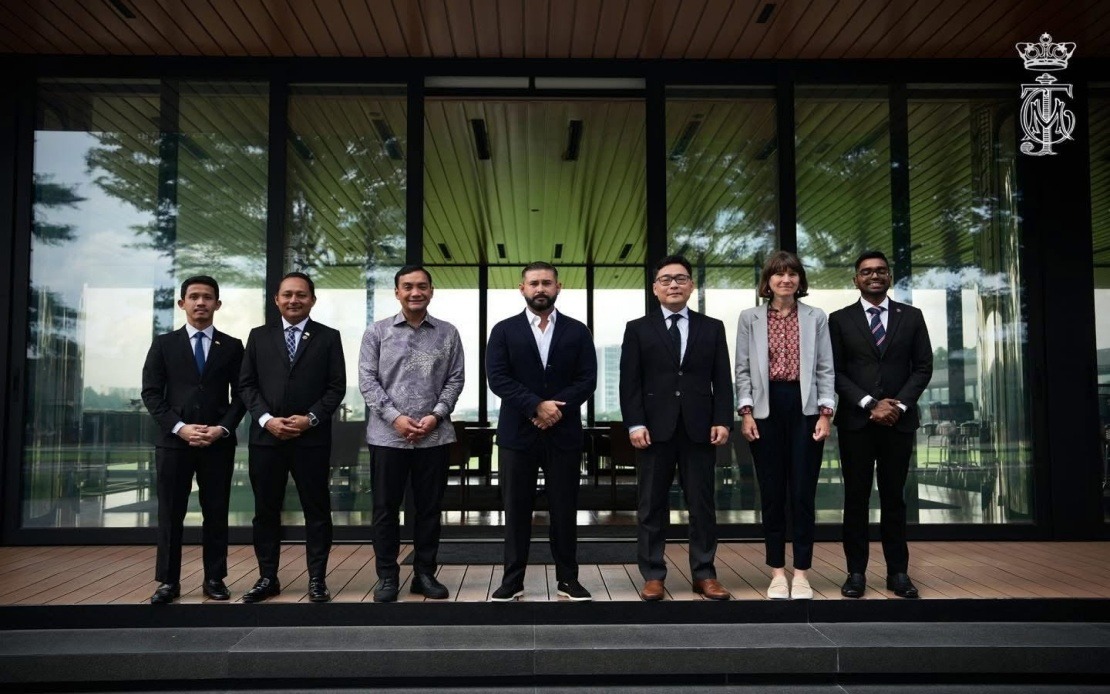
The Johor State Government's commitment to this partnership was underscored by engagement at the highest levels. The Regent of Johor, Tunku Mahkota Ismail, received a delegation from Harvard led by Dr Dominic Mao, assistant director of Undergraduate Studies and a molecular biologist, alongside Dr Andrea Wright, assistant dean of Harvard College. This high-level reception signals the state's determination to position itself as a serious player in educational innovation and international collaboration. Such visibility also elevates the programme's status within the state's education bureaucracy, potentially smoothing implementation and securing necessary resource allocation.
The timing of the January 2027 launch allows several months for detailed curriculum adaptation, teacher preparation, and logistical groundwork. Malaysian secondary education operates within the framework established by the Ministry of Education, and PSIL's designers will need to ensure the programme aligns with national policies while maintaining its distinctive pedagogical approach. This balancing act—honouring international best practice while respecting local curricular requirements—represents a delicate but essential negotiation in educational partnerships between developed and developing nations.
From a regional perspective, the Johor-Harvard collaboration positions Malaysia within broader Southeast Asian trends toward internationalised education and 21st-century skill development. Singapore, Thailand, and Indonesia have all pursued various partnerships with elite international universities, and Johor's move reflects the state's ambition to compete for both student talent and reputational recognition. For Malaysian families with means and educational aspirations, access to Harvard-designed programming without the expense and disruption of overseas education represents significant value.
The programme's emphasis on English language mastery while preserving Malay language competency reflects a deliberate curricular philosophy. Global competitiveness increasingly demands English fluency, yet national identity and mother-tongue literacy remain important anchors in Malaysian education policy. SRBJ's explicit commitment to this balance mirrors broader Malaysian educational debates about balancing globalisation with cultural preservation. Similarly, the focus on science, technology, engineering, and mathematics (STEM) aligns with national economic diversification strategies that seek to reduce reliance on commodity exports and develop high-value knowledge sectors.
The inclusion of international-standard competency assessments within PSIL suggests that participating students will eventually hold credentials recognisable beyond Malaysia's borders. This portability of qualifications could prove transformative for exceptional students from less affluent backgrounds, potentially opening pathways to global universities and careers that might otherwise remain inaccessible. Whether the partnership includes explicit support for university admissions counselling or scholarship identification remains unclear from available information, but such components would significantly amplify the programme's impact on student trajectories.
Implementation challenges will inevitably emerge. Sustaining teacher engagement and managing the additional workload that active learning pedagogy requires demands careful institutional support. Ensuring equitable student selection to avoid the programme becoming a preserve of already-privileged cohorts requires transparent, merit-based processes. Measuring programme effectiveness beyond conventional examination scores will require thoughtful assessment design. Johor's education authorities will need to track not just academic outcomes but also student confidence, communication abilities, and leadership capacities.
Looking forward, the partnership's success in Johor could serve as a proof-of-concept for expansion across other Malaysian states. If the 100 students and 40 teachers involved demonstrate measurable gains in critical thinking, communication, and leadership readiness, the model might attract replication and resource investment elsewhere. Conversely, if implementation encounters significant obstacles, the experience will generate valuable lessons for future international educational partnerships. Either way, this collaboration represents a meaningful attempt to inject proven international pedagogical approaches into Malaysian secondary education, with potential implications extending well beyond Johor's borders.