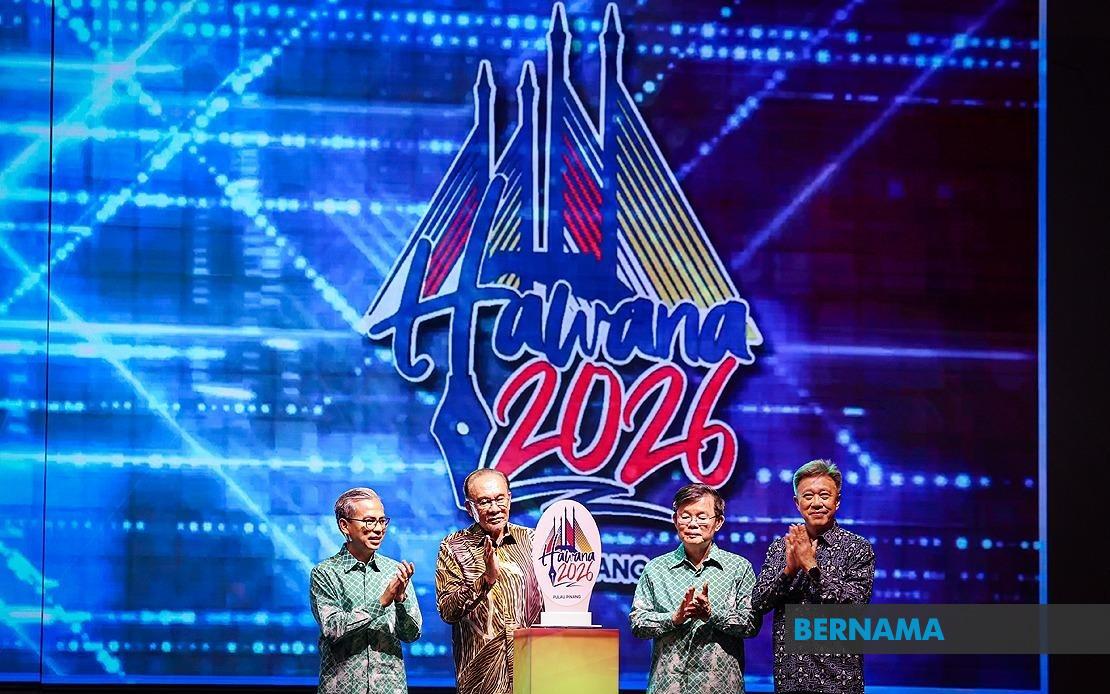
The three-day National Journalists' Day (HAWANA) 2026 drew to a close at PICCA@Arena Butterworth Convention Centre, cementing a milestone for Malaysia's media sector and demonstrating the industry's continuing importance to national discourse. The gathering attracted nearly 1,000 journalists and media professionals from across Malaysia and neighbouring countries including Indonesia, Cambodia and Timor-Leste, reflecting the event's expanding regional significance and the shared commitment of ASEAN media outlets to professional excellence.
Centered on the theme 'Media Integrity Strengthens Credibility', the main celebration was officiated by Prime Minister Datuk Seri Anwar Ibrahim on Saturday. His presence underscored the government's recognition of journalism as a cornerstone of an informed citizenry and responsible governance. The choice of Penang as host city extended beyond mere convenience, positioning the northern state as a venue capable of hosting nationally significant gatherings and reinforcing its role in Malaysia's media and cultural landscape.
Among the most significant announcements, Anwar allocated an additional RM1 million to the Tabung Kasih@HAWANA welfare fund, a move that directly addresses the economic pressures facing journalism practitioners. The fund, introduced in 2023, has already supported 773 media workers nationwide with combined assistance totalling RM2.26 million. By continuing and expanding this initiative, the government signals sustained commitment to supporting journalists during career transitions or personal hardship. The Prime Minister also pledged ongoing support for the Media Innovation Fund, recognising that Malaysia's media organisations require continuous investment in digital infrastructure and capabilities to remain competitive in an increasingly technology-driven information landscape.
Telekom Malaysia's announcement as a new strategic partner, with a RM500,000 contribution to the welfare fund, demonstrates how private sector entities are increasingly recognising journalism's public value. This collaboration model, wherein corporations supplement government funding through dedicated partnerships, creates a more sustainable support ecosystem for media practitioners. The diversified funding approach reduces dependence on any single source and reflects growing acknowledgment that media sustainability extends beyond traditional business models.
Recognition ceremonies formed a poignant component of the proceedings. Datuk Suhaimi Sulaiman received the HAWANA Award for his distinguished career in broadcasting and journalism, honouring individuals who have shaped Malaysia's media landscape. More emotionally resonant was the posthumous Special HAWANA Award 2026 presented to Azlan Idris, the late former head of Bernama Radio who passed away in January at age 57. The presentation to his widow, Wan Syahrina Wan Abdul Rahman, acknowledged Azlan's instrumental role in establishing and developing Bernama Radio since 2007, and his significant contributions to organising multiple HAWANA editions. Such recognition ensures that contributions to the profession are preserved in institutional memory.
The regional dimension of HAWANA 2026 acquired particular significance through the formalisation of a memorandum of understanding between Bernama and Timor-Leste's national news agency, Agência Noticiosa de Timor-Leste (TATOLI). Signed by respective leadership and witnessed by Prime Minister Anwar and Timor-Leste's Secretary of State for Social Communication, this agreement establishes a framework for news exchange and professional collaboration. For Malaysia and Southeast Asia, strengthening institutional links between national news agencies facilitates more accurate, contextualised reporting of regional developments and reduces reliance on external international wire services for regional information.
Beyond formal proceedings, the three-day RIUH Pi HAWANA Carnival demonstrated how professional journalism events can generate broader cultural and economic impact. Featuring performances by local music acts including Exists, Bunkface and Chelsea Ng, alongside workshops and over 40 creative and food vendors, the carnival attracted a younger demographic to media-related content. This approach acknowledges that sustaining journalism requires cultivating new audiences and building public appreciation for the profession among emerging generations.
The programme included substantive professional discourse through mechanisms such as the Malaysia Media Retreat 2.0 by the Malaysian Federation of Media Clubs, dialogues with the Communications Minister, and a town hall organised by the Malaysian Press Institute examining journalism's future viability through 2035. These discussions positioned the event as more than celebration, converting it into a working conference where the industry could collectively address structural challenges and establish standards. Such professional forums are essential for maintaining editorial integrity and addressing contemporary pressures facing journalism globally.
Penang's role as host state extended beyond logistical arrangements. Governor Tun Ramli Ngah Talib hosted a dinner honouring domestic and ASEAN media practitioners, acknowledging journalism's contribution to nation-building. The state's hosting of HAWANA 2026 demonstrated infrastructure capacity while generating tourism and economic benefits. For Penang specifically, the event positioned the state as a centre for professional and cultural gatherings, enhancing its profile beyond traditional manufacturing and technology sectors.
The event's execution reflected institutional maturity within Bernama as national news agency. The first live television broadcast in HAWANA's history, managed entirely through in-house expertise, demonstrated technical capability and confidence in the organisation's operational sophistication. This capacity is increasingly important as news agencies navigate digital transformation and compete with independent and international media outlets for audience attention and advertiser support.
HAWANA 2026 illustrated how Malaysia's media profession maintains structural mechanisms for professional development, peer recognition, and institutional support. The convergence of government policy announcements, corporate partnership commitments, regional collaboration agreements, and professional forums created a comprehensive event addressing journalism's sustainability challenges from multiple angles. For Malaysian journalists navigating economic pressures and evolving technological demands, such forums reinforce professional identity and remind practitioners that their work is valued at institutional and governmental levels.