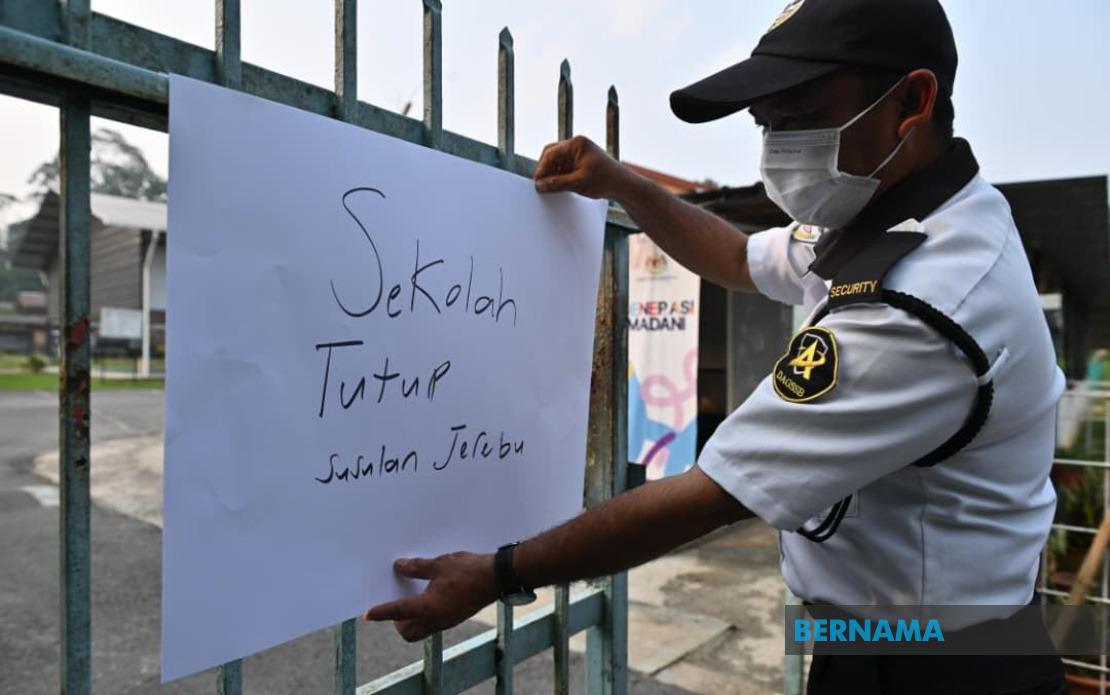
Sarawak's struggle with transboundary haze has intensified dramatically, forcing authorities to close 108 schools across the Serian district on August 12 as a protective measure. The decision reflects growing alarm over air quality in the state, with the Air Pollutant Index (API) breaching the critical 200-point threshold that triggers automatic school shutdowns under national protocols.
The Sarawak State Disaster Management Committee (JPBN) announced the closures while assuring parents and educators that teaching would continue uninterrupted through home-based learning arrangements. This dual approach—physical closure coupled with remote instruction—represents the established response framework when environmental hazards threaten student safety. The measure underscores how haze episodes, once episodic concerns, have become recurring crises demanding institutional adaptation across the education system.
Under Malaysia's National Haze Action Plan, education authorities possess clear guidelines for managing air quality emergencies. The API framework establishes thresholds that trigger progressively stricter responses: readings between zero and 50 indicate good air conditions, 51 to 100 suggest moderate levels, 101 to 200 classify air as unhealthy, 201 to 300 register as very unhealthy, while anything exceeding 300 constitutes hazardous conditions. The Serian closure occurred when API readings reached 202, placing the area squarely in the very unhealthy band. This standardized system enables swift decision-making by school administrators and state education departments when air quality deteriorates beyond safe levels.
The scope of the haze problem extends well beyond Serian. By mid-afternoon on August 12, Sarawak's air quality had become increasingly fragmented across the state. Tebedu emerged as the most heavily affected area with an API reading of 212, matching Serian's dangerous levels. Beyond these two hotspots, eleven additional regions reported API measurements between 101 and 200, classifying them as unhealthy. These locations—Kuching, Samarahan, Sri Aman, Sarikei, Sibu, Bintulu, Samalaju, Miri, Lundu, Lubok Antu, and Lawas—span the entire length of Sarawak, from the central coast through interior regions, indicating a widespread atmospheric phenomenon rather than isolated pollution.
State environmental officials have noted a troubling pattern emerging since the start of August. Air quality metrics across Sarawak have demonstrated a consistent upward trajectory in API readings, suggesting conditions will likely worsen before stabilizing. This deterioration aligns with seasonal atmospheric patterns and regional fire activity during the dry season, when agricultural burning and uncontrolled forest fires in neighboring jurisdictions significantly impact air quality across Borneo and Southeast Asia more broadly.
The health implications of prolonged haze exposure command serious attention. Medical professionals consistently identify children, elderly populations, pregnant women, and individuals with pre-existing respiratory or cardiovascular conditions as particularly vulnerable to air pollution's harmful effects. Exposure to elevated particulate matter and toxic gases can trigger acute complications including asthma attacks, reduced lung function, and cardiovascular stress. School closures therefore serve not merely as administrative convenience but as essential public health interventions, removing vulnerable populations from hazardous environments during critical developmental and health vulnerability periods.
Public health authorities across the region have begun issuing comprehensive guidance on minimizing haze exposure. The general population is advised to curtail outdoor activities when API readings exceed unhealthy thresholds, effectively confining many residents to indoor environments despite the economic and social costs of restricted mobility. For at-risk groups, authorities recommend even stricter limitations on outdoor exposure, essentially necessitating shelter-in-place precautions during severe episodes. These behavioral modifications represent significant quality-of-life constraints that accumulate across weeks of poor air quality.
Government communications emphasizing information discipline reflect concerns about misinformation during environmental crises. The Sarawak JPBN explicitly cautioned residents against speculation and urged reliance on official channels for air quality updates and guidance. This messaging targets a real phenomenon: during haze episodes, social media frequently amplifies unverified claims about pollution sources, health impacts, and government responses, sometimes generating unnecessary panic or undermining official management efforts. Establishing authoritative communication sources becomes critical when environmental conditions create anxiety and uncertainty.
The broader Southeast Asian context illuminates why haze remains a persistent challenge despite decades of diplomatic engagement. Transboundary pollution flows from Indonesia's burning forests and agricultural lands across maritime boundaries that cannot physically contain airborne particles. Malaysia's domestic efforts to manage haze impact through school closures and activity restrictions address symptoms rather than root causes. Without comprehensive regional cooperation addressing forest management, agricultural practices, and enforcement mechanisms in source areas, Malaysia and other affected nations face recurring seasonal crises that disrupt education, commerce, and public health.
For Malaysian policymakers and educators, haze episodes like Sarawak's current situation underscore the need for robust climate adaptation strategies. Schools increasingly require air filtration systems, flexible learning infrastructure, and contingency protocols for extended closures. The normalization of haze-driven school interruptions signals a shift in environmental baseline conditions that will shape educational planning and student outcomes for years ahead. This crisis management approach, while necessary today, ultimately reflects an unsustainable equilibrium that demands regional-scale solutions addressing air pollution at its source.

