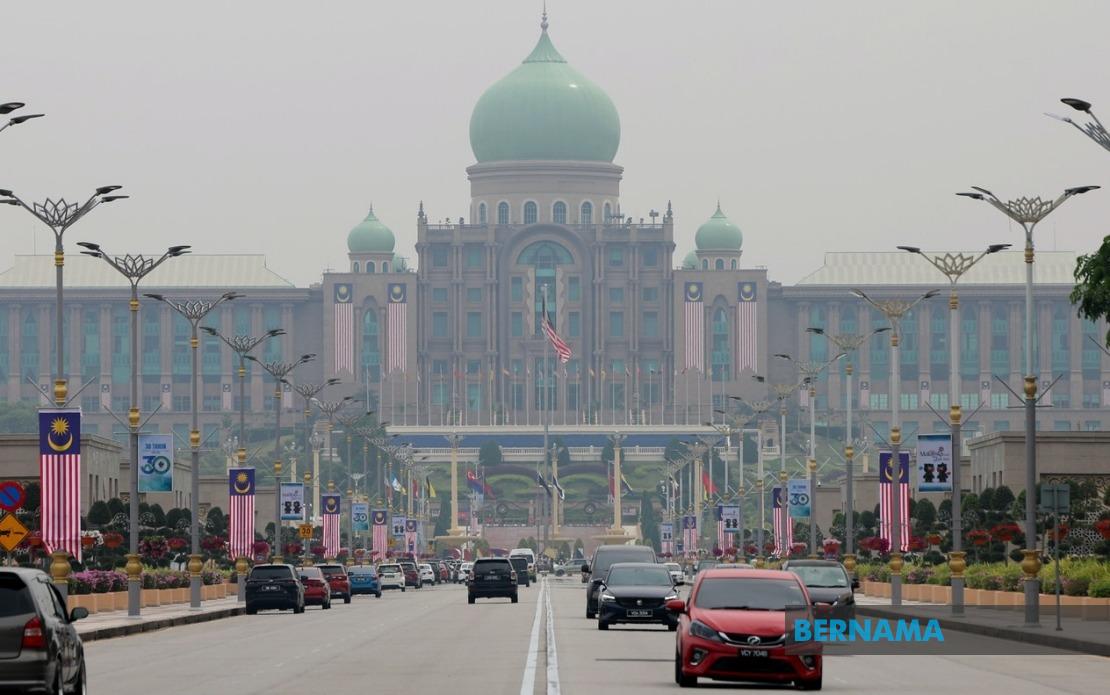
Prime Minister Datuk Seri Anwar Ibrahim will place the escalating haze crisis at the centre of his discussions with the Sultan of Brunei, Sultan Hassanal Bolkiah, during an upcoming two-day working visit to Bandar Seri Begawan. The transboundary air pollution issue is expected to dominate talks at the 27th Malaysia-Brunei Annual Leaders' Consultation (ALC-27), reflecting shared regional concerns as smoke engulfs parts of Southeast Asia and creates hazardous conditions across the peninsula and the sultanate.
Malaysian High Commissioner to Brunei Datuk Mohd Aini Atan confirmed the environmental crisis will command significant attention, positioning it alongside other pressing bilateral matters requiring leadership-level intervention. The inclusion of senior officials from Malaysia's most affected regions underscores the severity of the situation. Both Sarawak Premier Tan Sri Abang Johari Tun Openg and Sabah Chief Minister Datuk Seri Hajiji Noor will accompany the Prime Minister, bringing frontline perspectives on the disaster unfolding across Borneo's states.
The timing of these high-level consultations is critical. Data from the Malaysian Air Pollutant Index Management System (APIMS) portal reveals that Serian in Sarawak has spiralled into the "very unhealthy" category with a reading of 204 as of 5 pm on the day of the announcement. This threshold represents dangerous levels that pose direct health risks, particularly to vulnerable populations including children, the elderly, and those with respiratory conditions. The situation extends far beyond a single hotspot, with five other Sarawakian municipalities struggling under unhealthy conditions that demand immediate regional attention.
Kuching, the state capital, registered an API of 195, placing it firmly in the unhealthy band alongside Samarahan (182), Sri Aman (179), Sarikei (158), and Sibu (152). These readings across multiple population centres suggest a widespread atmospheric phenomenon rather than localised pollution, intensifying pressure on governments to identify and address root causes. For Malaysian readers, particularly those in East Malaysia, these numbers translate to tangible daily hardships—school closures, business disruptions, and mounting healthcare demands across affected communities.
The bilateral consultation mechanism between Malaysia and Brunei represents the highest-level dialogue platform available to both nations, making it an ideal venue for discussing transnational environmental challenges that transcend borders. The ALC series has historically served as a crucial conduit for resolving complex issues requiring coordinated policy responses. The Sultan's participation signals Brunei's recognition that haze phenomena, regardless of origin, demand collaborative solutions rooted in mutual understanding and shared responsibility.
Sarawak's central role in these discussions reflects its geographical vulnerability and economic dependence on stable environmental conditions. The state's tourism and agricultural sectors suffer directly when air quality plummets, creating cascading economic effects that ripple through Malaysia's broader development agenda. Including state-level leaders in a federal-level consultation acknowledges that effective responses require coordination across administrative tiers and jurisdictions, a lesson learned from previous transboundary pollution episodes in the region.
For Southeast Asian observers, this gathering arrives amid broader concerns about transboundary haze becoming a recurring seasonal threat. The region's vulnerability stems from interconnected ecosystems, shared monsoon patterns, and land-use practices that cross political boundaries. Malaysia and Brunei, as neighbours with significant bilateral trade and cultural ties, are uniquely positioned to demonstrate regional solidarity on environmental governance. Their ability to forge concrete cooperation on air quality could establish precedents for broader ASEAN-level environmental diplomacy.
The consultation comes at a moment when Malaysian society is grappling with the health consequences of deteriorating air quality. Medical facilities across affected regions report increased respiratory complaints, eye irritation, and other pollution-related conditions. Parents face difficult decisions about children's outdoor activities, while vulnerable populations retreat indoors, creating social and economic friction. These lived experiences underscore why the haze issue has transcended technical environmental discourse to become a matter demanding political leadership and diplomatic engagement.
Brunei's stake in these discussions extends beyond the sultanate's immediate air quality challenges. As a regional economy with significant service sectors including tourism, Brunei has vested interest in stabilising environmental conditions across Borneo. The sultanate's relative prosperity and limited industrial base mean it shoulders disproportionate burden from transboundary pollution originating elsewhere, a dynamic that shapes its diplomatic priorities and reinforces the logic of high-level engagement on this issue.
Moving forward, the consultation likely will explore both immediate mitigation measures and longer-term cooperation frameworks. Discussions may encompass information-sharing protocols, joint monitoring arrangements, enforcement coordination, and possibly financial mechanisms for supporting affected communities. The involvement of Sarawak and Sabah leadership provides opportunity to address state-specific concerns while ensuring federal-level diplomatic goals remain aligned with ground-level realities.
The broader implication for Malaysian observers concerns how effectively national leadership can translate diplomatic engagement into tangible improvements in air quality and environmental protection. The ALC-27 represents opportunity to demonstrate that Malaysia's federal government takes seriously the interconnected nature of regional environmental challenges and is prepared to invest political capital in solutions that protect citizens' health and economic wellbeing. For Sarawak and Sabah residents enduring hazardous air conditions, the outcomes of these consultations will signal whether high-level talks translate into substantive policy changes or remain largely symbolic gestures.

