The Ministry of Health has committed RM500,000 towards improving healthcare infrastructure at the Kemar Health Clinic in Gerik, signalling renewed efforts to enhance medical services for the Orang Asli community in this mountainous region of Perak. Health Minister Datuk Seri Dr Dzulkefly Ahmad announced the allocation during a working visit to Hulu Perak, where he inspected existing facilities and met with frontline healthcare personnel. The funding reflects the government's stated priority to eliminate geographical barriers to healthcare access, a cornerstone of the Malaysia MADANI framework.
A significant portion of the RM500,000 will fund construction of a new Boat Storage Facility, addressing a critical infrastructure gap that has hampered healthcare delivery in this water-dependent region. The current storage structure, operational for more than eleven years, has deteriorated substantially and suffers from severe capacity limitations, accommodating only a single vessel. This constraint has created logistical challenges in protecting and maintaining boats essential to emergency response networks. For the dispersed Orang Asli settlements scattered across the Kemar area, waterborne transport remains the primary—and often only—viable means of moving medical personnel and patients through challenging terrain.
Beyond infrastructure, the allocation will enable procurement of critical operational assets, including a four-wheel-drive vehicle to retire an aging transport unit. The ministry will also acquire sophisticated medical equipment, particularly a Video Laryngoscope, which facilitates intubation procedures during emergency interventions. These equipment upgrades translate into tangible improvements in the clinic's capacity to handle acute medical situations, where delayed response due to inadequate tools could prove life-threatening in remote settings. The combination of improved transport and enhanced diagnostic capacity represents a meaningful step towards standardising emergency care quality across urban and rural divides.
Complementing the facility upgrade, the Ministry of Health simultaneously commissioned the Medik 8 Boat, a twelve-passenger multipurpose vessel that cost RM350,000 and now operates from Belum Rainforest Resort Jetty. This addition augments the ministry's existing fleet of six boats serving the region, expanding capacity to respond to medical emergencies affecting approximately 4,500 Orang Asli residents in settlements around RPS Kemar. The boat deployment specifically targets response time reduction, a critical metric in remote healthcare where traditional ambulance networks prove impossible. Dr Dzulkefly emphasised that technological sophistication remains hollow without personnel willing to navigate treacherous river conditions and unpredictable weather patterns—a pointed acknowledgment of sacrifices made by doctors, nurses and boat operators working in challenging environments.
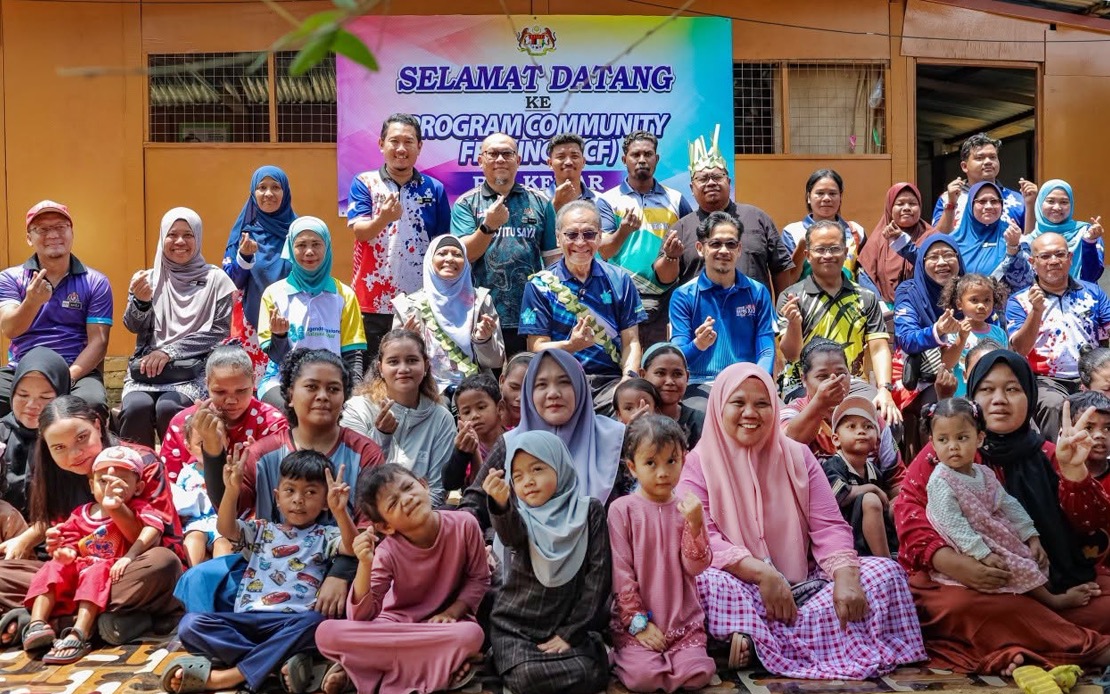
The broader context of Orang Asli healthcare in Perak reflects persistent health disparities within Malaysia's indigenous populations. Stunting—a measure of chronic malnutrition affecting childhood development—remained catastrophically high in the Kemar area at 75.2 per cent in 2015, indicating systematic undernutrition among young children. A decade of targeted interventions through the Community Feeding Programme, launched at RPS Kemar, has produced measurable improvement. By 2025, the stunting rate had declined to 50.8 per cent, representing meaningful progress though still far exceeding national and international benchmarks. Similar progress marked underweight prevalence, which fell from 43.7 per cent to 25.2 per cent during the same period, suggesting that sustained nutritional intervention programmes generate tangible health outcomes even in challenging community settings.
The Community Feeding Programme provides comprehensive nutritional support targeting Orang Asli children between six months and six years, the critical window for physical and cognitive development. The initiative extends beyond simple food provision to include active feeding supervision, full-cream milk supplementation, multivitamins, and Ready-to-Use Therapeutic Food formulations for identified malnutrition cases. This multi-layered approach recognises that malnutrition in remote communities stems from complex factors including food access, poverty, water quality and infectious disease burden. By addressing nutritional deficiencies directly, the programme interrupts the cycle connecting poverty to poor health outcomes to educational underperformance to intergenerational disadvantage.
For Malaysian policymakers examining health equity, the Kemar investment illustrates the substantial resource requirements for closing disparities affecting indigenous communities. Current improvements in stunting and underweight rates, while encouraging, reveal that halfway progress remains unacceptable given the severity of baseline conditions. Many comparable regional jurisdictions, including parts of Thailand, Cambodia and Indonesia, grapple with similar challenges in indigenous and remote communities. The Malaysian approach—combining infrastructure investment, equipment procurement, personnel support and sustained nutritional programming—offers a testable model for integrated health system strengthening in isolated populations. However, scaling this model nationwide would demand significantly greater financial and human resource commitments than currently evident.
Dr Dzulkefly's visit to Hulu Perak carried symbolic weight beyond announcement of specific allocations, representing ministerial engagement with marginalised communities often invisible in national health policy discussions. The Health Minister's direct inspection of facilities and consultation with frontline staff signal administrative attention to implementation details—a crucial factor distinguishing policy pronouncements from meaningful system change. In many developing countries, including Malaysia's own history, infrastructure investments announced with fanfare frequently encounter execution delays, cost overruns and maintenance failures that undermine intended benefits. The Kemar upgrades will require sustained political commitment through implementation phases, likely spanning multiple budget cycles and requiring coordination across federal, state and local administrative levels.
The Malaysia MADANI principle explicitly cited by Dr Dzulkefly—healthcare as an equal right transcending geography—establishes an aspirational standard against which future performance can be measured. This framing positions healthcare equity as a governance principle rather than charitable impulse, placing obligations on state institutions to eliminate systematic disparities. For indigenous communities historically marginalised in national development narratives, such framings create political space to demand accountability and continued investment. However, principles require resources; sustaining programmes like the Community Feeding Initiative demands long-term budgetary allocation extending beyond discrete development projects to become integrated components of standard public health provision.
The Kemar health facility investments arrive at a moment of broader discussion regarding Malaysia's healthcare system modernisation and universal health coverage priorities. Rural and indigenous health represents one dimension within larger debates about healthcare financing, workforce development and service delivery models. Geographically dispersed populations with high disease burdens and limited economic productivity present particular challenges for health systems organised around efficiency metrics favouring population concentration. The MOH's explicit commitment to Kemar and comparable remote settings suggests deliberate policy choice to prioritise equity over pure efficiency—a stance requiring sustained defence against fiscal pressures and competing budgetary demands.

