Dataran Putrajaya will host Malaysia's 2026 National Day festivities on Monday with health protections mobilised against current haze conditions affecting the region. The advisory to wear N95 masks represents a precautionary stance aligned with guidance from the Ministry of Health, particularly for vulnerable segments of the population including young children, elderly citizens, and individuals with respiratory conditions such as asthma. This recommendation underscores the persistent air quality challenges that have periodically disrupted public events and daily activities across Malaysia and the broader Southeast Asian region, a concern that has grown more acute in recent years.
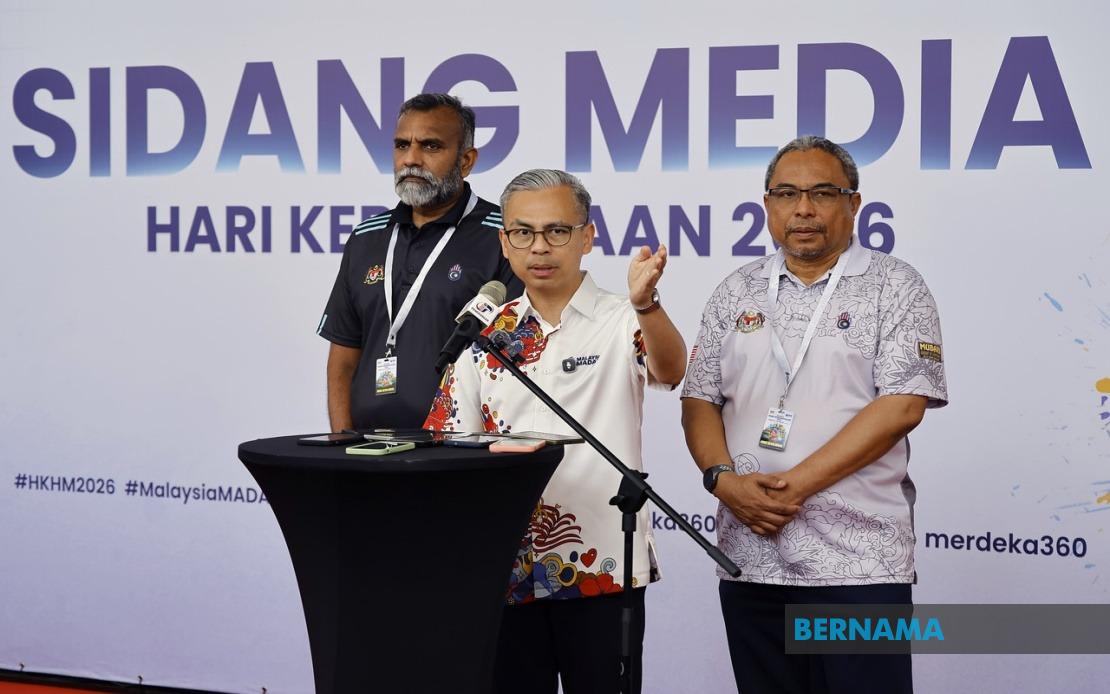
Communications Minister Datuk Seri Fahmi Fadzil, steering the 2026 National and Malaysia Day celebrations committee, confirmed that masking remains voluntary rather than mandatory, allowing individuals to make personal health decisions based on their circumstances. The distinction between guidance and compulsion reflects an approach that balances public health objectives with personal autonomy, though observers note the implicit acknowledgment that air quality poses genuine risks to attendees. The ministry's emphasis on voluntary participation suggests confidence in public understanding of individual risk factors, yet simultaneously communicates that respiratory protection measures are genuinely warranted for the occasion.
The scale of protective measures demonstrates serious preparedness from event organisers. More than 10,000 participants scheduled to attend the celebrations will receive complimentary N95 masks as part of routine health safeguarding protocols. This distribution addresses both accessibility concerns and ensures that even individuals without prior mask supplies can readily adopt protection if they perceive need. The provision of masks to such a substantial participant cohort signals that organisers view haze-related health impacts as a material consideration rather than peripheral concern, particularly given that participants include performers, officials, and ceremonial participants who will spend extended periods at the venue.
Beyond mask distribution, the Ministry of Health has deployed medical infrastructure throughout Dataran Putrajaya to provide immediate assistance should participants experience haze-related respiratory distress or other health emergencies. Medical teams stationed at strategic locations represent a second line of defence, ensuring that individuals who develop symptoms during celebrations can access prompt clinical evaluation and intervention. Minister Fahmi reported that all medical stations were functioning without reported complications following the full dress rehearsal, suggesting logistical readiness for the actual event. This medical presence acknowledges that despite precautions, some attendees—particularly those with pre-existing respiratory vulnerabilities—may require professional intervention.
The full dress rehearsal proceeded without complications, providing organisers confidence in operational execution. The rehearsal served as a critical stress-test for coordination among multiple agencies including security forces, medical personnel, communications infrastructure, and ceremonial participants. Smooth completion of the rehearsal suggests that contingency protocols are functional and that inter-agency coordination meets required standards. For Malaysian event management more broadly, successful rehearsal execution often indicates strong likelihood of smooth main event performance, provided no intervening circumstances substantially alter conditions.
Media coverage logistics have expanded significantly compared to prior year celebrations, reflecting growing domestic and international interest in Malaysia's national commemorations. The number of accredited media practitioners has increased substantially from approximately 600 in 2025 to 823 scheduled for 2026, a boost exceeding 37 percent. This expansion necessitates enhanced communications infrastructure to accommodate reporters, camera operators, and production crews covering various aspects of the festivities. The Communications Ministry's acknowledgment of this growth and proactive address of internet access concerns demonstrates awareness that media operations depend heavily on reliable connectivity for live reporting and content transmission.
The Malaysian Communications and Multimedia Commission has addressed infrastructure demands by installing additional communications equipment at 102 celebration venues across the broader National Day event footprint. This network augmentation involved coordination with telecommunications service providers to ensure redundancy and capacity sufficient for simultaneous multi-site broadcasting and reporting. Infrastructure investment of this magnitude reflects recognition that national celebrations increasingly depend on seamless digital connectivity for both domestic media coverage and international broadcast reach. For Malaysia's standing as a regionally significant nation, demonstrated capacity to host large-scale public events with professional media operations carries diplomatic and soft power implications.
Security arrangements have proceeded without notable incidents reported by the Royal Malaysia Police, indicating that pre-event screening and threat assessment procedures have functioned effectively. Public order maintenance reflects successful coordination between law enforcement agencies responsible for venue security, crowd management, and incident response. The absence of reported security concerns following the full dress rehearsal suggests that access control protocols, bag screening procedures, and personnel vetting have identified and addressed potential vulnerabilities before the main celebration. For participants and observers, the security profile contributes to confidence that the event can proceed safely.
The convergence of these preparations—health protections against haze, expanded media infrastructure, enhanced security protocols, and medical preparedness—reflects comprehensive event planning addressing multiple risk vectors simultaneously. For Malaysian citizens and international visitors attending the 2026 National Day celebrations, these arrangements attempt to balance commemorative solemnity with practical acknowledgment that environmental and public health conditions require active management. The advisory framework adopted by organisers, emphasising voluntary precautions rather than restrictions, preserves the celebratory atmosphere while empowering individuals to protect their health based on personal risk assessment.
From a regional perspective, Malaysia's approach to managing outdoor national celebrations amid seasonal haze demonstrates adaptive governance. Transboundary haze has periodically affected several Southeast Asian nations, yet sustained efforts to maintain commemorative traditions while implementing health safeguards reflect institutional learning and growing sophistication in managing predictable environmental challenges. The 2026 celebrations thus represent not merely a patriotic observance but also a case study in how Malaysia navigates the intersection of environmental constraints, public health obligations, and national ceremonial requirements.

