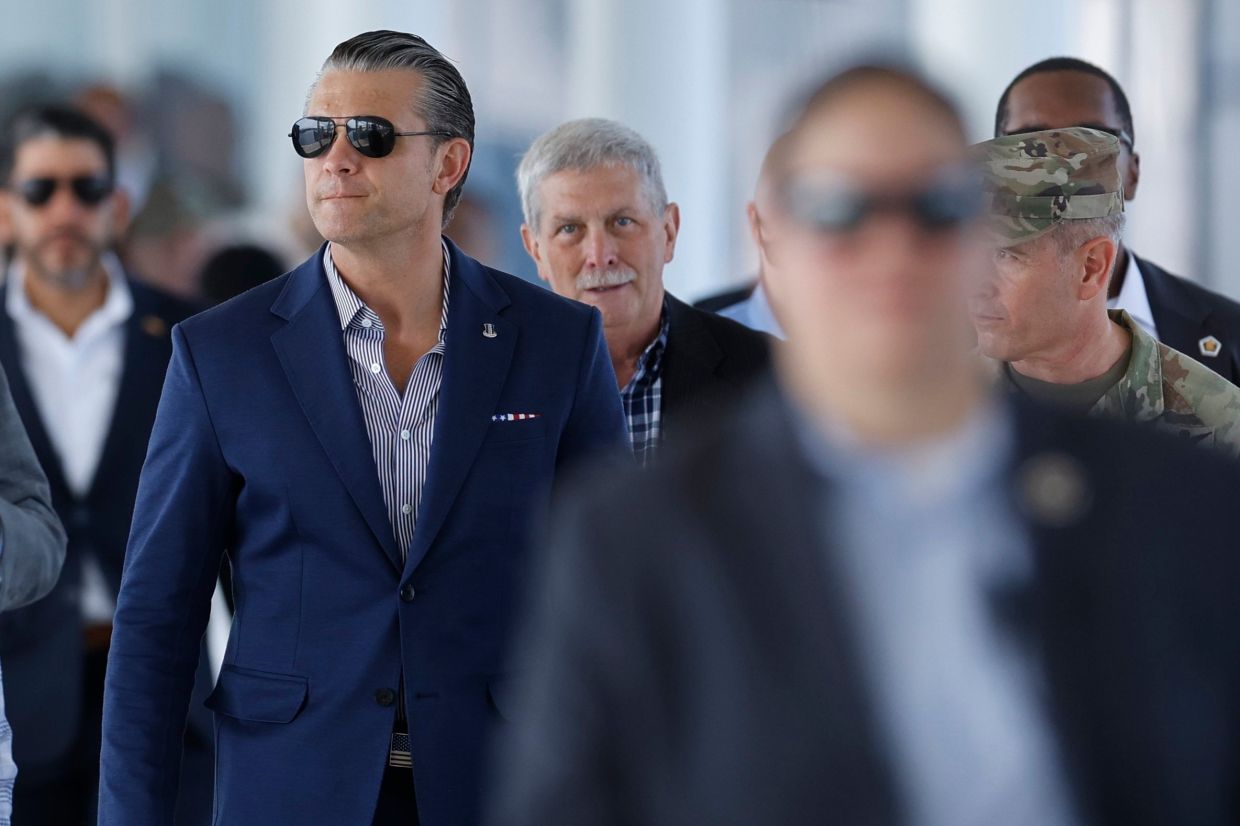
Pentagon chief Pete Hegseth's position has become increasingly precarious, according to unnamed sources familiar with internal discussions, with suggestions he is rapidly approaching the point of dismissal. The unravelling of his tenure comes amid a protracted standoff over Iran policy and a stream of unfavourable media coverage that has accumulated into a formidable political liability for the Trump administration. These mounting pressures arrive at a particularly delicate moment for the world's two largest economies, just as their military establishments have begun to rebuild channels of communication that had deteriorated over recent years.
The thaw in US-China defence relations represents one of the Trump administration's more tangible diplomatic achievements. Following the May summit between President Donald Trump and Chinese leader Xi Jinping in Beijing, military contacts between the countries have intensified across multiple levels of command. Officials with direct knowledge of these engagements report that the frequency and depth of military-to-military interaction has reached its highest point in more than a decade, suggesting a fundamental shift in how the two powers manage their strategic relationship. This progress has been carefully nurtured and represents a deliberate strategic choice to prevent miscalculation and build what both sides have termed a relationship rooted in mutual strategic stability.
Hegseth himself has become a public face of this rapprochement. At a defence conference following the Beijing meeting, the Pentagon chief characterised relations between the two militaries as having improved dramatically, explicitly connecting military engagement to the broader Trump-Xi understanding. Deputy Assistant Defence Secretary Alvaro Smith amplified this message during recent talks with Chinese Vice-Minister for Foreign Affairs Ma Zhaoxu in Washington, stating that under Hegseth's leadership, the Pentagon was actively repairing communication channels that had previously been severed or dormant. These statements carried weight because they came from someone positioned at the working level where actual military coordination occurs, suggesting institutional commitment rather than mere rhetoric.
Hegseth's diplomatic credentials in the China relationship extend beyond rhetoric. He has conducted multiple meetings with his Chinese counterpart Defence Minister Dong Jun, including significant encounters in Malaysia and during Trump's own state visit to Beijing. These face-to-face engagements are crucial in military diplomacy, where personal relationships and trust between senior commanders facilitate understanding during crises. The cultivation of such relationships typically requires continuity and repeated interaction, making transitions in leadership particularly disruptive to fragile trust-building processes.
Chinese analysts acknowledge the potential complications should Hegseth depart. Zhao Minghao, a specialist in international relations at Fudan University, suggested that Trump might need to designate someone to absorb political responsibility for the contentious Iran issue, and that cabinet reshuffles ahead of US midterm elections follow a historical pattern. More significantly, Zhao noted that Hegseth's removal would necessitate a difficult recalibration of military-to-military engagement, as any new defence secretary would need to rebuild relationships and establish their own working rapport with Chinese counterparts. This reset period could slow the momentum that has recently been building.
However, the Pentagon's institutional continuity may prove more resilient than political transitions would suggest. Deputy Defence Secretary Vikram Colby, who participated in the recent Washington talks with Ma Zhaoxu, has apparently earned respect within Chinese policy circles. According to sources tracking these dynamics, Beijing officials have been favourably impressed by Colby's strategic thinking, particularly his assessment that Taiwan, while important, does not constitute an existential threat to American interests. This framing is subtly different from traditional US positions and may reflect a calibrated approach to one of the most sensitive issues between the two powers.
Colby's potential to maintain continuity in the military relationship becomes significant if Hegseth indeed departs. Should he remain in a senior Pentagon role under a new defence secretary, his presence could provide institutional memory and preserve relationships established during Hegseth's tenure. Multiple sources familiar with current military-to-military contacts characterise these engagements as performing exceptionally well, with one description of the relationship as "very good right now" appearing in assessments. These observers suggest that a change in defence secretaries would have minimal disruptive effect unless Hegseth's replacement proved to be a committed China hawk determined to reverse the current trajectory.
Zhao's analysis points toward a more optimistic scenario if Colby's role remains stable. He argued that maintaining continuity in Pentagon leadership below the secretarial level would preserve momentum in military exchanges. Working-level talks between the two militaries have already resumed, driven partly by the Trump-Xi commitment to build relations around strategic stability. Zhao emphasised that such high-level commitments typically cascade down to military engagement, making senior political will the decisive factor. The implication is that as long as Trump remains committed to improving US-China relations—a position he has emphasised repeatedly—military-to-military contacts should continue regardless of personnel changes.
The broader context includes Xi Jinping's anticipated state visit to Washington next month, marking his first full state visit to the United States since 2015. Such high-profile visits typically include military and defence-related discussions on their agenda, and strengthening military-to-military relations figures prominently in both Beijing and Washington's strategic intentions. Any significant disruption in Pentagon leadership immediately before or during such a visit could create awkward timing and complicate the messaging both sides wish to convey about their commitment to stable relations. The coincidence of Hegseth's uncertain position with this important diplomatic moment adds urgency to how Washington manages any potential transition.
For regional powers like Malaysia and other Southeast Asian nations, the stability of US-China military relations carries concrete implications. A functioning military-to-military relationship between Washington and Beijing reduces the risk of miscalculation in areas of vital regional interest, including the South China Sea and Taiwan Strait. Enhanced communication channels between the two militaries serve as confidence-building mechanisms that benefit the entire region's stability. Malaysian readers should understand that what appears to be an internal Pentagon management issue in Washington actually reflects on whether the two largest powers can maintain the kind of predictable, managed competition that allows smaller nations to navigate between them effectively.
The question ultimately hinges on institutional versus personalised diplomacy. If US-China military relations rest primarily on one individual's relationships and commitments, they remain vulnerable to political vicissitudes. But if they have moved into the institutional phase, where multiple layers of bureaucracy maintain engagement and commitment becomes embedded in organisational structures, they can survive leadership transitions. Current indications suggest the relationship has moved beyond depending entirely on personalities, though the loss of a committed defence secretary could still introduce friction and reduce momentum at a critical juncture.

