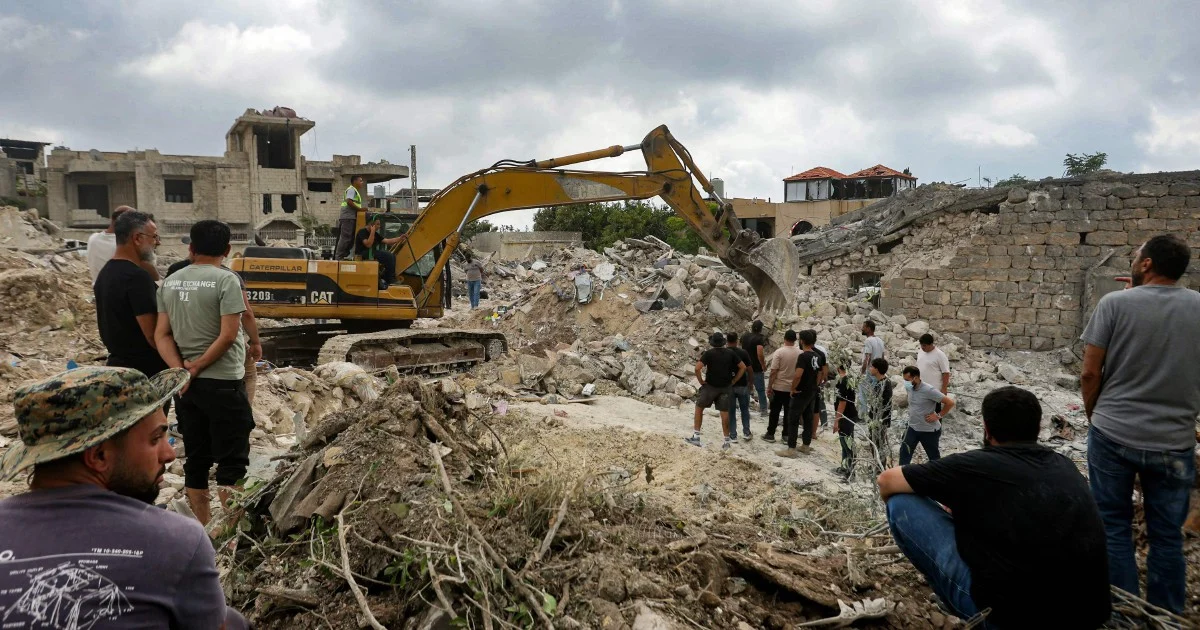
Hezbollah's leadership has delivered a stark rejection of Israeli plans to establish a security buffer zone in Lebanon's southern territories, marking a significant hardening of positions as ceasefire negotiations face mounting obstacles. The Iranian-backed militant group's chief Naim Qassem made his position unambiguous on Sunday, emphasising that his organisation will not tolerate any Israeli military footprint within Lebanese borders under any circumstances.
This forceful rebuttal follows recent comments by Israeli Prime Minister Benjamin Netanyahu, who declared that his country's military presence in southern Lebanon would persist for an indefinite period, contingent upon Israel's assessment of its security requirements. Netanyahu's remarks, which suggested Israeli forces could maintain their position regardless of international pressure or agreed timelines, have set off alarm bells among regional observers and Lebanese stakeholders already exhausted by nearly two decades of instability.
The deepening dispute over territorial control and military presence encapsulates the fundamental incompatibility between Israeli security demands and Lebanese sovereignty concerns. For Israel, a demilitarised buffer zone in southern Lebanon represents a critical strategic objective to prevent Hezbollah from reconstructing its military infrastructure and launching attacks across the border. From Hezbollah's perspective, however, any such arrangement would amount to a surrender of Lebanese territorial integrity and a humiliating acknowledgment of Israeli dominance over Lebanese affairs.
The statement from Qassem carries particular weight given Hezbollah's status as a significant military and political force within Lebanon. Unlike many international organisations, Hezbollah maintains deep roots in Lebanese society and commands substantial popular support among certain constituencies, making it far more than a marginal fringe group. This means that any ceasefire arrangement that fails to address Hezbollah's core objections is unlikely to hold, regardless of formal agreements struck between governments.
For Malaysia and Southeast Asian nations observing these developments, the escalating rhetoric underscores how easily Middle Eastern conflicts can destabilise the broader region. The Israel-Lebanon tensions directly influence shipping routes through the Red Sea and impact global energy markets, with ramifications felt acutely by import-dependent economies across Southeast Asia. Malaysia's significant trade exposure to the Middle East and dependence on uninterrupted maritime commerce make regional peace essential to economic stability.
The timing of this confrontation is particularly fraught, as international mediators have been attempting to broker a lasting ceasefire between Israeli forces and Hezbollah following months of intense cross-border violence. The failure to achieve a comprehensive settlement that addresses both Israeli security needs and Lebanese territorial concerns would virtually guarantee a resumption of hostilities, potentially triggering a wider regional conflagration. Previous rounds of Israeli-Hezbollah conflicts have drawn in various state and non-state actors, raising the spectre of a much larger confrontation.
Netanyahu's insistence on an indefinite Israeli military presence reflects deep scepticism within Israeli security establishments regarding Hezbollah's willingness to respect any territorial arrangement. Israeli officials have repeatedly pointed to Hezbollah's history of rearming and reconstituting its capabilities after previous conflicts, suggesting that without continuous Israeli oversight and military presence, the group would simply rebuild its arsenal. From this perspective, an Israeli security zone functions as a necessary insurance policy against future threats.
Hezbollah's categorical rejection of such arrangements stems from a fundamentally different reading of the conflict's origins and resolution. The organisation frames Israeli military presence as the root cause of insecurity rather than its solution, arguing that genuine peace requires Israeli withdrawal and the restoration of full Lebanese government control over border territories. This ideological divide appears nearly unbridgeable through conventional diplomatic channels, as both sides view the other's fundamental position as unacceptable.
The political complications extend beyond military considerations into questions of Lebanese national pride and sovereignty. Many Lebanese across the political spectrum, regardless of their views on Hezbollah, resist any arrangement that would place parts of their country under foreign military control or administration. This nationalist sentiment creates significant political constraints for any Lebanese government attempting to negotiate with Israel, as any leader seen as compromising on territorial integrity faces accusations of betrayal.
Regional powers with strategic interests in Lebanon, including Iran and Syria, will undoubtedly view Israel's proposed security zone with alarm. Iran, which provides substantial support to Hezbollah, has consistently opposed what it characterises as Israeli territorial expansion and domination over its allies. Syria, sharing a border with Lebanon and hosting significant Hezbollah operations, similarly opposes any arrangement that would entrench Israeli military presence in the region.
The divergence between Netanyahu's position and Qassem's rejection suggests that any ceasefire agreement will face substantial implementation challenges. Even if international mediators succeed in arranging a temporary halt to active hostilities, the underlying disputes over military presence, territorial control, and security arrangements remain unresolved. Without progress on these fundamental issues, any ceasefire risks becoming merely a pause in a much longer conflict.
Looking forward, the trajectory of these negotiations will likely determine whether Lebanon can stabilise and rebuild, or whether it descends further into instability. The stakes extend well beyond Lebanon itself, affecting regional security dynamics, international commerce, and the broader Middle Eastern balance of power. For Southeast Asian observers, the outcome will shape energy prices, shipping security, and the broader geopolitical environment in which smaller nations must navigate.