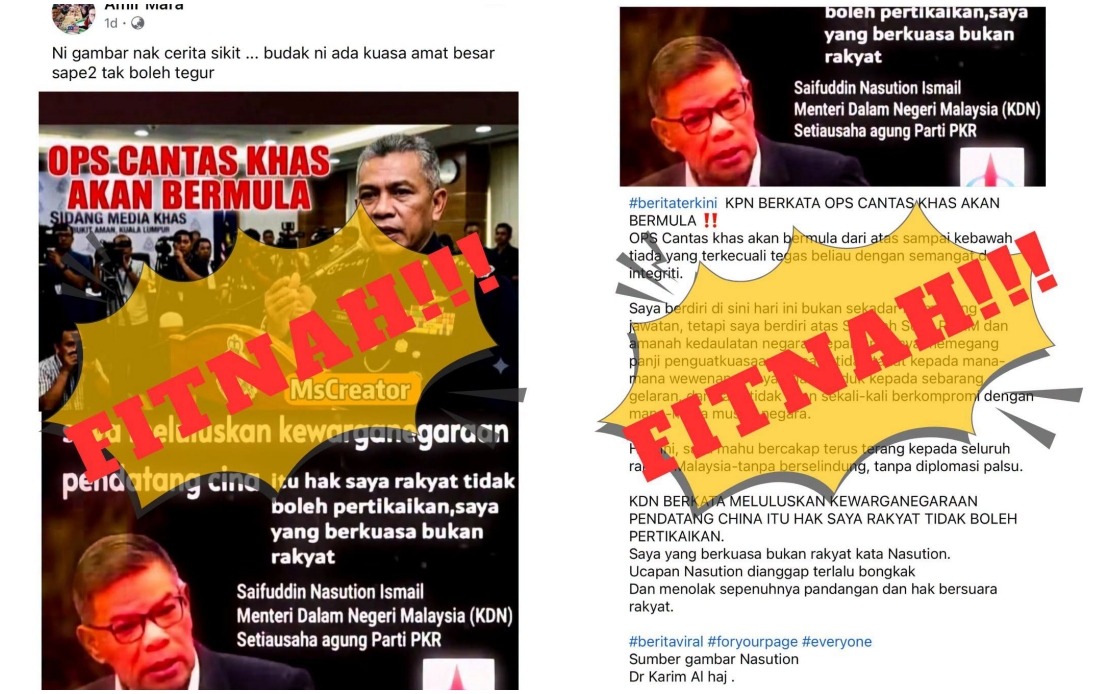
Datuk Seri Saifuddin Nasution Ismail, Malaysia's Home Minister, has categorically rejected allegations that his ministry granted citizenship to large numbers of foreign nationals, addressing accusations that have circulated repeatedly across social media platforms. The minister emphasised that he has refuted these claims multiple times with supporting evidence and official data, yet certain groups continue to resurrect and recycle debunked narratives designed to mislead the public. Speaking through his official social media channels in Putrajaya on August 19, Saifuddin Nasution expressed frustration with what he characterised as a deliberate campaign to spread misinformation about citizenship procedures and decisions made by the Home Ministry.
The controversy centres on suggestions that approximately 1.2 million Chinese nationals have remained in Malaysia following alleged bulk naturalisation approvals. Multiple posters making these claims have gained traction online, particularly in messaging groups and social platforms where fact-checking mechanisms are limited. This phenomenon reflects a broader challenge facing Malaysian authorities in combating disinformation, particularly on sensitive matters touching on citizenship, nationality and demographic composition—subjects that carry significant weight in the country's multicultural context.
Saifuddin Nasution's statement underscores the ministry's position that the dissemination of unverified allegations about citizenship practices causes far more damage than simple reputational harm to individuals or institutions. Rather, such claims erode public trust in state agencies responsible for managing national security and immigration matters, consequences that carry implications for Malaysia's social stability and institutional credibility. When citizens lose confidence in the integrity of citizenship processes, it can trigger broader anxieties about governance and institutional effectiveness.
The minister's remarks highlight a recurring pattern in Malaysian public discourse where sensitive historical narratives become recycled through digital channels, often stripped of context or updated with contemporary footage designed to lend false credibility to outdated claims. This technique proves particularly effective when circulated among networks already predisposed to distrust official narratives, creating echo chambers that amplify misinformation regardless of official corrections. The persistence of these claims despite multiple government clarifications demonstrates the difficulty authorities face in managing the information environment.
Beyond institutional reputation, Saifuddin Nasution identified the potential for such narratives to incite communal tensions and ethnic discord. Claims involving large-scale naturalisation of particular ethnic groups can inflame existing sensitivities around demographic change, citizenship rights and belonging—issues that remain central to Malaysian political identity. By framing the problem this way, the minister appealed to broader social stability concerns, not merely bureaucratic accuracy.
The Home Ministry has previously documented its position through official statements and media releases providing factual details about citizenship procedures, approval rates and relevant statistics. These records represent the ministry's attempt to establish an authoritative record backed by administrative documentation. However, the persistence of viral claims despite such documentation reveals the limitations of traditional government communication channels in an era dominated by algorithmic social media feeds and informal information networks.
Saifuddin Nasution's call for public responsibility regarding information consumption and sharing reflects growing awareness among Malaysian policymakers about the role ordinary citizens play in amplifying misinformation. Rather than positioning the public as passive victims of false narratives, the minister urged active verification habits, suggesting that Malaysians consult official sources before accepting or sharing claims about government actions. This approach places responsibility on information consumers to exercise critical judgment.
The minister's emphasis on distinguishing between facts and falsehoods carries particular significance in Southeast Asia, where government institutions in several countries face legitimacy challenges rooted in both historical grievances and contemporary disinformation campaigns. Malaysia's multicultural composition makes it especially vulnerable to narratives that weaponise demographic anxieties, creating conditions where misinformation can rapidly mobilise communities. The Home Ministry's defensive posture reflects recognition that institutional credibility on citizenship matters directly affects social cohesion.
Saifuddin Nasution also cautioned against the exploitation of sensitive issues for political advantage or social media engagement. This warning targets both politicians seeking to capitalise on public anxieties and ordinary users motivated by algorithmic incentives to share sensationalist content. The implicit suggestion is that some actors deliberately recycle discredited claims knowing they will generate engagement, regardless of veracity. By naming this dynamic, the minister attempted to shift the conversation toward ethical responsibility in public discourse.
The broader context reveals how Malaysia's immigration and citizenship frameworks remain subject to persistent scrutiny and competing narratives. The country's history of large-scale migration, its constitutional provisions regarding citizenship, and its complicated demographic politics create fertile ground for alternative explanations of current demographics. When official narratives conflict sharply with publicly circulating claims, segments of the population may default to the explanation that resonates most strongly with their existing worldview.
Moving forward, the Home Ministry faces the sustained challenge of communicating credibly about citizenship matters amid an information environment that privileges sensational claims over technical documentation. Merely repeating denials backed by data has proven insufficient to arrest the circulation of competing narratives. This suggests the need for more sophisticated communication strategies that address the underlying anxieties and uncertainties driving public receptiveness to such claims, rather than simply reasserting official positions.

