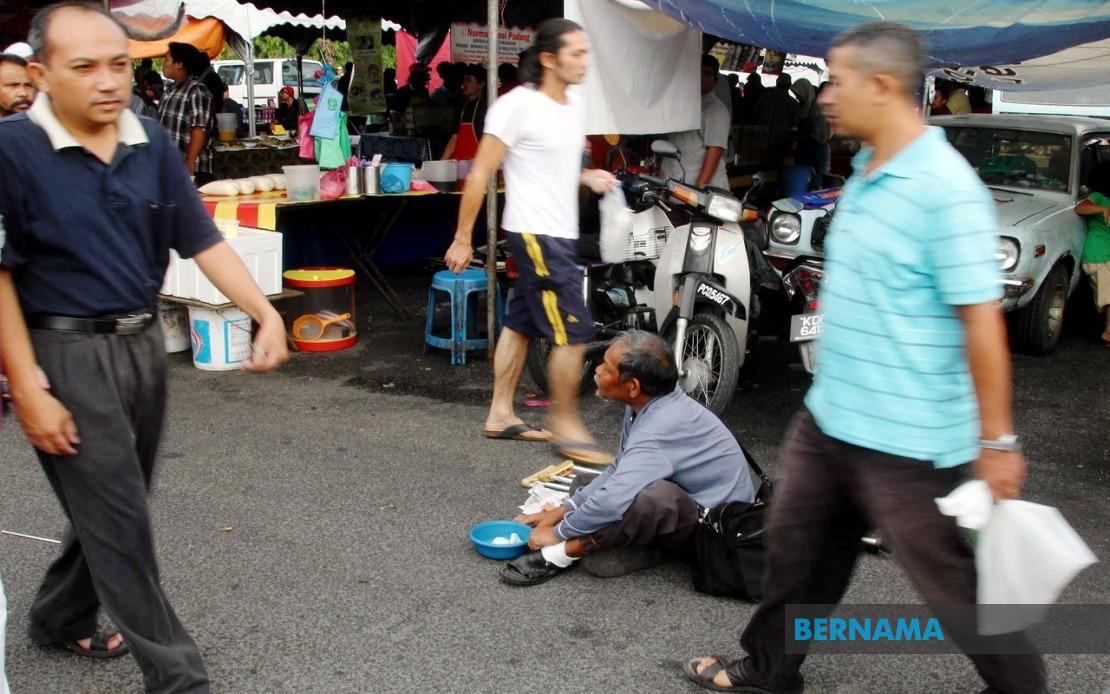
Malaysia's Home Ministry has raised alarm over begging activities involving foreign nationals, signalling that such operations may constitute organised crime involving syndicates that exploit vulnerable migrants and children. The disclosure came in response to parliamentary inquiries about the prevalence of street begging in prominent tourist zones around Kuala Lumpur, including Bukit Bintang and Changkat Bukit Bintang, where the practice has become increasingly visible to visitors and residents alike.
The ministry's enforcement arm, the Immigration Department, has intensified its crackdown on these activities. Between January 2025 and May 31 this year, immigration officers conducted 836 separate operations throughout Kuala Lumpur and its surrounding areas, screening a total of 10,609 individuals during these sweeps. The scale of the enforcement effort demonstrates the seriousness with which authorities are treating the matter, though the relatively modest number of begging-related detentions—just 42 foreigners out of 5,411 total foreign apprehensions—suggests that immigration offences broadly remain the primary concern.
Particularly troubling for policymakers is evidence of local involvement in perpetuating these networks. The ministry indicated that concurrent investigations are examining Malaysian nationals suspected of orchestrating begging operations, providing protection to foreign beggars, or profiting financially from their activities. This two-tier structure—foreign nationals performing the visible begging while local intermediaries operate behind the scenes—represents a classic syndicate model that complicates enforcement and suggests deeper criminal organisation than street-level poverty-driven activity.
The targeting of children in begging operations elevates the concern from mere public nuisance to child exploitation and trafficking territory. Kuala Lumpur's status as a regional tourist hub means that high-traffic areas such as Bukit Bintang and Jalan Alor become prime hunting grounds for syndicates seeking to maximise earnings through emotional manipulation of foreign visitors. The visibility of child beggars damages Malaysia's international reputation as a safe, well-governed destination while simultaneously reflecting a humanitarian crisis affecting vulnerable migrant families.
To combat these networks, the Home Ministry has broadened its institutional approach, recognising that immigration enforcement alone cannot address the problem. The Immigration Department now conducts joint operations with the Royal Malaysia Police and Kuala Lumpur City Hall, combining street-level enforcement with municipal oversight. This horizontal integration represents an acknowledgment that begging syndicates operate across multiple jurisdictional boundaries and require coordinated response mechanisms rather than siloed agency action.
Intelligence gathering has been elevated as a strategic priority. The ministry emphasised that improved data sharing and analytical capacity among enforcement agencies now focus specifically on identifying syndicate networks, understanding their operational methods, and pinpointing geographical hotspots where begging concentrates. This intelligence-led approach, rather than reactive enforcement, potentially offers better prospects for disrupting organised activities before they victimise additional migrants.
The KL Strike Force team represents a concentrated institutional response, bringing together the Immigration Department, Royal Malaysia Police, City Hall, the Department of Social Welfare, and other agencies under a unified command structure. This task force conducts regular and unscheduled raids at identified hotspots, coordinates intelligence sharing with the public, and maintains ongoing surveillance to prevent the rapid re-establishment of begging operations following enforcement actions. The multi-agency framework also enables social welfare authorities to identify vulnerable individuals, including potential trafficking victims, requiring protective intervention rather than purely punitive responses.
The broader policy context reveals the ministry's commitment to preserving Malaysia's international standing. Officials stressed that they will not tolerate breaches of law or exploitation that could damage the country's reputation and image. This framing acknowledges that foreign begging syndicates represent more than a domestic law enforcement issue; they constitute a reputational challenge in an intensely competitive regional tourism marketplace where perceptions of safety and order influence visitor flows and investment decisions.
Separately, the ministry addressed foreign worker quota applications, revealing that 314 employers received recommendations out of 1,919 applications submitted during a special extension period from January 19 to March 31 this year. This special application window was established to assist employers who missed the original December 31, 2025 deadline for securing foreign worker quotas under that year's ceiling. The modest approval rate—approximately 16 percent—underscores the restrictive foreign worker policy framework and suggests significant unmet demand for migrant labour in the Malaysian economy, a backdrop that indirectly contextualises why vulnerable foreign nationals may turn to informal economic activities including begging.
These approved quota recommendations are currently awaiting deliberation by the Department of Labour Peninsular Malaysia, which must grant initial approval under the Employment Act 1955 before employers can formally engage foreign workers. The bureaucratic pipeline suggests that timely labour market adjustments remain constrained by administrative processes, potentially perpetuating the informal employment and exploitation that drive some foreign nationals toward street-based survival strategies.
For Malaysia specifically, the Home Ministry's intervention signals growing official concern that begging syndicates represent a form of transnational organised crime exploiting migration vulnerabilities. The enforcement intensity and multi-agency coordination demonstrate policy recognition that Kuala Lumpur's prominence as a regional business and tourism hub makes it an attractive operational base for criminal networks targeting migrants and street-based exploitation. Whether enforcement actions can dismantle these networks or merely disperse them to other Southeast Asian cities remains an open question, particularly given the underlying push factors driving migration and the structural inequalities that make begging economically rational for desperate individuals.

