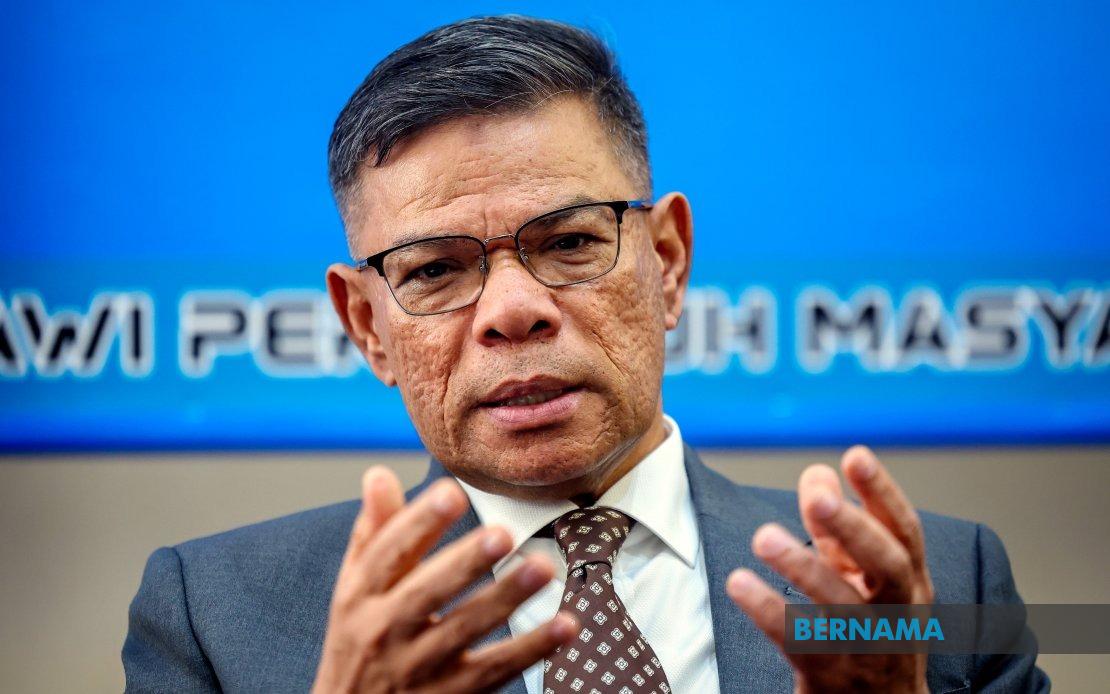
The Malaysian Home Ministry has committed to broadening its consultation process with key stakeholders before formally reintroducing proposed amendments to the Prisons Act, according to minister Datuk Seri Saifuddin Nasution Ismail. Speaking at the ministry's monthly assembly in Putrajaya on July 27, the minister acknowledged that sections of the public, civil society organisations, and parliamentary representatives have misinterpreted the legislative proposals as an attempt to grant blanket legal immunity to prison service personnel.
The clarification arrives amid ongoing debate over the scope and intent of the Prisons (Amendment) Bill 2026. Rather than shielding prison officers from all legal consequences, the ministry has stressed that the amendments are designed to provide targeted protections for officers who discharge their responsibilities in good faith and in accordance with the law. This distinction has proven critical to understanding the measure, particularly given widespread apprehension among advocacy groups and lawmakers who view expansive legal immunity for custodial staff with considerable scepticism.
The ministry previously announced a postponement of the bill's parliamentary tabling to enable more rigorous examination by a Parliamentary Special Select Committee. This decision reflects recognition that deeper scrutiny and public dialogue are necessary before the legislation proceeds through the legislative chamber. The extended timeline provides an opportunity to address legitimate concerns and to reshape public understanding of the proposals' actual parameters and safeguards.
Among the substantive proposals contained within the amendment package are provisions authorising the use of electronic monitoring systems to supervise designated prisoner movements, the formalisation of prison volunteer programmes to support inmate rehabilitation initiatives, and the aforementioned legal protections for officers performing duties consistently with statutory requirements. These elements represent a multifaceted approach to modernising prison administration while simultaneously addressing vulnerabilities in the current legal framework affecting custodial personnel.
Saifuddin Nasution emphasised that comparable protective provisions already exist across numerous other Malaysian statutes, framing the Prisons Act modification as a matter of legislative consistency rather than exceptional treatment. The minister identified two core justifications for the reform: achieving alignment with parallel legislative protections elsewhere in the Malaysian statutory corpus, and definitively negating any suggestion that the government seeks to circumvent legal accountability for the prison service. This argument for consistency carries particular weight in jurisdictions where similar provisions are embedded in police, military, and civil defence legislation.
A concrete illustration of the impetus behind the amendment involves the case of a prison director who faced legal action following the execution of a court-ordered caning sentence on an inmate who subsequently died. In another instance documented by the ministry, prison officers confronted litigation despite medical examinations confirming natural causes in cases where inmates died in custody. These scenarios highlight genuine vulnerabilities experienced by prison personnel who perform their duties correctly yet find themselves entangled in litigation driven by circumstances beyond their operational control.
Crucially, the minister stressed that the proposed amendments would not extinguish legal accountability where negligence or statutory breaches occur. Prison officers would remain subject to criminal prosecution, civil liability, and administrative discipline in instances involving culpable conduct or violations of law or departmental protocol. The Taiping Prison incident investigated by the Human Rights Commission of Malaysia provides instructive precedent. That disturbance prompted investigation by the police, initiation of internal disciplinary proceedings, and subsequent legal action—demonstrating the multi-layered accountability mechanisms already operational within the prison system.
The ministry's position reflects an increasingly common challenge confronting custodial systems across the Asia-Pacific region. Prison officers operating in complex, sometimes volatile environments require operational certainty regarding legal exposure when acting appropriately. Simultaneously, maintaining robust oversight mechanisms protecting inmate rights and preventing abuse remains essential. The amendments attempt to navigate this tension by creating protected space for lawful conduct while preserving consequences for wrongdoing—a balance several regional governments are similarly attempting to achieve.
For Malaysian policymakers and the broader public, the extended consultation period offers an opportunity to examine whether the proposed framework adequately distinguishes between legitimate operational protection and inappropriate immunity. The engagement approach signalled by the Home Ministry suggests openness to refining the proposals based on stakeholder input, potentially including additional definitional clarity around the "good faith" standard or supplementary safeguards addressing rights defenders' concerns. Such modifications could substantially reshape perceptions of the amendments among sceptical constituencies.
The decision to broaden stakeholder engagement before retabling reflects recognition that legislative credibility depends on transparent deliberation and apparent responsiveness to legitimate concerns. For a region navigating complex questions about custodial reform, human rights protections, and operational effectiveness, Malaysia's approach—emphasising consultation, clarification, and iterative refinement—may establish useful precedent for balancing competing institutional interests while maintaining public confidence in the prison system's accountability structures.

