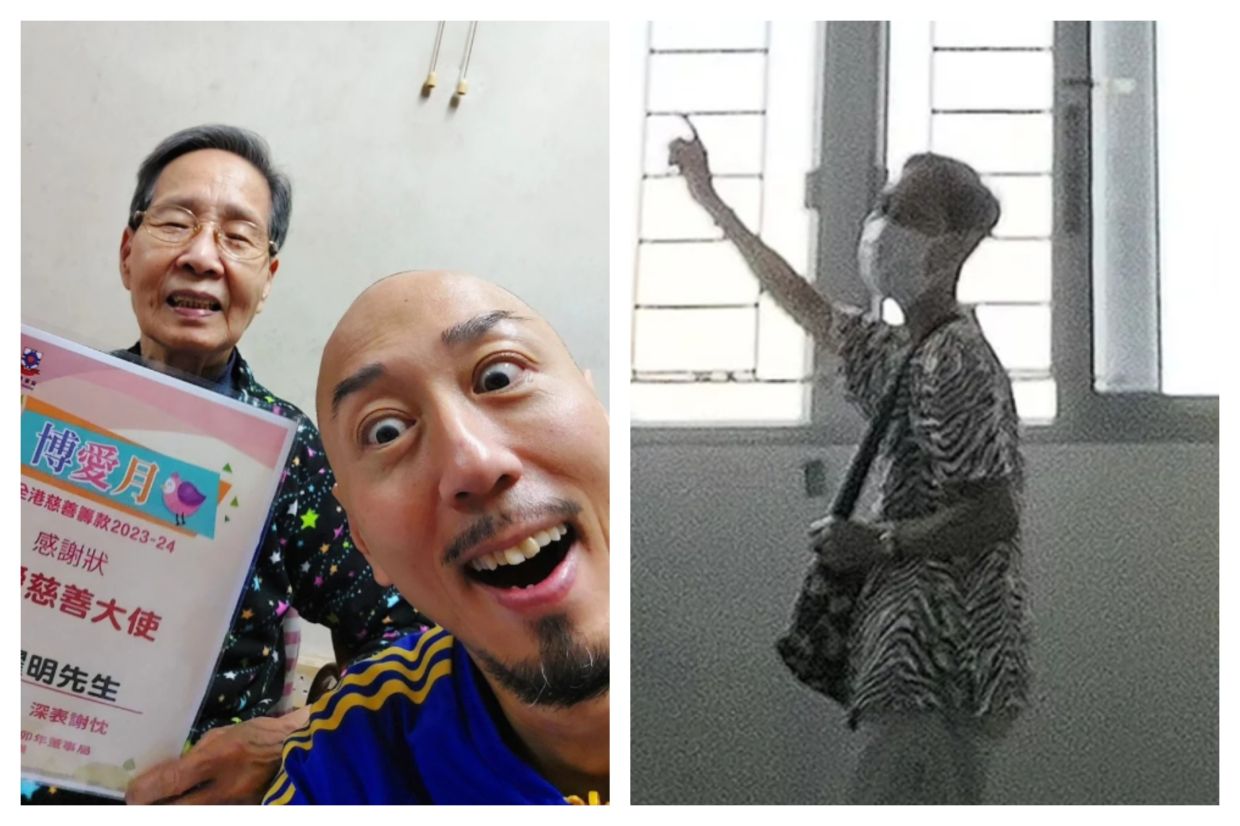
Hong Kong television actor Dai Yiu Ming has achieved a cherished personal milestone by purchasing his first residential property, dedicated entirely to providing comfortable accommodation for his elderly mother. The 54-year-old performer, who has cultivated a steady career in the city's entertainment industry over three decades, recently shared news of the acquisition through social media, posting photographs of the new residence and its views. His announcement resonated widely across online platforms, garnering warm messages of support from admirers who recognize the actor's longstanding commitment to his family.
Dai's mother, now in her ninth decade, has endured a remarkable life marked by extraordinary hardship and perseverance. Throughout most of her existence, she resided in cramped public housing apartments and makeshift shelters, experiencing conditions that shaped her resilience and character. The actor has previously recounted harrowing details about his mother's wartime survival, during which she lived in air-raid shelters and sustained herself by foraging for sweet potato leaves. These narratives underscore not merely the financial progress Dai has achieved, but the emotional significance his property purchase carries for both mother and son.
In his social media post, Dai acknowledged the substantial financial burden the purchase represented, openly stating that the transaction stretched his financial capacity considerably. Yet he expressed no regret, framing the acquisition as an essential gesture within the context of their limited time together. His written message conveyed philosophical reflection on mortality and family obligation: the actor contemplated how a single lifetime together might prove insufficient, and how reincarnation offers no guarantee of reunion. This perspective guided his decision to prioritize his mother's welfare and comfort during their years together, regardless of the economic sacrifice required.
The actor's words carefully balanced acknowledgment of his own professional limitations with acceptance of personal responsibility. Dai noted that his earnings had never permitted him to accumulate wealth rapidly, requiring instead a disciplined approach to saving and budgeting accumulated over many years. He expressed gratitude toward his mother for accepting this belated but sincere gift, framing his modest earning power not as failure but as context for understanding the magnitude of effort the home purchase represented. His tone conveyed genuine emotion without self-pity, focusing instead on gratitude for his mother's acceptance and wishes for her continued health and happiness.
The online response to Dai's announcement highlighted how his decision resonated deeply within Hong Kong's cultural context, where filial piety remains a valued ideal despite significant social and economic change. Commentators praised the actor's devotion, with social media users employing traditional concepts of family duty while encouraging him to maximize remaining time with his aging parent. The overwhelmingly positive reception suggested that Dai's achievement struck a chord beyond celebrity circles, touching on universal themes of intergenerational responsibility and sacrifice.
Dai's professional journey illuminates how perseverance and incremental career building can eventually yield such personal rewards. He began his entertainment career in 1991 through ATV's artiste training programme, making his initial television appearance in 1993. However, his early career proved disappointing; after approximately one year, he departed ATV feeling undervalued and unappreciated despite his dedication. This setback forced temporary career diversification, and Dai spent six months working as a computer repair technician, a practical profession that sustained him during industry uncertainty.
The actor's subsequent engagement with TVB from 1994 onward proved more fruitful, establishing the foundation for sustained professional longevity. Over subsequent decades, Dai built a reputation as a capable supporting performer, appearing consistently in dramatic productions and establishing himself as a reliable professional. His career trajectory exemplifies the entertainment industry's reality: most performers do not achieve superstardom, yet committed artists can construct stable livelihoods through steady work and professional reliability.
Personal circumstances significantly influenced Dai's career decisions and priorities. His father passed away more than a decade before the property purchase, creating a situation where Dai and his mother became entirely dependent upon one another for emotional and financial support. This changed family structure intensified the actor's sense of responsibility toward his aging parent and shaped his willingness to sacrifice personal ambition for family obligations.
Proof of this commitment emerged clearly in 2017 when Dai attempted to expand his professional opportunities by relocating to mainland China, where significant entertainment industry growth promised enhanced earning potential. Despite the apparent career benefits such a move might offer, Dai found himself unable to endure extended separation from his mother. The emotional toll of distance proved incompatible with his core values, and he returned to Hong Kong relatively quickly, prioritizing family presence over professional advancement. This decision exemplifies how personal relationships ultimately outweighed material considerations in shaping Dai's life choices.
For Southeast Asian audiences, Dai's story carries particular relevance within broader regional contexts. Throughout the region, demographic shifts have created situations where adult children increasingly bear responsibility for aging parents' welfare, often while managing their own financial constraints and career demands. Hong Kong's property market presents an extreme version of challenges common across wealthy Asian cities, where housing costs consume disproportionate portions of household income and where purchasing property represents a profound achievement rather than a routine milestone. Dai's disciplined approach to saving and his willingness to subordinate personal advancement to family duty resonate with values emphasized across Confucian-influenced societies.
The timing of Dai's property purchase also reflects changing patterns in entertainment industry compensation and career longevity. Streaming platforms, expanded television production, and international collaboration opportunities have created more diverse income streams for performers, potentially enabling individuals like Dai to accumulate savings previously unavailable to earlier generations of entertainment workers. Yet his achievement remains notable precisely because it required decades of careful financial management rather than sudden windfall success.
Dai's public acknowledgment of his accomplishment serves additional social functions beyond personal celebration. By openly discussing his modest earning capacity and the substantial effort required to achieve this milestone, he implicitly validated the experiences of countless others managing similar financial constraints. His refusal to present the property purchase as evidence of sudden wealth or exceptional fortune reflected honest communication about working-class economic reality, offering a counternarrative to celebrity narratives emphasizing effortless success.
Ultimately, Dai Yiu Ming's home purchase represents convergence of multiple themes relevant to contemporary Asian society: aging population demographics, intergenerational family obligation, housing market challenges, and the values guiding individual life choices. His achievement, modest by some measures yet profound by others, demonstrates how disciplined effort extended across decades can yield meaningful outcomes, particularly when directed toward values transcending material accumulation. For regional audiences observing their own aging parents and contemplating their own financial priorities, Dai's story offers both inspiration and honest reflection on the choices structuring ordinary lives.

