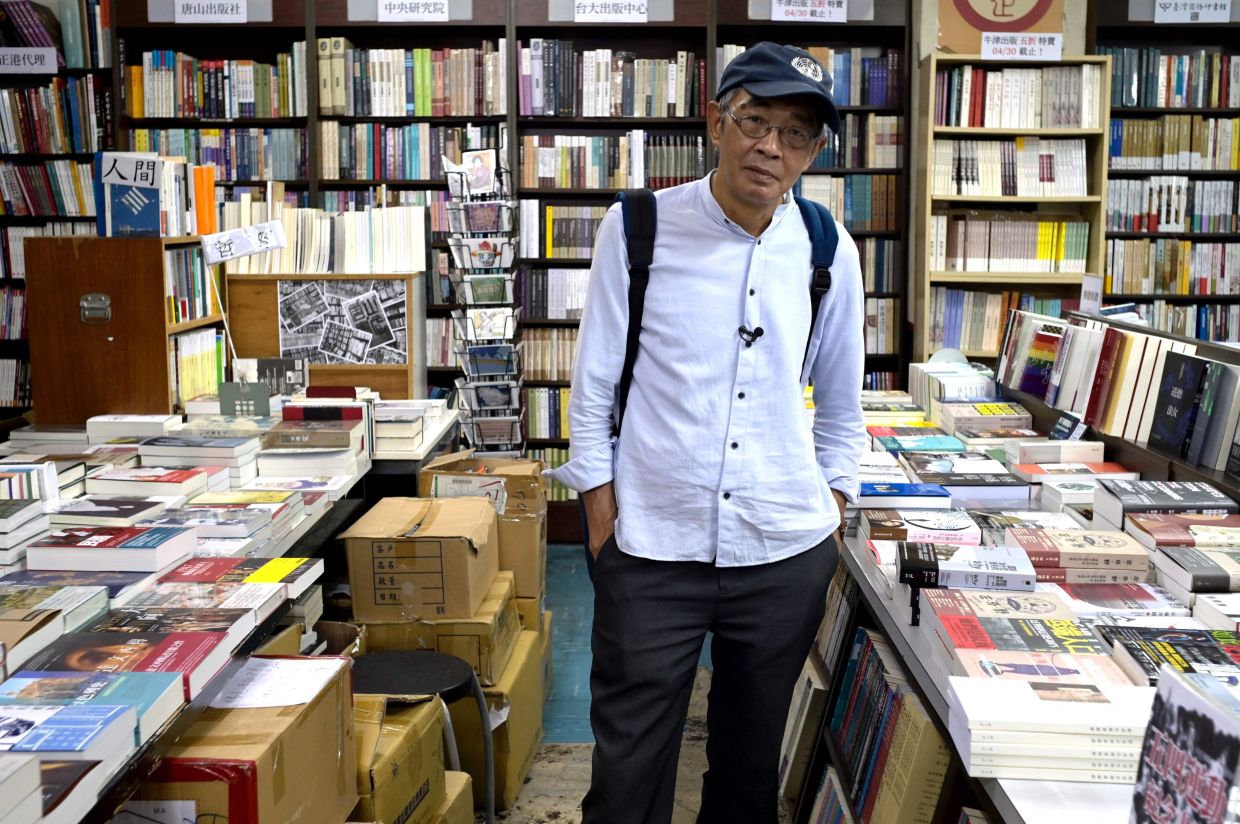
Lam Wing-kee, the Hong Kong bookseller whose abduction by Chinese authorities in 2015 became a watershed moment in debates over freedom and Beijing's grip on the territory, has died in Taiwan at the age of 70. The Central News Agency of Taiwan reported his death following a cancer relapse that saw him admitted to MacKay Memorial Hospital in Taipei earlier this week. He slipped into a coma on Wednesday and passed away on Thursday evening, according to the agency, which did not specify the exact medical cause beyond the recurrence of his earlier malignancy.
As manager of Causeway Bay Books, a Hong Kong bookstore that specialised in publications unavailable on mainland China—including titles alleging to expose secrets about the personal lives and scandals of senior Chinese leaders—Lam became the public face of a coordinated operation that shook confidence in Hong Kong's autonomy. His story resonated far beyond Hong Kong's borders because it appeared to confirm fears that Beijing was willing to extend its security apparatus into the territory despite international agreements guaranteeing Hong Kong's separate legal system and freedoms.
Lam was one of five people connected to Causeway Bay Books who vanished in the final months of 2015 under deeply troubling circumstances. The coordinated nature of the disappearances, coupled with subsequent revelations about their treatment, suggested a deliberate targeting of individuals involved in publishing material deemed sensitive by mainland authorities. Among the five was Gui Minhai, a publisher and part-owner of the bookstore, who disappeared while staying at his holiday property in Thailand. Gui was later sentenced to ten years imprisonment in China in 2020 on charges of illegally transmitting intelligence abroad, an outcome that underscored the reach and determination of Beijing's security apparatus.
What distinguished Lam's experience was his willingness to speak publicly about his ordeal, defying the official narrative that Beijing and Hong Kong authorities sought to impose. In 2016, he delivered a detailed account at a heavily attended news conference in Hong Kong that directly contradicted state claims about what had transpired. According to Lam's testimony, plainclothes officers detained him after he crossed from Hong Kong into Shenzhen in October 2015. He described a harrowing 13-hour train journey during which he was blindfolded, followed by five months of confinement in a room where he was placed under constant watch by rotating pairs of guards. He further alleged that he was coerced into appearing on Chinese television to confess to offences, a common tactic employed by Beijing to discredit dissidents and extract public validation of accusations.
Following his release, Lam relocated to Taiwan in 2019, citing legitimate apprehensions about potential legal proceedings that might be initiated against him under Hong Kong's evolving legal framework. The decision reflected the deteriorating atmosphere for people associated with sensitive publishing and dissent. In 2020, he reopened Causeway Bay Books in Taipei under the same name, establishing a foothold for the bookstore's operations outside the reach of Chinese jurisdiction. However, his health challenges mounted in subsequent years, and last month he disclosed to the Central News Agency that he had temporarily shuttered the Taipei location due to his medical condition, expressing uncertainty about when normal operations might resume.
Taiwan's President Lai Ching-te acknowledged Lam's passing through a Facebook statement, characterising his death as profoundly regrettable while emphasising the enduring significance of his legacy. Lai noted that Lam, through his quiet yet resolute actions as an ordinary bookstore worker, had demonstrated to the world the profound value of freedom and had underscored the necessity of defending democratic systems across generations. The presidential message positioned Lam's struggle as emblematic of larger questions about liberty and governance that extend beyond Hong Kong to encompass Taiwan's own circumstances and the broader regional contest between authoritarian and democratic systems.
The evolution of Hong Kong's political environment since Lam's detention has largely validated his concerns about the territory's trajectory. Following the massive pro-democracy street protests of 2019, Chinese and Hong Kong authorities have progressively dismantled the remaining space for dissent, implementing increasingly stringent measures to suppress opposition voices and activities. The 2024 national security law has provided a new legal instrument for such suppression, with enforcement actions demonstrating official commitment to eliminate publications and persons deemed threats to state security. In June of this year, Hong Kong police acting under this legislation arrested two individuals suspected of operating a bookstore that sold what authorities characterised as seditious materials and allegedly received financial backing from foreign political entities.
Lam's trajectory from successful Hong Kong businessman to exile in Taiwan exemplifies the difficult choices faced by many in Hong Kong who found themselves unable to reconcile their professional or personal convictions with the territory's transformed political conditions. His willingness to articulate publicly what had happened to him during his detention set him apart from many other detained individuals who remained silent, either through compulsion or pragmatic calculation. By speaking out, he provided the international community with documented testimony about detention practices and provided Hong Kong's remaining free press with a concrete human narrative to illustrate abstract threats to civil liberties.
The significance of Lam's passing extends to what his life and death symbolise about the broader regional implications of Beijing's approach to security and governance. For Malaysia and other Southeast Asian nations grappling with questions about how to balance national security concerns with protection of basic freedoms, Lam's experience offers a cautionary case study about the costs of unrestrained state power. His decision to flee Hong Kong and establish himself in Taiwan rather than risk further legal entanglement demonstrates how security crackdowns can prompt talented individuals to seek refuge elsewhere, representing a form of brain drain and loss of civil society capacity that ultimately weakens societies.
A mourner from Hong Kong, declining to provide his identity, paid tribute to Lam by placing a white rose outside the Taipei bookstore's entrance on Monday, a gesture heavy with symbolic meaning in the context of Hong Kong's democracy movement. The flower served as a quiet acknowledgement of Lam's importance to the struggle for freedom in Hong Kong and a recognition that his contributions to that cause extended beyond his individual suffering to encompass his role as a witness and symbol.

