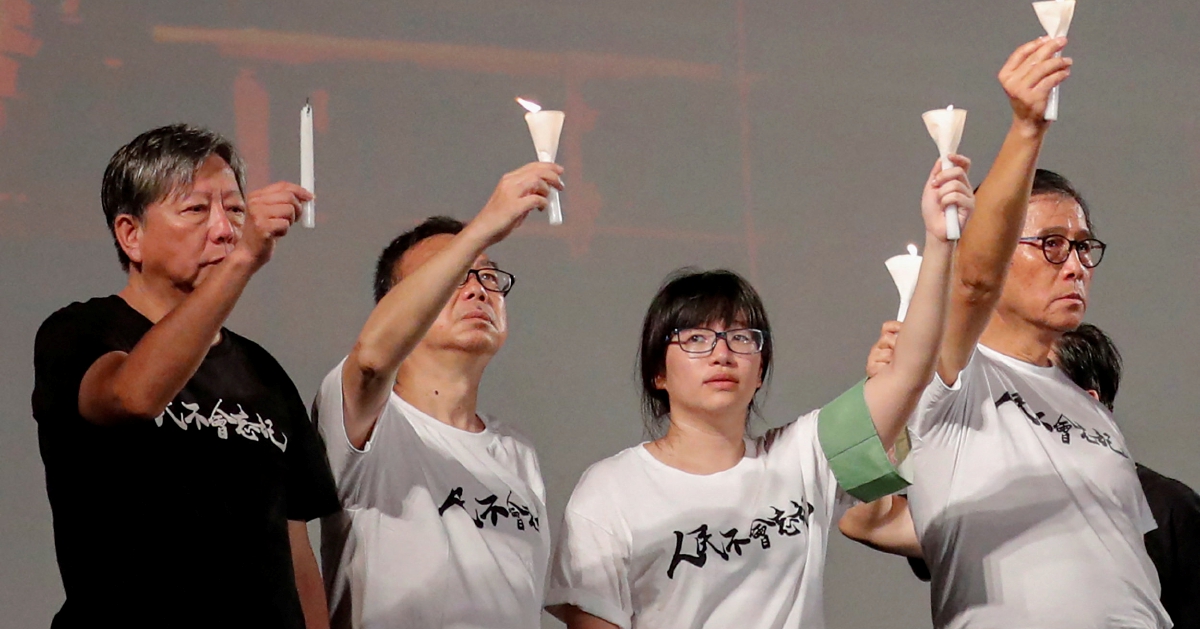
A Hong Kong court on Friday convicted two pro-democracy activists of inciting subversion for their central roles in organising annual candlelit vigils that have commemorated the deadly 1989 Tiananmen crackdown in Beijing. The guilty verdicts represent a further tightening of restrictions on political expression in Hong Kong, where such commemorative gatherings have long been a symbol of the territory's distinct identity and its tradition of public dissent.
The charges brought against the activists fall under Hong Kong's national security law, a sweeping piece of legislation imposed by Beijing in 2020. That law fundamentally redefined the legal landscape for political activism and speech in the former British colony, giving authorities expansive powers to prosecute conduct deemed to threaten state security. The convictions underscore how aggressively that framework has been applied to activities that were previously considered ordinary forms of civic participation and remembrance.
For Southeast Asian observers, the case carries particular weight in illustrating how Beijing's security apparatus operates within Hong Kong's judiciary. Malaysian readers should note that Hong Kong's legal system, once regarded as independent and robust, has been increasingly reshaped to serve national security imperatives as Beijing defines them. This transformation has implications for how regional democracies assess the autonomy of legal institutions under Chinese influence.
The Tiananmen vigils themselves have carried profound symbolic importance beyond their immediate historical commemoration. Each June, thousands of Hong Kongers traditionally gathered in Victoria Park to light candles and observe moments of silence for those who died when Chinese military forces suppressed pro-democracy protests. These gatherings represented more than historical remembrance; they were expressions of Hong Kong's separate political consciousness and its citizens' insistence on preserving memory of events that remain officially taboo on mainland China.
Under the national security law, however, activities once considered benign political expression have been recharacterised as potentially seditious. The law's broadly worded provisions concerning subversion allow prosecutors to build cases against those who organise assemblies deemed to undermine state authority or territorial integrity. The activists' conviction signals that even commemorative gatherings—events centred on remembrance rather than explicit calls for political change—can now be prosecuted as criminal incitement.
This development reflects a broader pattern of securitisation affecting Hong Kong's civil liberties landscape. The city's government has systematically dismantled the legal protections and procedural safeguards that once distinguished its common law system from mainland China's approach. Media outlets have faced pressure and ownership changes, opposition political parties have been dismantled through disqualifications, and educators have confronted scrutiny over classroom content. Each element of this transformation reinforces the others, creating a comprehensive reordering of permissible civic conduct.
For the international community, the conviction demonstrates how national security frameworks can be weaponised against routine democratic activities. International human rights organisations have repeatedly warned that the law's vague definitions enable prosecutors to target behaviour that poses no genuine threat to state security in conventional terms. The case of vigil organisers prosecuted under such provisions exemplifies this concern, as their activities involved solemn, candlelit remembrance rather than violent plots or explicit sedition.
The implications for Hong Kong's future are substantial. If annual commemorations can be prosecuted as subversion, the precedent severely constrains what forms of dissent remain legally permissible. The verdicts suggest that Hong Kong authorities will pursue active prosecutions against those who organise gatherings, even peaceful ones, that challenge the official narrative surrounding sensitive historical events. This will likely deter participation in such activities, effectively chilling public expression without formal bans.
From a Southeast Asian perspective, Hong Kong's trajectory offers cautionary lessons regarding the durability of legal institutions under pressure from centralised state security regimes. Malaysia and other regional democracies that value judicial independence and freedom of assembly should consider how such systems can be progressively reshaped through legislation presented as protective measures. The Hong Kong experience demonstrates that established legal traditions do not automatically resist such transformations once the underlying statutory framework shifts fundamentally.
The convictions also complicate Hong Kong's international standing and its role within global networks of civil society and commerce. Investors, academics, and activists have cited concerns about rule of law deterioration when assessing their presence in the territory. Each high-profile prosecution contributes to perceptions that Hong Kong's legal system now operates within parameters set by Beijing, undermining confidence in its autonomy.
Going forward, Hong Kong's annual June 4 remembrances will likely become increasingly clandestine or restricted, if they occur at all. The guilty verdicts establish legal precedent that may embolden further prosecutions of those who seek to publicly commemorate the 1989 crackdown. For Hong Kong residents and observers across Asia, the convictions represent a tangible narrowing of the political and expressive space that once distinguished the territory from mainland China, and they confirm that the national security law has become a principal tool for engineering that convergence.

