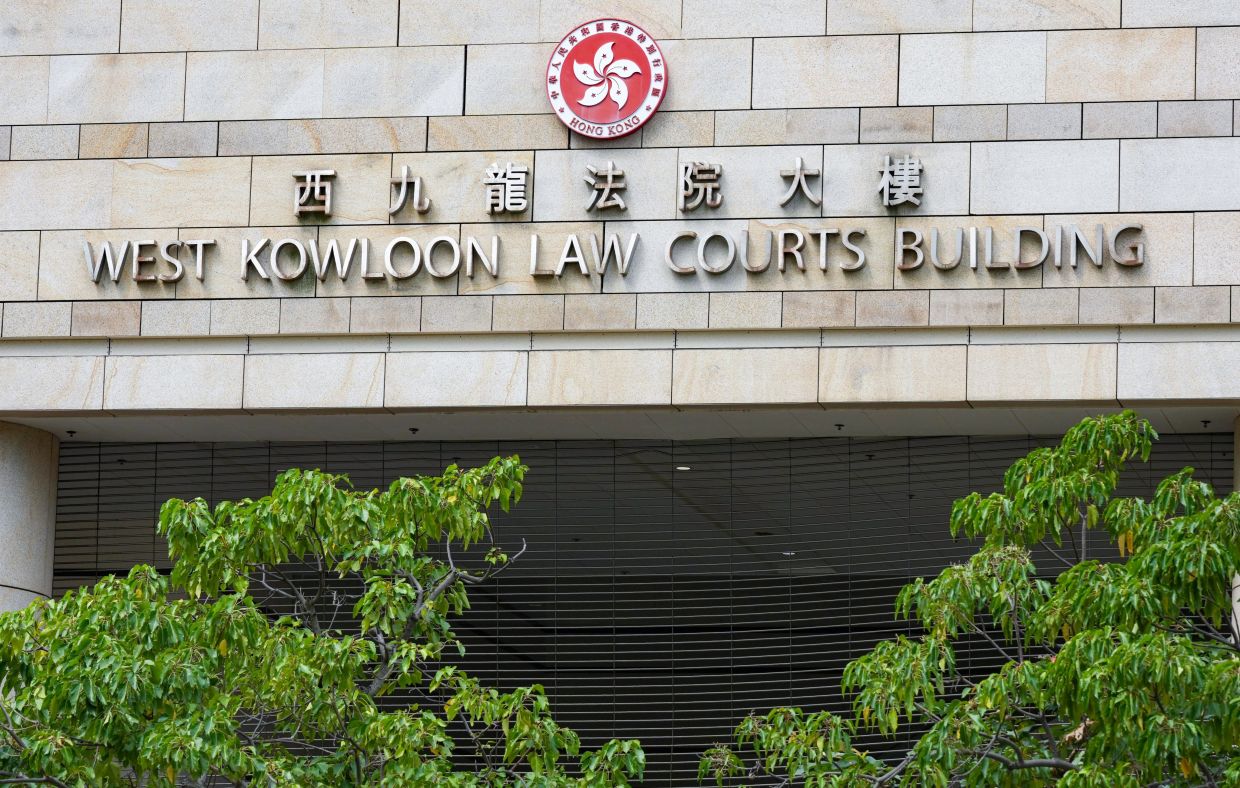
A 65-year-old repeat offender in Hong Kong has begun serving a four-month prison sentence after being convicted of groping a secondary school student aboard a public bus in an assault captured on video and widely distributed through social media. West Kowloon Court handed down the sentence on Tuesday against William Wu Yiu-shing, a former hardware salesman, for the indecent assault that took place on June 5 during daylight hours in the busy Mong Kok district.
The incident occurred as a KMB double-decker bus approached the intersection of Mong Kok Road and Sai Yeung Choi Street South shortly after noon. A pedestrian outside the vehicle recorded the 37-second assault on a mobile phone, capturing Wu, wearing a white tank top, reaching forward from his seat to touch the chest of the 17-year-old Form Three student sitting directly in front of him on the upper deck. Despite audible warnings shouted by onlookers on the street, Wu persisted with the assault as the bus continued moving away from the intersection.
Wu's criminal history significantly compounds the gravity of this case. He carried three prior convictions for indecent assault before committing this latest offence, establishing a troubling pattern of sexual misconduct spanning years. His guilty plea entered last month came as little surprise given the video evidence that left no ambiguity about his actions. The defendant later admitted to police that he had committed the assault to satisfy his sexual desires, offering no substantive justification for his behaviour.
The victim, a minor attending secondary school, described to investigators how she felt her armpit being touched for several seconds and observed Wu attempting to grab her. Overwhelmed by fear in the moment, she did not respond to the assault and instead rushed home immediately after leaving the bus. The trauma of being targeted by a stranger in a public space, compounded by the knowledge that the incident was recorded and shared on social media, represents a significant violation of her sense of safety and privacy.
Law enforcement responded swiftly to the case once the video gained traction online. Police arrested Wu at the Hong Kong-Zhuhai-Macau Bridge border checkpoint later that same day, June 5, as he attempted to return from Macau. His apprehension at this international crossing prevented his escape and ensured he faced immediate consequences for his actions.
During court proceedings, Wu's duty lawyer emphasised that his client had demonstrated frank acknowledgement of his wrongdoing and admitted to committing previous offences in similar circumstances. The legal representative further noted that Wu had expressed willingness to undergo psychological treatment as part of his rehabilitation programme, signalling at least superficial acceptance of the need for intervention. However, such statements carry limited weight given the defendant's established track record of reoffending despite previous convictions.
The sentencing of four months represents a meaningful, albeit not lengthy, custodial punishment. Under Hong Kong law, indecent assault carries a maximum penalty of ten years' imprisonment when prosecuted at higher court levels, though cases heard by magistrates carry a two-year cap. The magistrate's decision fell well short of even this reduced maximum, suggesting judicial consideration of factors such as guilty plea, age, and the relatively brief duration of the assault itself.
Wu has been held in remand custody since formal prosecution began on June 8, meaning he has already served approximately two months before sentencing. Accounting for time already served and assuming standard eligibility provisions, the offender is expected to be released within approximately one month, raising significant concerns about community safety and offender management protocols.
This case underscores troubling dynamics within Hong Kong's justice and rehabilitation systems. The leniency of sentencing for a repeat sex offender, combined with the brevity of his incarceration, raises questions about whether existing penalties adequately protect vulnerable populations and deter persistent offenders. The reliance on psychological treatment as a rehabilitative mechanism, while conceptually sound, requires meaningful implementation with robust monitoring to prevent further reoffending.
For Malaysia and other Southeast Asian jurisdictions observing this case, the Hong Kong precedent carries instructive lessons about sentencing approaches for sexual offences and the management of repeat offenders. The viral nature of the video—facilitated by social media's rapid dissemination—demonstrates how public awareness and documentation can bring perpetrators to justice when institutional systems might otherwise move slowly. Simultaneously, it highlights the secondary victimisation that occurs when assault footage circulates online without consent or context.
The incident also reflects broader concerns about sexual harassment and assault in public transit systems across the region. Women and children using buses, trains, and ferries remain disproportionately vulnerable to predatory behaviour. The case of William Wu Yiu-shing, with his established pattern of targeting young females in semi-public spaces, illustrates why stronger preventive measures—including improved surveillance, increased visible police presence, and public awareness campaigns—warrant urgent implementation across Hong Kong and neighbouring jurisdictions.
As Wu prepares for release within the coming weeks, the case will likely reignite debate about sentencing adequacy and offender reintegration. The question remains whether four months of imprisonment, combined with undefined psychological intervention, will genuinely rehabilitate a 65-year-old with three prior similar convictions or whether it merely delays inevitable reoffending.

