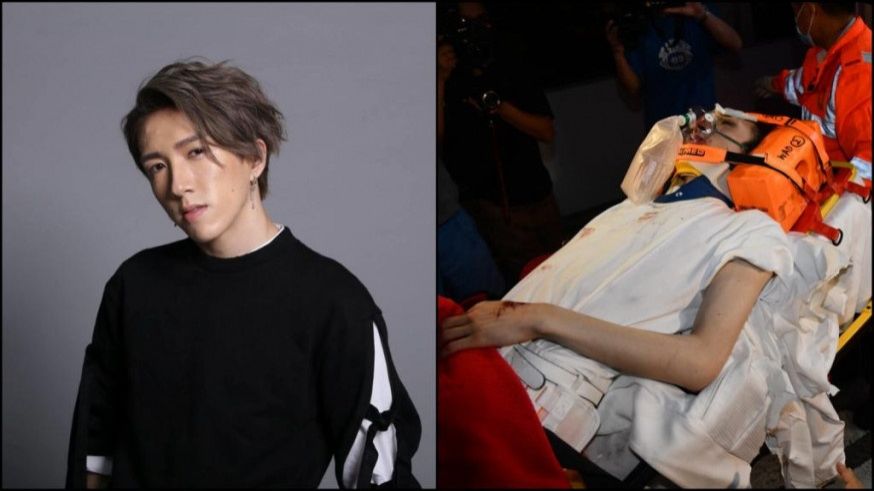
A Hong Kong district court has ordered Studiodanz to pay HK$6.29 million (approximately RM3.32 million) in damages to dancer Mo Li Kai-yin, who suffered catastrophic spinal injuries when a massive LED panel collapsed on stage during a Mirror concert in July 2022. The June 15 ruling represents one of the most substantial compensation awards for occupational injuries in Hong Kong's entertainment industry, reflecting the severity of Mo's condition and the lifelong consequences of the accident.
The incident occurred on July 28, 2022, at Hong Kong Coliseum during the fourth show of Mirror's planned 12-concert series. A four-by-four-meter LED screen fell from the ceiling, striking the 31-year-old performer directly. The impact caused catastrophic damage to his cervical spine, resulting in complete paralysis from the neck downward. Medical teams at Queen Elizabeth Hospital immediately diagnosed cervical spine dislocation and rushed him into emergency surgery, beginning what has become an ongoing journey of intensive treatment and rehabilitation across multiple institutions.
The district court's judgment was emphatic about the permanence of Mo's condition. Justices noted that he had suffered what they termed "catastrophic disabilities" alongside permanent total incapacity, determining that he would require constant, round-the-clock care for the remainder of his life. The court acknowledged that Mo has become entirely incapable of living independently or pursuing any semblance of his former adult life. This clinical assessment underscored why the compensation was awarded at maximum levels across multiple categories including permanent total incapacity, ongoing caregiving expenses, periodic payments, and medical treatment costs.
The financial award reflects the extraordinary demands of Mo's ongoing care requirements. The court determined that he needs three full-time caregivers to assist with all personal and daily living activities. This level of support—available 24 hours every day—will continue indefinitely, creating substantial long-term financial obligations. Beyond immediate care costs, the judgment covers projected medical expenses as Mo continues aggressive rehabilitation programs across Hong Kong and international treatment centres.
Mo's family has made tremendous personal sacrifices throughout his recovery. His father, Reverend Derek Li Shing-lam, stepped away from his pastoral position and returned from Canada to become his son's primary caregiver. He maintained this demanding role until his death on April 25, underscoring how profoundly the accident has affected the entire family unit. The compensation award now ensures that professional caregiving can continue, easing the burden on remaining family members while guaranteeing Mo receives consistent, specialist care.
Notably, Studiodanz did not participate in the trial proceedings, yet the court held the company fully responsible for the incident. Beyond the substantial damages award, the court ordered Studiodanz to pay interest on the compensation and cover all of Mo's legal costs. The company had previously faced regulatory penalties, including a HK$132,000 fine for violations of occupational safety regulations—a relatively minor punishment that many observers argue insufficient to deter similar negligence in entertainment venues.
Mo's career trajectory makes the loss particularly tragic. He discovered his passion for dance while attending university between 2015 and 2019, subsequently committing to performance as a full-time profession from 2019 onward. Before the accident, he had built a diverse career performing at major concerts, television programmes, advertisements, and music videos. He simultaneously taught dance at four different studios, including Studiodanz, balancing teaching commitments with active performance work. At just 31 years old, he was establishing himself as a respected figure in Hong Kong's entertainment and dance education sectors.
Despite the severity of his paralysis, Mo has demonstrated remarkable resilience through intensive rehabilitation using cutting-edge medical technologies. His treatment programme incorporates regenerative medicine approaches and implantable microstimulation devices designed to restore neural function. These advanced interventions have yielded modest but meaningful progress: Mo has regained some movement capacity in his right arm and recovered sensation in his bladder and bowel functions. A video he shared on Instagram in March 2024 demonstrated his ability to operate an electric wheelchair using his right hand—a significant achievement representing months of difficult rehabilitation work.
The case carries important implications for entertainment industry safety across Asia. Hong Kong's entertainment sector, like those throughout Southeast Asia, has historically prioritised spectacle and production value over rigorous safety protocols. The Mirror concert series was enormously popular, with massive production budgets supporting elaborate stage setups. Yet the catastrophic failure of basic safety systems—an LED panel somehow becoming unsecured and falling directly onto a performer—raises uncomfortable questions about whether profit-driven entertainment prioritises adequate safety inspections and maintenance procedures. The relatively modest HK$132,000 fine suggests regulatory consequences may be insufficiently stringent to motivate compliance.
For performers across Malaysian and Southeast Asian entertainment industries, Mo's case serves as a sobering reminder of workplace vulnerability. Unlike conventional office or industrial work, performance environments often feature complex technical systems, elevated structures, and compressed production timelines that can create safety blind spots. The compensation award, while substantial, cannot restore what Mo has lost—his career, his independence, and his health. Instead, it acknowledges the permanent harm and ensures he can access necessary care, a principle that should inform safety culture throughout regional entertainment sectors.
Mo's ongoing recovery demonstrates both the possibilities and limitations of modern medical intervention. While regenerative medicine and neural stimulation technologies offer hope, they cannot reverse the fundamental spinal cord damage. His rehabilitation programme, undoubtedly among the world's most advanced available, has restored limited function but leaves him permanently dependent on others for basic living needs. The compensation allows him to access such treatment, yet the award fundamentally represents society's recognition that some harms cannot truly be remedied, only managed with dignity and appropriate resources.