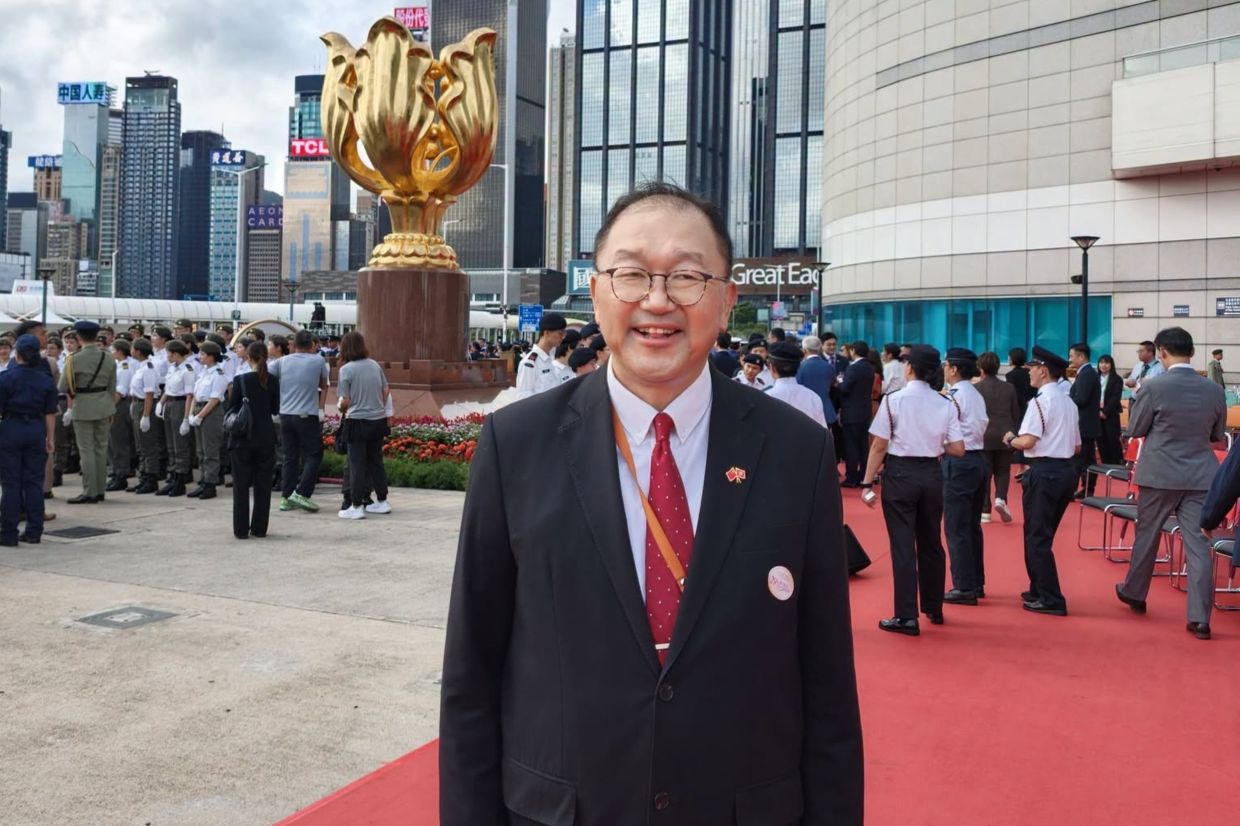
William Wong Kam-fai, a 66-year-old Hong Kong legislator, has become the first lawmaker to resign from the Legislative Council over a scandal in more than 26 years, submitting his resignation letter on Friday following his arrest on suspicion of drink-driving and leaving the scene of a traffic accident. The incident has reignited scrutiny over governance standards in the territory and sparked debate about accountability among lawmakers, particularly those serving in politically sensitive roles.
Wong's departure came swiftly after he lost control of his vehicle near a university staff residence late Monday evening, colliding with two parked cars in succession. According to accounts of the incident, the collision occurred at approximately 10:46pm when Wong's car struck a stationary vehicle, which was then pushed into a second parked car. The lawmaker's arrest followed shortly thereafter, and his position became increasingly untenable as news of the incident spread.
In his statement announcing his resignation, Wong expressed deep regret for the distress his actions had caused both the broader community and the institution itself. He framed his decision as a necessary step to prevent further disruption to the Legislative Council's functioning. However, Wong invoked the ongoing police investigation as justification for declining to elaborate further on the circumstances, a stance that has left many questions about the incident unanswered in the public domain.
Legislative Council President Starry Lee Wai-king formally acknowledged Wong's resignation, thanking him for his service to the body and his broader contributions to Hong Kong. The acceptance was procedurally straightforward, yet it carried symbolic weight given the rarity of such resignations under scandal in recent Hong Kong political history. The last legislator to step down over misconduct was Gary Cheng Kai-nam in 2000, who resigned shortly after election following revelations about undisclosed business ties and his eventual conviction on corruption charges.
Political analysts and observers have largely viewed Wong's immediate resignation as the prudent course of action, though their reasoning reflects deeper concerns about Hong Kong's political environment. Lau Siu-kai, affiliated with the Chinese Association of Hong Kong and Macau Studies think tank, characterised the resignation as minimising reputational damage not only to Wong personally but also to the legislative institution itself. More significantly, Lau noted that maintaining the position risked attracting criticism of the principle of "patriots administering Hong Kong," a politically sensitive concept in the territory's governance framework.
Wong's status extends beyond his Legco seat to include membership in the Chinese People's Political Consultative Conference, the National People's Congress advisory body. Political observers expect he will likely relinquish this position as well, though the mechanism and timing remain unclear. Lau suggested that central authorities would probably accept such a resignation given the serious nature of the incident, despite the general rarity of expelling CPPCC members. The connection between Wong's various political roles and the severity of the traffic incident appears to have created pressure for a comprehensive withdrawal from high-profile positions.
Tam Yiu-chung, Hong Kong's former sole representative to the National People's Congress Standing Committee, endorsed Wong's decision as appropriate given the exacting standards imposed on legislators. He emphasised that serious misconduct by someone holding such office undermines public confidence in governance institutions. Tam also provided practical perspective on the mechanics of Wong's departure: because Wong represented the Election Committee constituency rather than a functional constituency tied to specific sectors, his absence would not directly compromise representation of particular interest groups.
The question of whether the government will hold a by-election to fill Wong's vacant seat remains open. There is no legal requirement to conduct such an election, and financial considerations reportedly factor into the decision-making calculus. Constitutional affairs officials have previously indicated that budgetary prudence would be weighed when determining whether to hold a by-election. Precedent exists for leaving such seats vacant: after Stephen Wong Yuen-shan departed his Election Committee seat in late 2022 to become chief of a government think tank, his position remained unfilled for approximately three years.
The University of Hong Kong, where Wong held an academic position alongside his legislative duties, swiftly distanced itself from the incident and its employee. University authorities suspended Wong from administrative duties immediately upon learning of his arrest and the traffic incident. The institution's statement indicated deep concern about professional conduct and ethics among its staff, though university officials declined to comment further pending the outcome of police investigations. This institutional response underscores how the incident has cascading consequences across multiple sectors of Wong's professional life.
Wong's resignation reflects broader questions about accountability and conduct standards in Hong Kong's political system, particularly for those elevated to senior governance positions. The 26-year gap since the last scandal-driven resignation had created an appearance of stability, yet this incident demonstrates that institutional vulnerabilities persist. For regional observers monitoring Hong Kong governance, the episode illustrates how personal misconduct by legislators can trigger rapid institutional responses, even among those with substantial political credentials and party backing. The manner of Wong's departure and the political calculations underlying it reveal how sensitive Hong Kong remains to perceptions of good governance and elite accountability.

