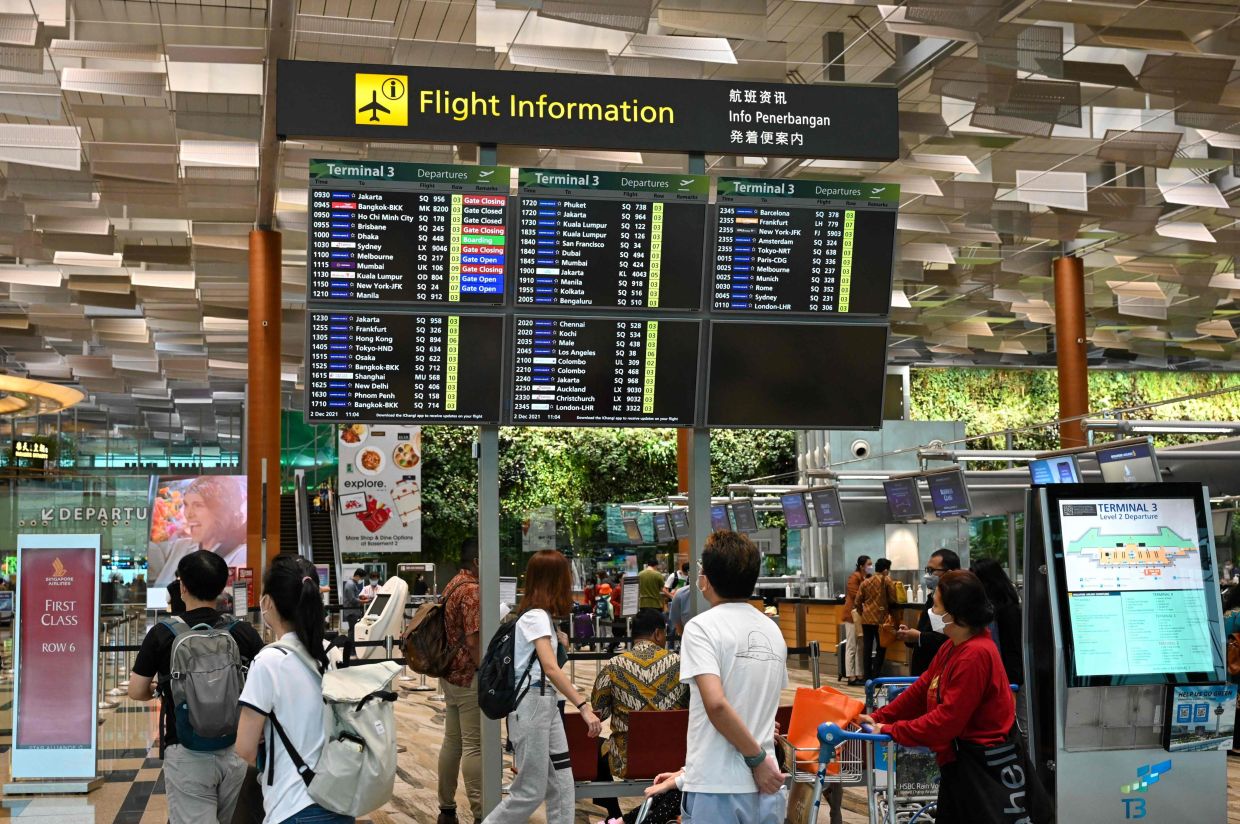
A Singapore court has handed down prison sentences to a Hong Kong mother and her adult son following a chaotic altercation at Changi Airport that left a bystander injured and resulted in an officer being bitten. Chan Sui-kwan, 65, received six months' imprisonment for voluntarily causing hurt with intent to deter a public servant from executing his duties, while her son Chan Wing-kwan, 42, was sentenced to 10 days for voluntarily causing hurt. The judicial proceedings concluded this week, more than a year after the incident unfolded at the airport's terminal 3 on June 30, 2024.
The confrontation originated from a misunderstanding that escalated rapidly within the airport terminal. Chan Wing-kwan became agitated after incorrectly perceiving that nearby bystanders were ridiculing him, prompting him to kick his mother in frustration. A 69-year-old bystander who observed the altercation and approached to assist the woman was met with resistance from her, who told him to stay away. Rather than de-escalating, the son then aggressively provoked the man to engage him in combat, demonstrating a pattern of aggressive behaviour that would characterise the entire incident.
The situation deteriorated further when the pair relocated to a different floor within the terminal building. The son struck his mother a second time with his foot, and when the concerned bystander attempted to contact authorities by telephone, the younger man launched himself towards him. A physical struggle ensued in which Chan Wing-kwan repeatedly struck the bystander with his fists, causing substantial injury including a head haematoma—a pooling of blood beneath the skin—along with abrasions to the knee and bruising across the fingers. The violence appeared to have been unchecked until police arrived on scene.
Initial police response to the incident was relatively measured. Officers who attended the scene documented the passports of both the mother and son, subsequently returning their travel documents to them. This early intervention, however, did not resolve the underlying disturbance. Later that same afternoon, police officers encountered the pair again within the departure hall, where the situation took a dramatic turn. The mother refused to surrender her passport when requested and began causing further disruption within the terminal, leading officers to place her under arrest.
Resistance to the arrest brought the confrontation with law enforcement into sharp focus. As officers moved to restrain and detain Chan Sui-kwan, she resisted forcefully, and in the course of this physical struggle, she bit a police officer on his right forearm. The bite penetrated the officer's clothing and left a one-centimetre mark along with additional bruising, constituting an assault on a public official performing his lawful duty—the charge that ultimately resulted in her lengthier sentence.
The judicial process that followed the incident was notably protracted and marked by procedural complications. Chan Sui-kwan was not brought before the courts until November 18, 2024, several months after the June incident, while her son faced charges on April 24, 2024. Both defendants failed to appear for a scheduled court hearing on July 22, 2024, prompting the issuance of an arrest warrant to secure their attendance. They were subsequently convicted on July 29 before receiving their sentences this week, indicating a legal process spanning approximately 17 months from initial incident to final sentencing.
The severity of the sentences reflects Singapore's approach to public order offences and assaults on law enforcement officers. The distinction between the mother's six-month term and the son's 10-day sentence underscores the courts' particular concern with the assault on the police officer, who was engaged in legitimate law enforcement activity when attacked. Singapore's criminal justice system treats assaults on public servants with considerable seriousness, viewing such acts as undermining the authority necessary for effective governance and public safety operations.
This incident carries implications for travel and public conduct at major regional transit hubs. Changi Airport, one of Asia-Pacific's premier aviation centres and a critical gateway for millions of passengers annually, depends on orderly passenger flow and compliance with airport regulations. Violent incidents at such facilities can disrupt operations, traumatise other travellers, and require significant police resources to manage, making the enforcement of conduct standards important for maintaining the airport's operational efficiency and safety reputation.
The case also highlights the consequences of escalation in conflict situations, particularly within crowded public spaces where bystander intervention can trigger unforeseen complications. The initial incident between mother and son might have remained a private family matter, but the intervention by a concerned bystander, though motivated by legitimate concern, precipitated a broader physical altercation that ultimately involved police and resulted in criminal convictions. For Malaysian travellers and others using Changi Airport regularly, the case serves as a reminder that airports maintain strict standards regarding passenger behaviour and that confrontations can swiftly result in legal consequences that extend far beyond the moment itself.

