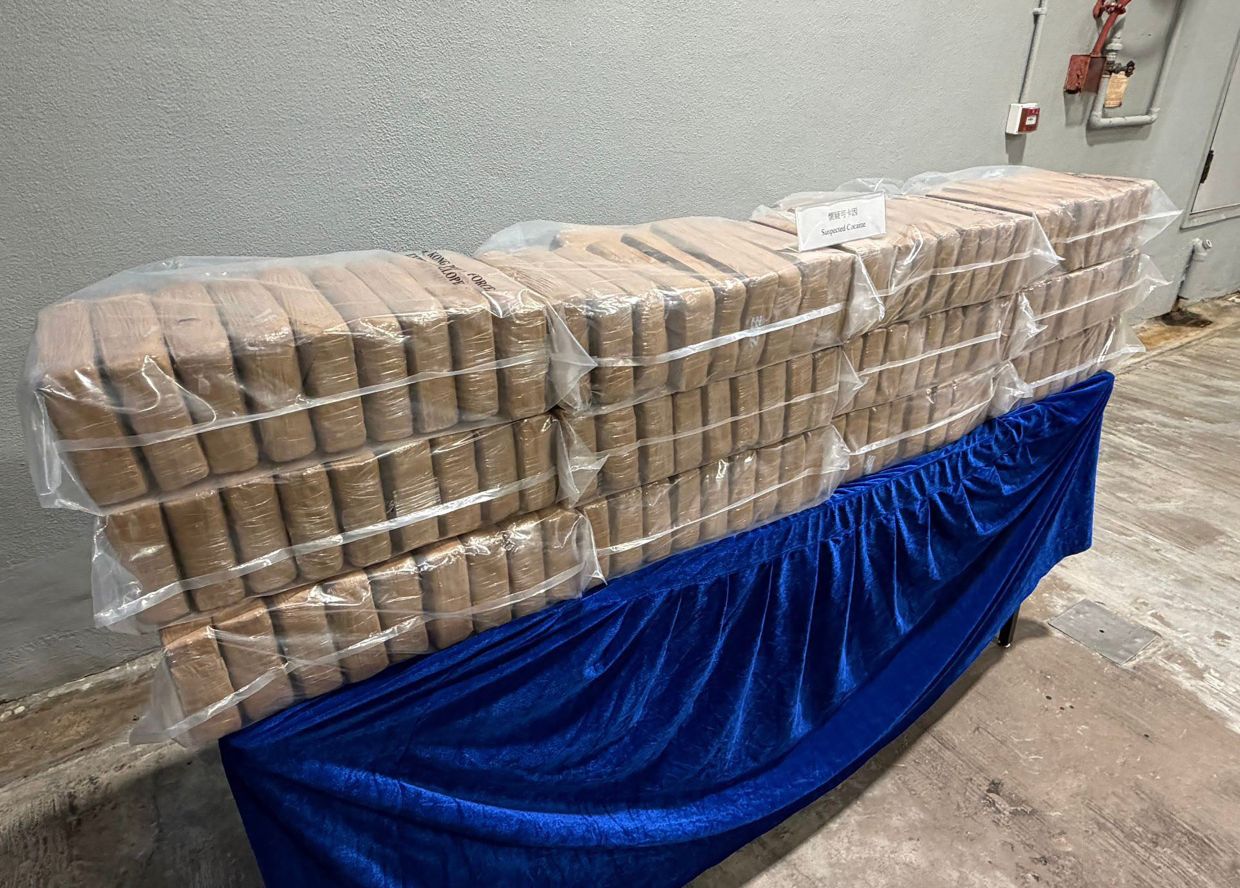
Hong Kong's narcotics authorities have dismantled what appears to be a sophisticated international cocaine trafficking operation, uncovering a total of 361 kilograms of the drug across two separate vessels moored in close proximity near Aberdeen Typhoon Shelter. The dual seizures, which occurred just days apart, represent the most significant cocaine trafficking case recorded by the territory's police in the past twelve months and underscore persistent vulnerabilities in Hong Kong's maritime security despite the city's reputation as a global financial hub and efficient customs authority.
The operation unfolded in two phases. Initially, on Friday, officers from the narcotics bureau discovered approximately 241 kilograms of cocaine packaged in brick form aboard a yacht in the Aberdeen Typhoon Shelter anchorage. Following this initial breakthrough, investigators remained focused on the area, suspecting additional drug caches might be hidden in nearby vessels. Their instinct proved correct when, just two days later on Sunday, authorities raided a second six-metre yacht moored close to the original target and recovered a further 120 kilograms of cocaine in similar brick packaging.
The combined street value of the seized narcotics reaches an estimated HK$270 million, a sum that underscores the enormous profits driving international drug trafficking networks through Southeast Asian waters. The similarity in packaging and weight specifications between the two hauls provided investigators with crucial evidence that both seizures originated from the same supply batch and trafficking network. This finding led police to conclude that the syndicate had deliberately distributed its inventory across multiple vessels as a risk-management strategy, reducing the potential loss from any single law enforcement interception while maximising storage capacity across the busy harbour.
The arrests following the raids reveal the operational structure of what authorities believe is an organised crime network. During the initial Friday operation, police detained a suspected kingpin of the drug syndicate along with two core members of the trafficking organisation. All three individuals claimed to be either unemployed or engaged in fishing activities, a common cover story used by those involved in maritime smuggling operations. On Monday, following the second raid, a 45-year-old local woman identified as the registered owner of the second yacht was arrested and taken into custody for questioning. Police characterised her as unemployed, suggesting she may have been acting as a nominal vessel owner to obscure the actual control of the boat by the trafficking syndicate.
The location itself—Aberdeen Typhoon Shelter—carries significant strategic importance for drug trafficking operations. The anchorage is a busy maritime zone frequented by fishing vessels, pleasure craft, and commercial shipping, providing natural cover for suspicious activity. The shelter's proximity to open waters makes it an ideal transshipment point for narcotics moving between international smuggling routes and onshore distribution networks. Hong Kong's role as a major international port, combined with its extensive harbour infrastructure and the volume of maritime traffic passing through its waters daily, creates both logistical advantages and enforcement challenges for law enforcement agencies.
The timing of these seizures comes amid broader regional concerns about drug trafficking through Southeast Asia. Hong Kong has increasingly become a transit hub and distribution centre for narcotics originating from South American production centres and destined for markets across East Asia, particularly mainland China. The cocaine trafficking route typically moves through multiple intermediaries and transshipment points, with maritime smuggling representing one of the most profitable and difficult-to-interdict methods. Vessels departing from Hong Kong waters can reach destinations across the region within days, making the territory a critical chokepoint for enforcement efforts.
For Malaysian readers and observers across Southeast Asia, the Hong Kong operation carries important implications. The sophistication displayed by the trafficking syndicate—including the use of multiple vessels, coordination between different operational elements, and apparent access to substantial cocaine supplies—suggests well-organised international networks with the resources to maintain operations despite law enforcement pressure. Malaysia's own ports and maritime zones face comparable vulnerabilities, particularly given the country's extensive coastline and busy shipping lanes. The methods employed by this Hong Kong-based syndicate, including the use of nominal vessel owners and distributed storage strategies, represent tactics that could easily be replicated in Malaysian waters.
The investigation also highlights the critical importance of sustained, intelligence-led enforcement operations. The fact that police maintained surveillance and focus on the Aberdeen area following the initial seizure, rather than declaring victory and reducing presence, directly resulted in the discovery of the second cache and additional arrests. This approach demands significant resources and coordination between different law enforcement agencies, a model that regional authorities including Malaysia's maritime enforcement bodies continue to develop and refine.
As authorities continue questioning the arrested individuals, the investigation will likely reveal more details about the supply chain, intended distribution networks, and financial structures underlying this trafficking operation. Understanding how the drugs entered Hong Kong's waters, which international networks organised the shipment, and where the final destinations lay will provide valuable intelligence for agencies throughout Southeast Asia working to disrupt cocaine trafficking routes.

