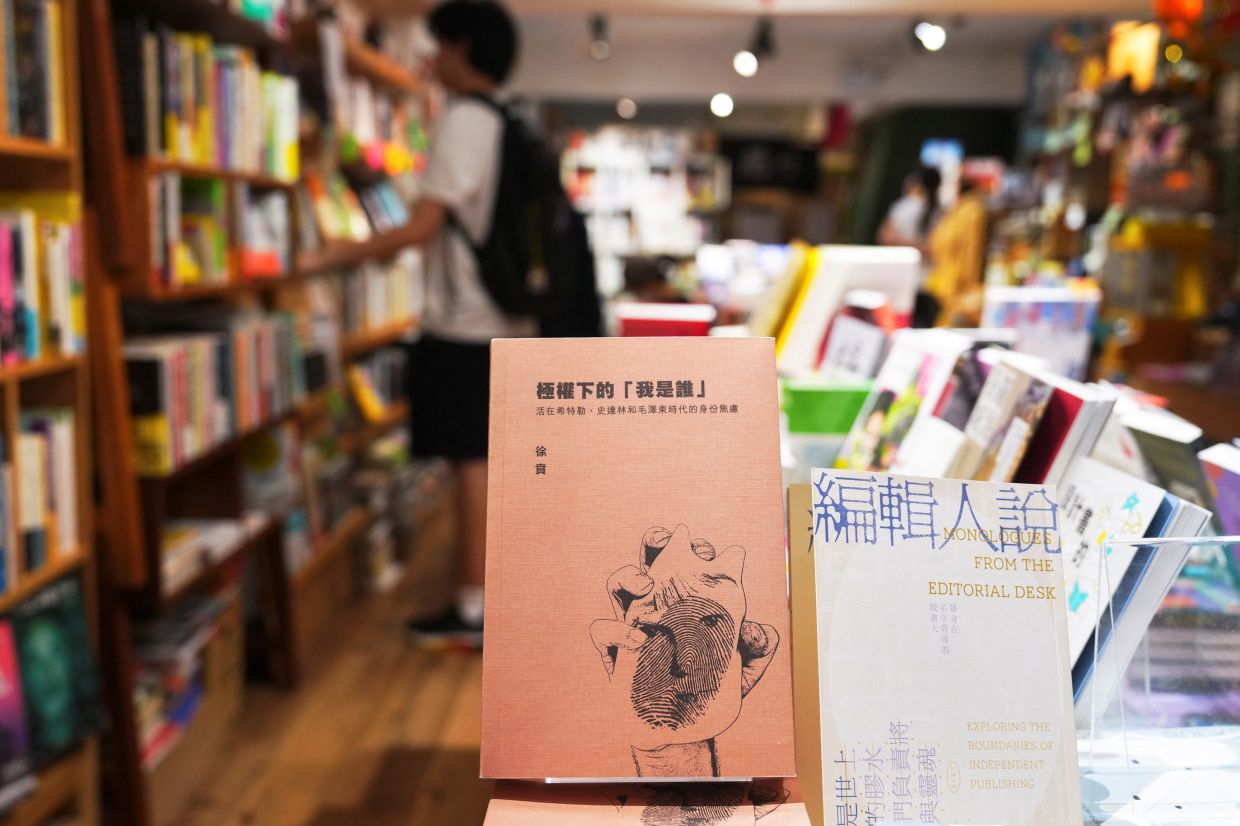
Hong Kong's top security official has issued a stark warning to booksellers that they bear responsibility for ensuring the titles they stock do not endanger national security, remarks that come on the heels of police arrests targeting independent bookstores and raising fresh alarm about the city's shrinking space for free expression.
Secretary for Security Chris Tang made the declaration at the legislative building on Thursday, a day after authorities raided two prominent independent bookstores and arrested five people suspected of displaying and distributing seditious materials. The operation represents the third major police crackdown on bookshop owners and staff within a four-month window, intensifying concerns among publishers, booksellers and civil society groups about the increasingly ambiguous boundaries of what constitutes prohibited content under Hong Kong's national security framework.
Tang's remarks drew particular attention for their sweeping nature. When addressing reporters, he framed booksellers' obligations in stark terms, comparing the responsibility to sell non-threatening books with the obligation food vendors face to ensure their products are safe and legal. The analogy, however, glosses over a critical distinction: while food safety standards are quantifiable and scientifically established, determining what constitutes a threat to national security operates in far murkier territory, a reality that has prompted widespread industry concern about self-censorship and regulatory unpredictability.
When pressed on whether authorities might publish an official list of banned books to provide clarity, Tang rejected the notion, stating that such a catalogue would undermine law enforcement efforts against titles specifically designed to harm the country. The position leaves booksellers in an untenable position—tasked with policing their own inventory against an undefined standard, unable to reference clear guidelines, and facing potential prosecution for misjudgement. This ambiguity has already prompted at least one major independent operator to announce closure. Have A Nice Stay, a bookshop founded by former journalists, said it would shut its doors on August 30, citing financial strain and what it described as an impossible-to-navigate red line governing acceptable content.
Wednesday's police operation targeted Have A Nice Stay and Greenfield Book Store, a longstanding fixture in Hong Kong's independent publishing ecosystem. Police statements alleged that materials seized from these locations stirred up hatred against the city's government, judiciary and law enforcement agencies—a vague formulation that critics argue could encompass legitimate political criticism and historical analysis. The five arrested individuals face suspicion of displaying and selling seditious publications, charges that carry potentially severe penalties under Hong Kong law.
The bookstore closures and arrests form part of a broader pattern of pressure on Hong Kong's independent publishing and bookselling sector. In March, authorities detained the owner and staff of Book Punch following similar allegations related to seditious publications. That operation notably included scrutiny of the biography of Jimmy Lai, the former pro-democracy media mogul currently imprisoned on national security charges and sentenced to 20 years. In June, police arrested two additional booksellers suspected of selling seditious materials and receiving funding from overseas political organisations, signalling that authorities are increasingly linking bookstore operations to foreign political influence.
The crackdown has not gone unnoticed internationally or in the broader Asia-Pacific region. Taiwan's President Lai Ching-te, who leads the self-governing democratic island that Beijing claims as its own, used his Facebook platform to highlight Hong Kong's deteriorating freedoms. He emphasised that independent bookstores serve a vital function in preserving free thought and intellectual pluralism, implicitly drawing contrasts with Taiwan's own more permissive publishing environment. The comment carries particular symbolic weight given the cross-strait tensions and Taiwan's positioning as a counterpoint to Hong Kong's trajectory.
Taiwan's Mainland Affairs Council has likewise raised concerns about the implications for the broader region. Deputy Minister Liang Wen-chieh reported that some Taiwanese publishers have begun self-censoring their content when preparing materials for Hong Kong book fairs, a practical manifestation of how enforcement uncertainty ripples through publishing supply chains across Asia. Publishers now face difficult calculations about what titles remain commercially and legally viable for distribution to Hong Kong retailers, a constraint that effectively extends Beijing-aligned regulations beyond Hong Kong's borders and into Taiwan's own editorial decision-making.
The situation underscores a fundamental tension at the heart of Hong Kong's post-2020 governance. National security legislation, introduced following the 2019 pro-democracy protests, grants authorities broad powers to investigate and prosecute activities deemed to threaten state security, subvert governmental authority or promote foreign interference. Yet the legislation provides limited guidance on where legitimate political discourse ends and criminal sedition begins. This interpretive flexibility allows enforcement agencies considerable discretion, but it simultaneously creates chilling effects as publishers, retailers and readers self-censor to avoid potential legal jeopardy.
For Malaysia and other Southeast Asian nations with their own complex relationships to political expression and press freedom, Hong Kong's experience offers cautionary lessons about how security legislation can metastasise beyond its stated targets. The bookstore crackdowns demonstrate how vague statutory language, combined with prosecutorial discretion and public pressure from officials, can transform entire sectors of civil society into de facto regulators of acceptable thought. When booksellers must themselves become arbiters of national security—without clear standards, legal recourse or meaningful judicial review—the practical effect is the outsourcing of censorship to private actors.
The closure of independent bookstores and the accumulating pressure on publishers represents more than a commercial challenge. It signals a narrowing of the intellectual commons, a space where ideas circulate, debate flourishes and citizens encounter perspectives beyond official narratives. As more bookstores close and publishers withdraw titles from Hong Kong circulation, the city's information ecosystem becomes increasingly constrained. This trajectory carries implications not merely for Hong Kong residents but for the broader regional ecosystem of ideas, capital flows and human talent that underpins Asia-Pacific publishing and intellectual life. The message implicit in these enforcement actions extends well beyond Hong Kong's borders: governments in the region are signalling their intent to shape not just what can be said, but what can be read.

