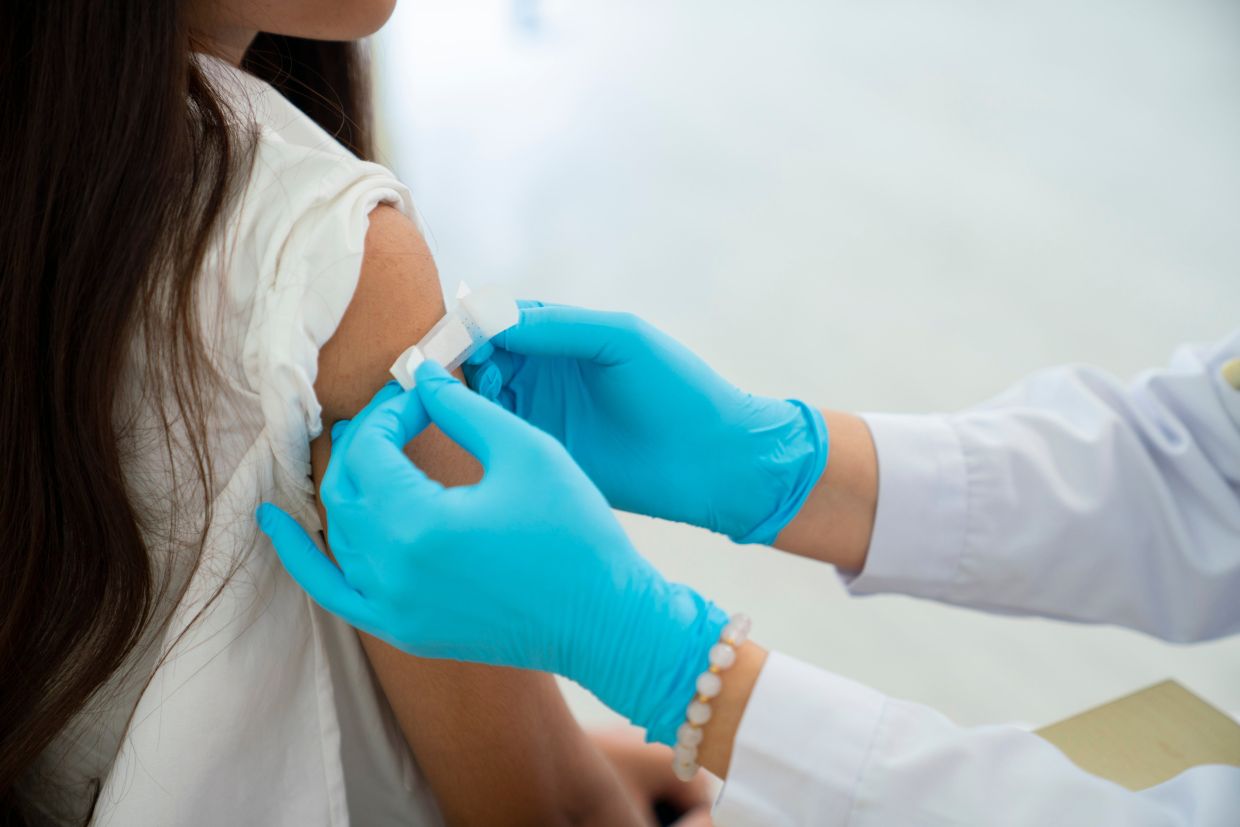
Hong Kong is doubling down on its vaccination requirements for children, with health officials firmly rejecting the notion that inoculation schedules should be delayed or altered without rigorous scientific justification. The Centre for Health Protection issued a statement this week underscoring the critical importance of adhering to established immunisation timelines, even as the United States moves in a different direction under a new executive order that significantly curtails vaccination mandates.
The timing of Hong Kong's defence is notable, arriving shortly after US President Donald Trump signed an executive order that fundamentally reshapes America's approach to childhood vaccinations. The order recommends restricting several vaccines—including those for respiratory syncytial virus, hepatitis A and B, meningococcal strains, and dengue—to only "certain high-risk groups or populations" rather than universal childhood immunisation. Perhaps more significantly, the federal government has signalled its intention to challenge state laws requiring school-based vaccination, framing such mandates as potential violations of parental rights and religious freedom.
Hong Kong's position reflects a philosophical divergence from this American trajectory. The Centre for Health Protection articulated a clear principle: public health policies and medical recommendations must be anchored in scientific evidence, not political convenience or parental preferences alone. This stance carries particular weight in a densely populated city where disease transmission occurs rapidly and where vulnerable populations—infants, the immunocompromised, and the elderly—require the protective buffer that high vaccination coverage provides. The centre warned that delaying vaccinations directly reduces protection against infectious diseases, potentially creating pockets of vulnerability that could rapidly spread through the community.
Under Hong Kong's Childhood Immunisation Programme, children from infancy through primary school are required to receive vaccines protecting them against eleven diseases: tuberculosis, poliomyelitis, hepatitis B, diphtheria, pertussis, tetanus, pneumococcal infection, chickenpox, measles, mumps, and rubella. Additionally, the programme extends human papillomavirus vaccinations to eligible primary school girls to prevent cervical cancer. This comprehensive approach has proven remarkably effective; Hong Kong maintains extremely high immunisation coverage rates, resulting in some of the world's lowest incidences of vaccine-preventable childhood diseases.
The contrast with the American approach raises questions about regulatory philosophy and public health priorities that ripple across the Asia-Pacific region. While the US administration argues that vaccination decisions should rest primarily with parents and emphasises concerns about government overreach, Hong Kong's framework prioritises collective protection and disease prevention as paramount public goods. For Malaysian observers, this divergence matters significantly, as Malaysia's own vaccination programme shares more similarities with Hong Kong's evidence-based, centrally coordinated approach than with the decentralised, parental-choice model being promoted in the United States.
Dr Edwin Tsui Lok-kin, controller of the Centre for Health Protection, acknowledged the crucial role that parental trust and community cooperation have played in Hong Kong's vaccination success. He credited healthcare professionals, schools, and parents for their sustained support of the immunisation programme over many years. This framing suggests that Hong Kong's health authorities view vaccination not as an authoritarian imposition but as a collaborative achievement between government, medical professionals, and families working toward a shared objective: protecting children from preventable diseases.
The government also addressed technical concerns about combination vaccines, particularly the MMR and MMRV formulations that bundle multiple immunisations into single injections. International evidence demonstrates that these combination vaccines are both safe and effective, providing robust protection against measles, mumps, rubella, and varicella. Beyond efficacy, combination vaccines offer practical advantages: they reduce the total number of injections required, lowering the likelihood that children miss doses due to appointment fatigue or scheduling difficulties. These products are now standard practice in vaccination programmes worldwide, from Europe to East Asia.
Contextualising Hong Kong's stance requires acknowledging a recent high-profile case that has intensified scrutiny of vaccination policy in the territory. Last month, parents of an infant placed under the guardianship of the Social Welfare Department applied for a legal review of the custody decision, specifically objecting to arrangements for the child—referred to as Danny in court documents—to be vaccinated. The parents characterised vaccination as a "medical intervention" against their wishes and sought a writ of habeas corpus from the High Court, framing the dispute as one involving bodily autonomy and parental authority.
This case illustrates the tension between individual parental preferences and collective public health obligations that increasingly confronts democracies worldwide. Hong Kong's health authorities have not wavered in their position that this tension must be resolved in favour of evidence-based protection, particularly for vulnerable populations such as infants who cannot advocate for themselves. The custody case, while legally complex, does not appear to have prompted the government to reconsider the scientific foundations of its vaccination programme.
For the broader Southeast Asian region, Hong Kong's firm stance carries implications. As anti-vaccination sentiment grows globally and political leaders in some countries embrace parental-choice narratives, jurisdictions like Hong Kong and Malaysia face pressure to justify mandatory immunisation requirements. Hong Kong's approach—grounding policy explicitly in scientific evidence and public health outcomes—provides a template for resisting politicisation of vaccination whilst maintaining the high coverage rates necessary to prevent disease outbreaks.
The divergence between Hong Kong and the United States reflects fundamentally different assumptions about governance, risk, and collective responsibility. Where the American executive order privileges parental autonomy and warns against government overreach in health decisions, Hong Kong prioritises disease prevention and population-level protection as the paramount consideration. These competing philosophies will shape health policy trajectories for years to come, with particular significance for developing regions that look to different models for guidance on balancing individual rights with collective welfare.
Looking forward, Hong Kong's health authorities appear committed to maintaining their evidence-based vaccination programme regardless of international trends. The repeated emphasis on scientific foundations and proven outcomes suggests that political pressure to align with American policy shifts will meet considerable institutional resistance. For Malaysia and other Southeast Asian nations grappling with similar questions about vaccination mandates and parental authority, Hong Kong's example demonstrates that sustained commitment to evidence-based policy, coupled with transparent communication about disease prevention benefits, can maintain public confidence in immunisation programmes even as political winds shift internationally.

