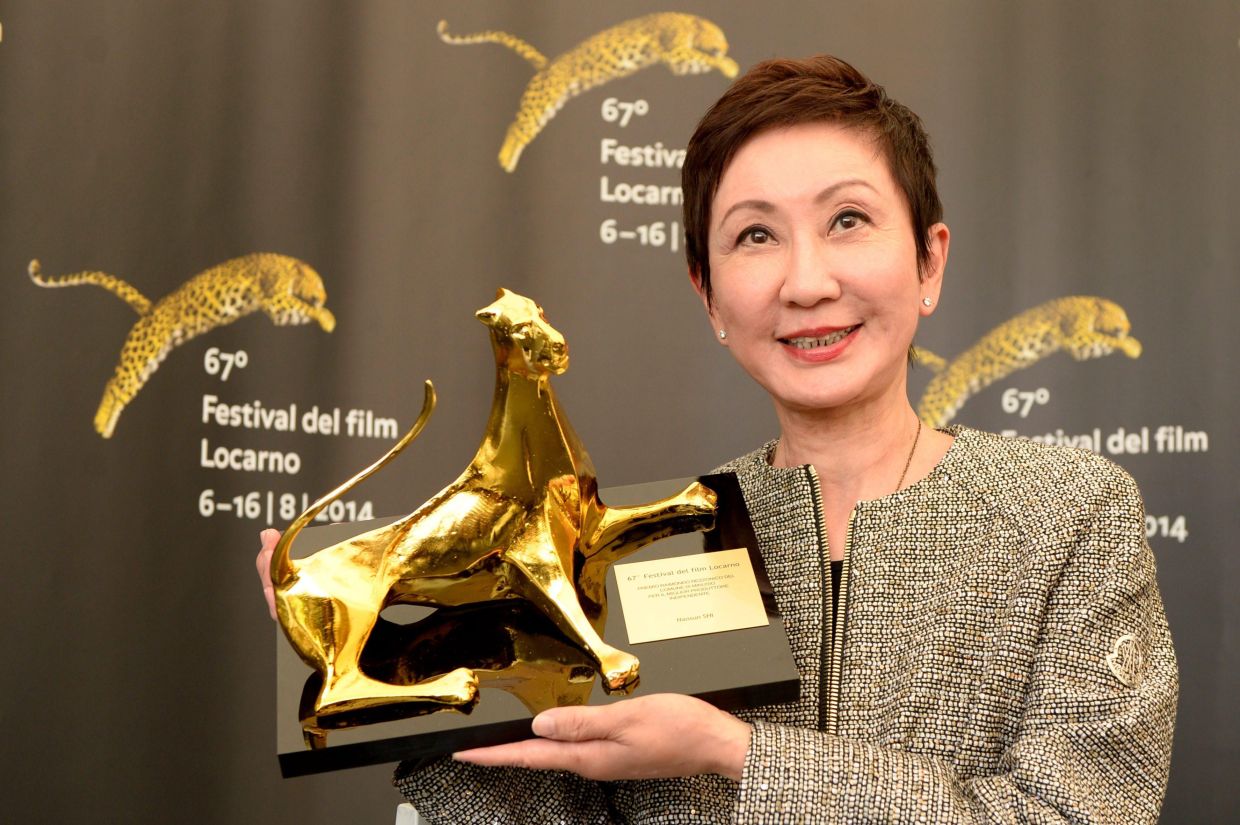
The Hong Kong film industry has lost one of its most formative architects with the death of Shi Nan-sun, a producer whose four-decade career fundamentally reshaped how local cinema reached global audiences. Shi, 75, passed away on Monday evening at Hong Kong Sanatorium & Hospital after succumbing to complications from a bacterial infection that triggered multiple organ failure. She was surrounded by family and loved ones at the time of her death, according to a statement from Film Workshop, the production and distribution company she established alongside acclaimed director Tsui Hark.
Shi's health had been deteriorating since 2022, when she first began experiencing immune system complications that would periodically flare into serious infections over the subsequent three years. In recent months, the recurrent nature of these infections proved overwhelming, ultimately leading to cascading organ dysfunction that her body could no longer withstand. The exact details of her memorial service and funeral arrangements would be announced at a later date, Film Workshop indicated in its statement.
The tributes that flooded social media platforms following news of her death underscored the profound affection in which she was held across Hong Kong's entertainment sector. Jackie Chan, one of Asia's most recognisable international film stars, posted a message on Weibo describing Shi as a figure the film world could ill afford to lose. He praised not only her professional achievements but what he characterised as the moral courage and strength of character evident in the classic films she had shepherded into existence. The sentiment echoed across the industry, with Carina Lau Ka-ling sharing a black-and-white photograph and writing of the countless lessons in personal conduct and professional integrity she had absorbed from Shi's example, crediting the producer alongside her husband Tony Leung Chiu-wai as sources of deep wisdom.
Other prominent figures in Hong Kong cinema, including Brigitte Lin Ching-hsia, Donnie Yen Chi-tan and Shu Qi, all publicly acknowledged Shi's outsized influence on their careers and the industry's development. The breadth of these tributes reflected how thoroughly Shi had woven herself into the fabric of Hong Kong's creative community, mentoring actors, supporting directors and building the institutional frameworks that allowed local talent to compete on the world stage.
The Hong Kong government also formally acknowledged Shi's contributions. Rosanna Law Shuk-pui, the Secretary for Culture, Sports and Tourism, issued a statement describing Shi as a distinguished producer whose work had fundamentally accelerated the long-term development of the local film sector. Law highlighted how Shi had dedicated her professional life to cinema and television, creating a body of work that had generated cherished memories for generations of Hong Kong audiences. The secretary emphasised that her extraordinary contributions to the industry would endure in collective memory.
Tsui Hark, Shi's ex-husband and longtime creative partner, provided perhaps the most poignant reflection on her final days. Speaking to journalists as he left the hospital on Monday night, he described how Shi had battled her illness with remarkable fortitude, maintaining her composure and grace until her immune system finally gave way under the strain. He characterised her passing as peaceful, noting that she remained surrounded by family and friends and expressed gratitude for the care and support she had received throughout her ordeal.
Shi's last public appearance came in May when she attended the funeral of fellow film producer Linda Kuk Mei-lai, an event that drew concern from observers who noted her reliance on a walking stick and visibly reduced mobility. That outing signalled to industry insiders that her health was seriously compromised, though few anticipated her decline would accelerate so dramatically in the months that followed.
Born and educated in Hong Kong, Shi obtained qualifications in statistics and computing from the Polytechnic of North London before launching her career in television production. Her transition into film came in 1981 when she joined Cinema City as an executive director, a role that proved transformative for both her career and the industry's trajectory. In that position, she became renowned for her meticulous oversight of administrative operations, creative financing, contract negotiations and the international distribution networks that would eventually become her signature contribution to Hong Kong cinema.
The 1984 establishment of Film Workshop alongside Tsui Hark represented a watershed moment for local film production. The company, together with its companion Distribution Workshop venture, fundamentally professionalised how Hong Kong films were marketed, financed and disseminated to international audiences. Where previous generations of filmmakers had struggled to navigate foreign markets, Shi's sophisticated distribution infrastructure created pathways that allowed Hong Kong productions to compete directly with products from larger industries. This institutional innovation, as much as any individual film, became her enduring legacy.
Shi and Tsui married in 1996 and remained together for eighteen years before divorcing in 2014. Notably, their professional relationship survived and thrived despite the dissolution of their marriage, demonstrating a maturity and commitment to their shared artistic vision that became emblematic of their respective characters. Brigitte Lin, described as Shi's closest friend for more than five decades, once elaborated on the depth of Shi's devotion to Tsui in a personal essay, quoting legendary novelist Louis Cha (Jin Yong) to characterise Shi as "the only wife who is completely infatuated with her husband." Lin wrote that Shi had admired and protected Tsui as a true artist, viewing him as a figure worthy of her complete dedication and support.
Beyond her role in shaping Hong Kong's industry infrastructure, Shi became an instrumental ambassador for local cinema on the international stage. She received France's Ordre des Arts et des Lettres, an honour reserved for those who have made exceptional contributions to cultural advancement, and garnered the best independent producer award at the Locarno International Film Festival. Over her career, she served repeatedly as a jury member and festival president at major international film festivals, roles that reflected both her expertise and the global respect her judgment commanded.
Just weeks before her death, in January 2025, Shi and Tsui jointly received a lifetime achievement award at the Hong Kong Film Awards in recognition of their combined contributions to cinema. The honour represented institutional validation of a partnership that had transcended business and marriage to become a defining force in how the world perceived Hong Kong as a cultural and creative centre. Her death marks the end of an era in which personal determination and professional vision combined to transform a regional industry into a genuine global force.

