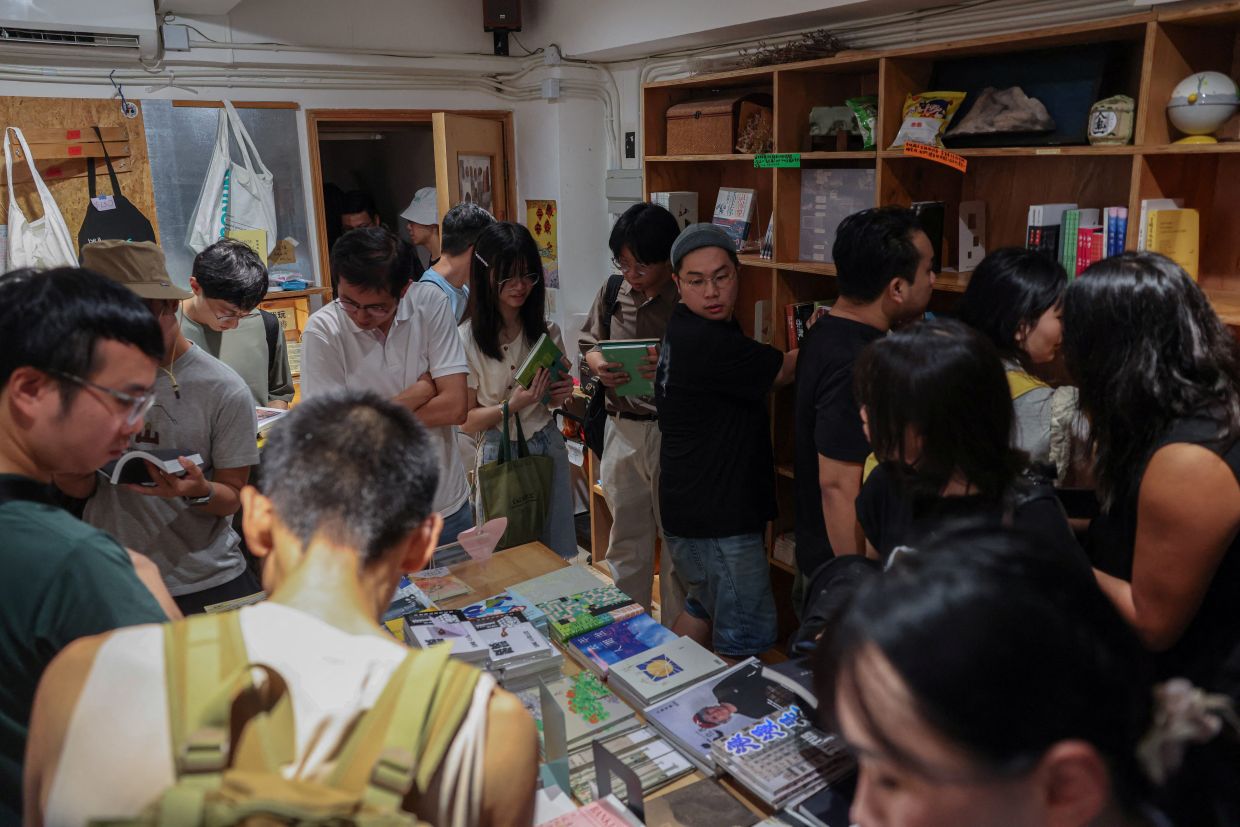
A young Chinese university student named Fleming Cheng discovered an intellectual world he had only glimpsed through screens when he visited Greenfield Book Store in Hong Kong last year. Using a VPN to circumvent mainland censorship, he had previously managed only fleeting glimpses of politically contentious titles online. Upon entering the shop, Cheng encountered physical copies of books offering perspectives fundamentally at odds with Beijing's approved narrative—including works critically examining China's modern political history and those sympathetic to victims of the 1989 Tiananmen Square crackdown. For readers like Cheng, these modest storefronts tucked away in Hong Kong's apartment buildings represented something increasingly rare across the Chinese-speaking world: unfiltered access to ideas deemed too sensitive for domestic circulation.
For decades, Hong Kong's independent bookstores have functioned as intellectual sanctuaries for mainland readers hungry for material suppressed at home. This role deepened as Beijing's control over information intensified, with these shops offering windows into alternative viewpoints and critical analyses unavailable in China's heavily regulated publishing ecosystem. Yet this carefully maintained equilibrium has collapsed rapidly following a wave of bookseller arrests under sedition charges levied under a 2024 national security law. Within just four months, police targeted four separate bookstores including Greenfield itself, Book Punch, Hunter Bookstore, and Have A Nice Stay. Though bail was granted in several cases, the consequences proved devastating: Greenfield announced closure at the end of its lease despite fifty years of operation, while Have A Nice Stay shut down prematurely, citing "elusive red lines" and financial strain even before its operators faced arrest charges.
The deterioration of Hong Kong's publishing freedoms represents merely the latest chapter in a prolonged narrative of constraint that accelerated dramatically following Beijing's imposition of a 2020 security law. That legislation catalysed a broader suppression of dissent across Hong Kong's civil society, with prominent activists imprisoned and civil organisations disbanded. Public libraries removed titles about the Tiananmen massacre and works by pro-democracy figures, while independent book fairs faced orchestrated criticism from state-aligned media. The erosion occurred incrementally enough that some bookstores persisted, continuing to stock sensitive material and organise reader activities despite mounting official scrutiny. However, the recent arrests have shattered whatever remaining assumption of tolerance existed, with authorities accusing booksellers of selling seditious publications without specifying which titles fall into that category.
The vagueness surrounding what constitutes seditious material has created paralysing uncertainty throughout Hong Kong's independent publishing sector. Secretary for Security Chris Tang claimed the law's parameters are transparent and rejected the notion of an official banned book list, yet simultaneously offered only an imprecise analogy comparing booksellers' responsibilities to food vendors ensuring product safety. This ambiguity forces retailers into an impossible position: lacking clear guidance on which titles breach national security provisions, many have become reluctant to stock books addressing contemporary Chinese politics. Even more troubling, some shop owners report that landlords, themselves potentially exposed to government harassment, have threatened to terminate leases. Anonymous booksellers describe the atmosphere as one of perpetual anxiety, where decisions about inventory carry undefinable legal consequences.
The plight of Hong Kong's independent bookstores carries profound implications for mainland Chinese intellectual life. Cheng's reflection captures this poignantly: if Hong Kong becomes indistinguishable from mainland China in terms of publishing restrictions, "that would be a tremendous loss for us mainlanders too." The bookstores' closure eliminates a crucial pressure release valve through which Chinese readers could access ideas and information filtered out by state censors. Unlike mainland bookstores, which operate within explicit Party guidelines, Hong Kong's independent retailers represented something qualitatively different—spaces where readers could encounter unvetted political analysis, biographical works about fallen leaders, and critical historical accounts. The disappearance of these outlets narrows the already-constrained information environment available to Chinese readers.
This erosion of Hong Kong's distinctive publishing ecosystem also reflects the broader convergence between Hong Kong and mainland governance that has accelerated since Hong Kong's 1997 handover from Britain to China. The territory, once celebrated for freedoms of expression and publication that distinguished it from the mainland, has undergone systematic realignment with Beijing's security and censorship frameworks. The 2015 disappearance of Lam Wing-kee and other Causeway Bay Books operators—who were allegedly held by Chinese authorities despite being Hong Kong residents—foreshadowed this trajectory. That incident, involving the vanishing of booksellers dealing in politically sensitive material, created an initial chilling effect; gossip-focused books about Chinese political elite subsequently diminished from Hong Kong's shelves. Subsequent security legislation has merely institutionalised and accelerated the process already underway.
The human experience of this transformation extends beyond commercial calculations to encompass the loss of civic space itself. Local Hong Kong resident Brian Leung articulated this sentiment clearly, describing independent bookstores as repositories of individual character that enriched the territory's culture. When arrests reached stores he frequented, Leung experienced not merely the loss of a retail service but the erosion of something he understood as fundamental to Hong Kong's identity. He explicitly rejected official claims that bookstores "incited" political action, noting that readers possessed sufficient judgment to form independent conclusions. Similarly, mainland student Iris Wang from neighbouring Guangdong province viewed these shops as intellectual spaces that cultivated critical thinking rather than merely transacting in inventory. The closing of bookstores thus represents not just commercial decline but the elimination of physical refuges where readers could inhabit different intellectual frameworks than those prescribed by state authorities.
Taiwan has emerged as a crucial alternative destination for Chinese-language publishing as Hong Kong's environment has contracted. Universities and publishers across the Taiwan Strait have intensified their output of works addressing Hong Kong politics and history, recognising that the territory's increasingly restricted publishing environment necessitates alternatives. Academic research from Tunghai University documents that Taiwan's publishers released six times as many books about Hong Kong between 2020 and 2024 compared to the preceding five-year period. This surge reflects both an attempt to preserve Hong Kong's intellectual heritage and provide diaspora writers with platforms unavailable in their homeland. Yet even this lifeline faces potential jeopardy: a Taiwanese logistics firm reportedly halted book shipments to Hong Kong retailers under police investigation and demanded complete inventory lists before serving other Hong Kong premises. Such developments suggest that Beijing's influence over Hong Kong's publishing environment may eventually extend into cross-strait book trade arrangements.
The strategic function of bookstores in preserving Hong Kong's civil society cannot be overstated. One Hong Kong author who relocated to Taiwan and requested anonymity for personal security noted that independent bookstores functioned as "bridges" connecting diaspora writers to their city of origin and bringing works about Hong Kong's pro-democracy movement back to Hong Kong's readers. The writer's evocative comparison of Hong Kong's collapsing civil space to "a boulder rolling downhill, crushing things in its path" captures the accelerating and seemingly irreversible momentum of restriction. Bookstores, the author suggested, represented "a small flower field where people could breathe and try to safeguard what remained"—fragile spaces where alternative frameworks of understanding could still flourish. The current wave of arrests and closures signals that "this borrowed time is coming to an end," marking a definitive transition in Hong Kong's relationship with intellectual freedom.
For Malaysian and Southeast Asian observers, Hong Kong's transformation offers cautionary perspective on how security frameworks can progressively reshape civil society. The gradual accumulation of restrictions—security laws followed by selective prosecutions under vague sedition provisions, landlord intimidation, and the elimination of publishing alternatives—demonstrates how institutional constraints crystallise into existential threats. What began in 2020 with official security legislation has evolved into a comprehensive restructuring of Hong Kong's information ecosystem. The independent bookstores that once distinguished Hong Kong from mainland China have become targets precisely because they embodied that differentiation. Their disappearance signals Hong Kong's accelerating convergence with mainland governance models, with profound consequences not only for local residents but for mainland Chinese readers whose access to uncensored material continues narrowing. The bookstores' fate represents more than commercial decline; it symbolises the geographical and intellectual contraction of spaces where Chinese readers can encounter ideas their governments prefer suppressed.

