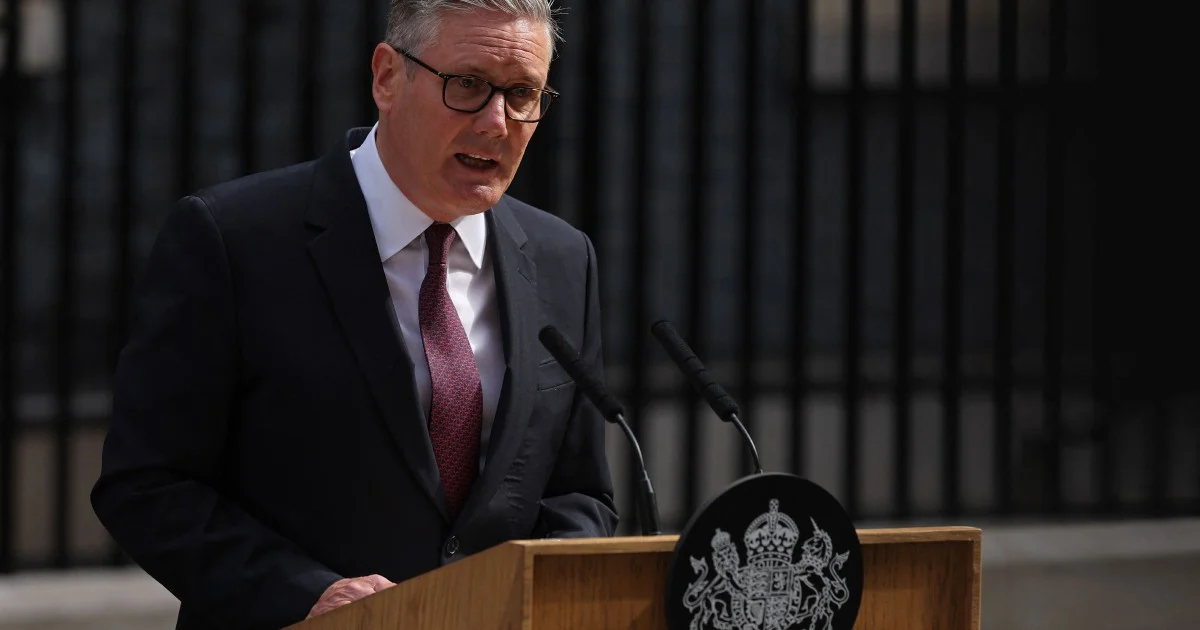
Prime Minister Keir Starmer's announcement on Monday that he will step down as Labour leader has set in motion a formal succession process that will reshape Britain's political landscape yet again. The departure leaves Britain bracing for its seventh change of prime minister within the past decade—a stark reflection of the country's turbulent recent political history. With parliament due to reconvene in September, Labour will need to complete its leadership selection process within a compressed timeframe, ensuring continuity of government amid what promises to be a contentious internal campaign.
The Labour Party's leadership election follows a democratic procedure established in its constitution, which gives all party members a direct vote in choosing their next leader. Unlike some political systems where only elected representatives determine succession, this structure ensures that roughly 370,000 party members across Britain will have a say in selecting Starmer's replacement. This broad-based approach reflects Labour's commitment to grassroots participation, though it also means the process will be more time-consuming than a simple parliamentary ballot. The party's National Executive Committee must formally trigger the election process, set the timeline, and establish the rules governing nominations and campaigning.
To be eligible as a candidate, prospective leaders must secure nominations from a minimum of 34 Labour MPs—roughly 10 per cent of the parliamentary party. This threshold exists to prevent the ballot becoming unwieldy with numerous fringe candidates and to ensure that serious contenders have demonstrated capacity to command respect among their colleagues in Westminster. The nomination process typically generates considerable jockeying and coalition-building among potential candidates, as aspiring leaders attempt to secure the backing they need while assessing their chances with the broader membership. The threshold also serves as an early indicator of which candidates can claim genuine parliamentary support versus those running primarily on ideological grounds.
Once nominations close, candidates enter a campaigning period where they present their vision directly to party members through hustings, media appearances, and digital outreach. The Labour membership voting process has evolved considerably in recent years, now incorporating both traditional postal ballots and online voting to maximise participation. Members receive candidate statements and have access to detailed policy positions, allowing them to make informed decisions about who should lead the party forward. This extended campaign period typically lasts several weeks, giving candidates opportunity to articulate their positions on the economy, public services, and Britain's international relationships.
The voting system employs a ranked choice mechanism, where members rank candidates by preference rather than simply voting for one person. If no candidate achieves an outright majority of votes in the first count, the candidate with the fewest votes is eliminated and their ballots redistributed according to members' second preferences. This process continues until one candidate secures more than fifty per cent of the vote. The ranked choice system encourages candidates to appeal beyond their core supporters and discourages divisive campaigns where frontrunners might win with a plurality rather than genuine majority support.
International precedent suggests the entire process—from triggering the election through declaring a winner—typically requires between six and eight weeks. Compressed timelines are possible if the party's decision-making structures move expeditiously, though rushing the process risks appearing undemocratic to members and potentially alienating factions within the party. The September return of parliament creates external pressure to complete the selection before the political calendar resumes in earnest, with the government facing parliamentary scrutiny and the opposition bench likely eager to challenge the new leadership.
For Malaysian observers and Southeast Asian political analysts, Labour's leadership process offers instructive contrasts to regional succession mechanisms. While Britain's system emphasises mass party democracy, many Commonwealth nations and Southeast Asian democracies employ different models ranging from parliamentary votes among legislators to select committee processes. The extended campaign and high nomination threshold reflect Labour's aim to balance inclusivity with order, though critics argue that membership voting can occasionally produce outcomes at odds with parliamentary party preferences. This tension between grassroots democracy and parliamentary stability remains a persistent question in British politics.
The leadership contest will inevitably address crucial policy questions that have divided Labour internally: the appropriate level of public service investment, approaches to industrial relations, environmental policy, and Britain's role in international affairs. Candidates will differentiate themselves on whether Labour should maintain its positioning toward the centre of British politics or shift in other ideological directions. These debates carry significance beyond Britain, as Labour's direction influences how centre-left parties globally approach challenges of economic inequality, technological change, and geopolitical realignment.
The compressed timetable also means potential leaders face limited opportunity to build campaign infrastructure or conduct extensive opinion research. Instead, the contest will likely favour those already possessing high public visibility or strong relationships within the party apparatus. Unexpected momentum can develop, particularly as previously lesser-known candidates gain exposure through hustings and media coverage. The outcome will ultimately reflect the Labour membership's assessment of who can credibly govern Britain and restore the party's standing after recent challenges.
Starmer's departure represents a significant moment for British politics at a time when international attention remains focused on Britain's domestic stability and economic performance. The process to replace him will test Labour's internal cohesion while signalling to the broader electorate how the party manages fundamental questions of leadership and direction. With the September parliament return looming, both the party machinery and potential candidates understand the stakes: completing a thorough, legitimate selection process while positioning Labour effectively for the political contests ahead.