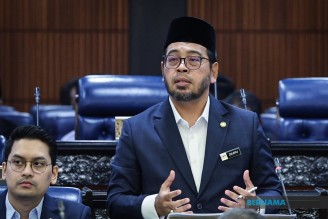
Tabung Haji's involvement with Putrajaya Perdana has emerged as a gateway through which the nation's largest Islamic savings institution became ensnared in 1Malaysia Development Bhd's controversial financial dealings, ultimately draining RM145.3 million from the pilgrim fund. Dr Zulkifli Hasan, Minister in the Prime Minister's Department (Religious Affairs), disclosed during a special parliamentary session that this single investment represented merely one casualty among 14 problematic ventures that collectively ravaged the organisation's finances, with cumulative losses reaching into the billions of ringgit according to findings in the recently released Royal Commission of Inquiry report.
The mechanics of this entanglement reveal troubling governance structures that blurred institutional boundaries and created potential conflicts of interest. Tabung Haji elevated its chairman to simultaneously chair Putrajaya Perdana, a structural arrangement that placed the institution's top leadership at the nexus of questionable transactions. More remarkably, during the height of 1MDB's controversies, Tabung Haji's chief executive officer served concurrently on 1MDB's board of directors—a dual position that inevitably raised questions about whose interests received priority when investment decisions were made.
One of the most striking manifestations of this compromised position materialised through Tabung Haji's acquisition of land at the Tun Razak Exchange from 1MDB when public scrutiny of that fund was intensifying. The minister pointedly questioned whether such transactions genuinely served Tabung Haji's mission to safeguard pilgrims' life savings, or whether they instead functioned as a financial lifeline for entities with deeper connections to political interests. This fundamental query strikes at the heart of institutional independence and fiduciary responsibility that Tabung Haji, as a sovereign wealth fund managing contributions from millions of Malaysians, should have zealously protected.
The TRX transaction exemplifies how Tabung Haji attempted to navigate its earlier missteps once financial pressures eased. The institution initially sold this land parcel for RM400 million in 2018, crystallising a loss position that reflected depressed valuations during the post-1MDB turbulence. However, recognising both the property's intrinsic value and perhaps the broader optics of having divested strategic assets at distressed prices, Tabung Haji reacquired the same land at RM270 million—a transaction that, while still representing a net loss on the round-trip basis, demonstrated the institution's improved financial capacity to reverse previous errors of judgment.
The FGV Holdings saga represents perhaps the most emblematic example of Tabung Haji's broader investment misadventures during the troublesome period. The Federal Government Ventures listing, marketed as Malaysia's crowning achievement in capital markets—boasting a subscription exceeding RM10 billion—subsequently became a financial millstone. Tabung Haji absorbed losses exceeding RM1 billion as the company's share price compressed by more than eighty percent, yet the institution compounded the original investment error through questionable accounting manoeuvres designed to obscure the haemorrhaging losses rather than confront them transparently.
What renders this accounting manipulation particularly egregious is the regulatory environment within which it occurred. Instead of acknowledging the deteriorating asset quality and adjusting risk management frameworks, Tabung Haji management simply recalibrated its impairment policies—the technical mechanisms through which assets are marked down—to render the losses less visible in financial statements. This approach effectively transferred Tabung Haji's problems from the income statement to the footnotes, misleading stakeholders about the true financial position of an institution entrusted with the savings of ordinary Malaysians preparing for pilgrimage.
The UJ Estates (Holdings) transaction follows a similar pattern of distressed sales followed by belated repurchases. Tabung Haji initially divested this oil palm plantation for RM800 million, presumably during a period when liquidity pressures or management misjudgement necessitated asset sales. As the institution's financial footing strengthened, it reacquired the property at RM695 million plus RM115 million cash, generating an enterprise value around RM580 million—again demonstrating both the previous undervaluation and the ongoing net loss position, though at a more manageable scale.
The Royal Commission of Inquiry investigation, which examined Tabung Haji's operations across the 2014 to 2020 period, identified systemic weaknesses extending far beyond individual investment decisions. The 211-page report, released in July, uncovered governance deficiencies and operational vulnerabilities that created environments conducive to poor decision-making and institutional capture. These weren't isolated lapses but rather manifestations of deeper structural problems within management hierarchies and oversight mechanisms.
Importantly, the RCI process itself reflects Malaysia's institutional efforts to confront historical governance failures. Announced in 2021 and formally constituted in January 2022, the inquiry presented findings to the Yang di-Pertuan Agong in August 2022, underscoring the serious nature of the investigation. The commission's 25 recommendations for remedial actions represent a roadmap for institutional rehabilitation, with Tabung Haji reporting that approximately 75 percent of these recommendations had already been implemented by late July.
For Malaysia's broader financial ecosystem, these revelations carry significant implications. Tabung Haji manages contributions from millions of citizens and represents the nation's largest Islamic savings institution, making its governance quality a matter of systemic importance. The 1MDB connections exposed through this inquiry demonstrate how institutional governance failures at one entity can propagate damage across related financial ecosystem participants, particularly when overlapping leadership creates ambiguous accountability structures.
The recovery trajectory, while encouraging in demonstrating improved financial capacity and management responsiveness, cannot erase the billions in value destruction that occurred during the problematic period. Each reversed transaction—the TRX land repurchase, the UJ Estates reacquisition—represents a sunk cost that pilgrims' contributions financed. These losses fundamentally altered the trajectory of the fund's long-term growth potential and reflected an institutional culture where investment decisions sometimes served interests beyond the organisation's primary mandate.
Moving forward, the implementation of RCI recommendations and the demonstrated willingness to acknowledge past errors and undertake remedial transactions suggest institutional learning is occurring. However, sustained reform requires not merely technical fixes to investment policies but a more fundamental recalibration of governance structures, the elimination of conflicting leadership positions, and the establishment of robust independence barriers between Tabung Haji and entities with competing interests. The RM145.3 million Putrajaya Perdana loss serves as a costly reminder of the consequences when such structural safeguards prove inadequate.

