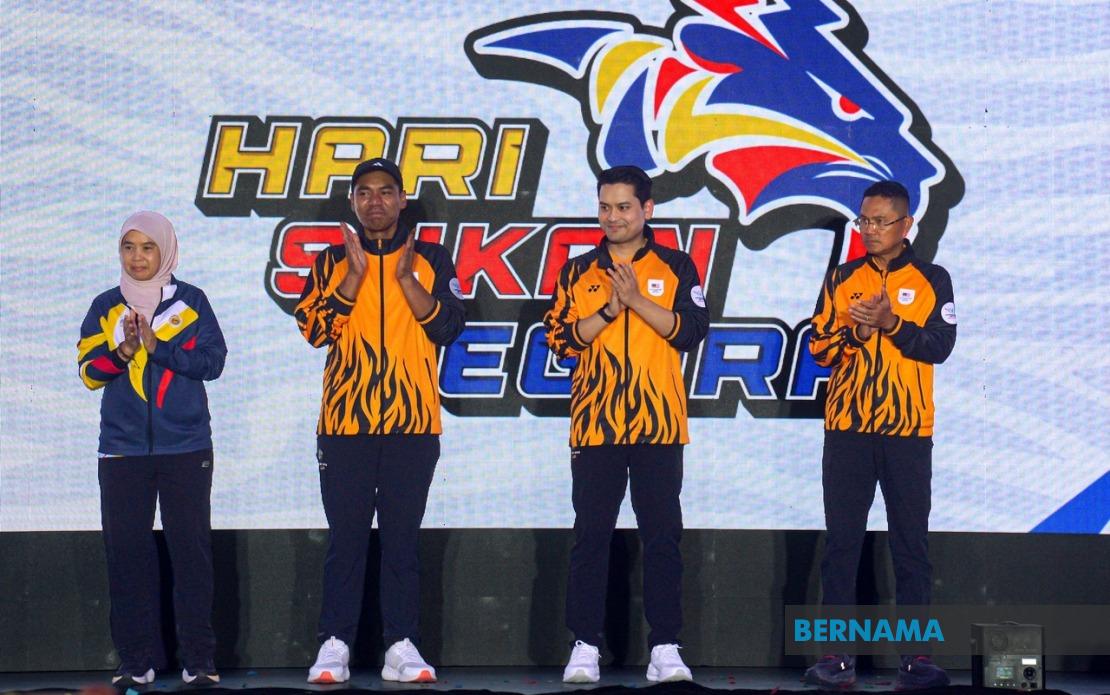
Malaysia's Youth and Sports Ministry has unveiled an ambitious blueprint for the National Sports Day (HSN) 2026, scheduled to unfold across October 9 to 11, with organisers targeting participation from more than 5.3 million Malaysians. The three-day celebration will encompass a cascade of sports and recreational activities spanning district, state, and national tiers, reflecting a significant expansion in the country's efforts to democratise sports engagement across all demographic groups and skill levels.
Youth and Sports Minister Dr Mohammed Taufiq Johari unveiled the initiative's distinctive positioning at a pre-launch ceremony held in Putrajaya, establishing "Digital Technology and Artificial Intelligence" as the central theme for the year's observance. This thematic choice represents a deliberate strategic pivot, signalling the ministry's commitment to weaving cutting-edge technological frameworks into the fabric of sports development whilst simultaneously broadening the appeal of physical activity participation among younger, digitally native audiences who may have previously viewed traditional sports as disconnected from their lived experience.
The pre-launch event itself became a showcase for this technological integration philosophy, with organisers deploying extensive virtual reality installations to immerse attendees in experiential demonstrations. Dr Mohammed Taufiq emphasised that this approach transcends mere novelty, instead functioning as a tangible manifestation of the ministry's broader digitalisation roadmap. By embedding VR technology into the pre-launch mechanics, the ministry telegraphed its intention to modernise how sports are promoted, experienced, and consumed at the grassroots level throughout the nation.
A particularly noteworthy dimension of the ministry's strategic framework involves its approach to e-sports and gaming communities. Rather than dismissing video gaming as antithetical to physical wellness, the ministry has elected to leverage e-sports' immense popularity as a bridge toward broader fitness adoption. This nuanced positioning reflects sophisticated understanding of contemporary youth behaviour and consumption patterns, acknowledging that the pathway to increased physical activity participation sometimes requires meeting prospective athletes within their existing digital ecosystems rather than attempting to pull them wholesale into traditional sporting environments.
The national-level celebration will reach its ceremonial apex on October 10 when Prime Minister Datuk Seri Anwar Ibrahim is scheduled to officiate proceedings at the National Stadium grounds in Bukit Jalil. This high-level political endorsement underscores the government's prioritisation of sports development as a cornerstone component of national health and social cohesion policy, signalling sustained institutional commitment to the sector beyond the immediate tenure of any particular administration.
Strategically, HSN 2026 functions as a critical preparatory mechanism for Malaysia's hosting of the 2027 Southeast Asian Games, a quadrennial sporting spectacle that demands extensive public engagement and infrastructure readiness. The ministry has established formal coordination pathways with the Malaysia SEA Games Organising Committee to integrate HSN 2026 into a broader communications ecosystem designed to cultivate public enthusiasm and consciousness surrounding the upcoming regional competition. This sequencing allows the ministry to test messaging frameworks, identify organisational bottlenecks, and build momentum across a two-year runway preceding the Games themselves.
The SEA Games Roadshow initiative represents a particularly innovative dimension of this integrated approach, transforming what might otherwise be a standalone annual commemoration into a linchpin of a multi-year promotional and engagement campaign. By embedding SEA Games messaging and activities within the HSN 2026 framework, organisers create natural storytelling opportunities whilst simultaneously building constituent familiarity with competition concepts and venue infrastructure. For Malaysian audiences, this represents an opportunity to witness and participate in curated sporting experiences that provide tangible foretastes of the larger international event.
Within the HSN 2026 programming architecture, several distinct activity streams have been identified, including the MADANI Fun Run and MADANI Fun Walk initiatives, alongside expansions of the established Active Malaysia and Sports Industry segments. The integration of Rakan Muda Lifestyle components suggests attempts to weave HSN 2026 programming into existing youth engagement frameworks, ensuring coherence across the ministry's various intervention points. This multi-platform approach acknowledges that effective sports participation mobilisation requires simultaneous activation across multiple demographic segments, from young families seeking recreational opportunities through to established competitive athletes pursuing performance advancement.
For Malaysian readers and the broader Southeast Asian sporting community, the HSN 2026 initiative carries significance extending beyond immediate participation metrics. The ministry's explicit emphasis on technological integration and AI incorporation positions Malaysia as a progressive stakeholder within regional sports development discourse, signalling willingness to experiment with innovative engagement mechanisms and infrastructure approaches. This positioning may influence how peer nations across Southeast Asia approach their own sports promotion and development strategies, potentially catalysing broader regional trends toward technology-enabled sporting participation.
The targeting of 5.3 million participants represents a substantial undertaking requiring coordinated mobilisation across municipal, state, and federal administrative levels. Achieving this figure would represent meaningful progress toward the ministry's broader objective of establishing sports participation as a normalised component of Malaysian lifestyle rather than a specialised activity pursued by competitive enthusiasts. The emphasis on inclusive accessibility across district-level programming ensures that participation opportunities extend beyond major urban centres, acknowledging that sustainable sports development demands equitable distribution of resources and opportunities throughout the country's geographic and demographic landscape.
Looking forward, the success of HSN 2026 will likely influence how Malaysia approaches sports engagement mechanisms in subsequent years. Should the technological integration strategy and expanded participation targets prove successful, the model may be replicated and refined for future national sports celebrations. Conversely, implementation challenges encountered during HSN 2026 could inform important adjustments to the ministry's operational frameworks and partnership strategies. Either trajectory will contribute valuable empirical data to Malaysia's evolving sports development methodology.
The convergence of HSN 2026 with the 2027 SEA Games hosting responsibilities creates a unique window for Malaysia to demonstrate its capacity for large-scale sporting event coordination whilst simultaneously building domestic enthusiasm and participation infrastructure. The ministry's decision to foreground digital technology and artificial intelligence reflects broader global trends toward technology-enabled sports engagement, positioning Malaysia within contemporary international best practices whilst adapting these frameworks to local contexts and preferences. For Malaysian audiences and Southeast Asian sporting observers, HSN 2026 represents both a singular annual commemoration and a preliminary chapter in Malaysia's broader narrative of technological integration and sports development expansion.

