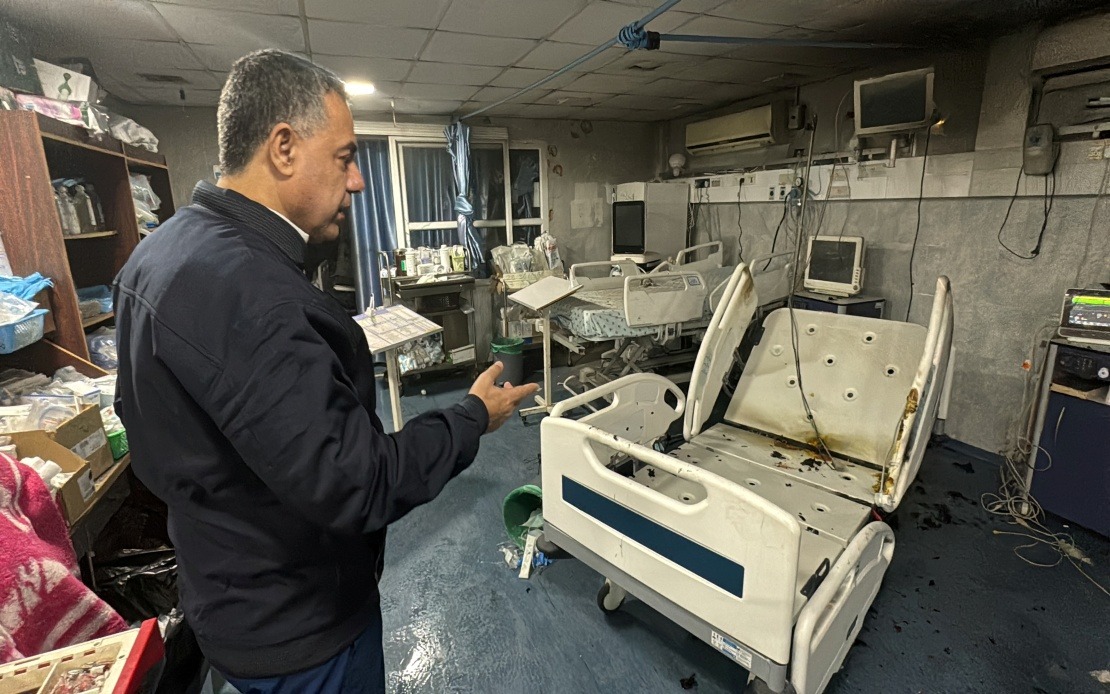
An international medical advocacy group has sounded urgent warnings about the wellbeing of Dr Hussam Abu Safiya, who heads Kamal Adwan Hospital in the northern Gaza Strip, following his relocation to an Israeli correctional facility. According to Physicians for Human Rights, the hospital administrator's health has sharply declined since being transferred to Nitzan Prison, with documented evidence of severe physical trauma and ongoing medical complications that threaten his life.
During a legal visit to the detention centre on July 2, the organisation's lawyer, Nasser Odeh, documented a troubling catalogue of injuries and medical distress. His observations included visible head trauma, significant bruising around the eyes, ears, and neck regions, combined with respiratory difficulties and repeated fainting episodes. The physical appearance was so compromised that Odeh reported difficulty identifying the patient. These findings paint a picture of systematic physical mistreatment within the custody system.
The circumstances surrounding Dr Abu Safiya's detention amplify concerns about due process. He remains incarcerated without formal charges or trial, a legal status that independent observers regard as problematic under international humanitarian standards. During the prison meeting, security personnel maintained heavy restrictions, keeping the detainee in shackles around both wrists and ankles while masked guards surrounded him throughout the encounter. Such measures suggest a high-security classification that may be disproportionate to the allegations against a hospital administrator.
Naji Abbas, who directs the Prisoners and Detainees Division at Physicians for Human Rights Israel, characterised the lawyer's testimony as exceptionally disturbing. He underscored that the documented injuries and medical symptoms represent among the most alarming cases the organisation has recorded since the current military conflict began. Critically, Dr Abu Safiya himself reportedly expressed grave fear for his survival while in custody, a statement that suggests awareness of imminent danger or prior experience of abusive treatment.
The timeline of events raises additional questions about causation and institutional accountability. According to Abbas, Dr Abu Safiya's condition deteriorated noticeably following a court appearance in which he challenged the legal basis for extending his detention. This temporal correlation suggests that asserting legal rights through the judicial system may have triggered adverse consequences within the prison environment, a pattern that human rights monitors view with suspicion.
Physicians for Human Rights Israel has called for Dr Abu Safiya's immediate release, extending the demand to encompass other medical professionals currently held without charges. The organisation frames this as a humanitarian imperative rooted in international law governing prisoner treatment. Its leadership contends that the evidence warrants an independent investigation into prison conditions and staff conduct, particularly regarding potential violations of prohibitions against torture or cruel, inhuman treatment.
For Malaysian readers, this case illustrates broader tensions within the Israeli-Palestinian conflict regarding detention practices and medical ethics. The arrest of healthcare workers raises questions about whether professional medical status provides protection under international law, particularly the Geneva Conventions which recognise special status for medical personnel during armed conflict. Southeast Asian nations have historically taken positions on humanitarian protection standards, making this case relevant to regional discourse on accountability mechanisms.
The allegations carry implications for international pressure mechanisms. While Israel's domestic courts remain available to detainees, human rights organisations argue that judicial processes require independent oversight to ensure fair application. The involvement of international witnesses and advocacy groups reflects a broader pattern where civil society organisations attempt to monitor detention systems in conflict zones. For countries like Malaysia with established human rights commissions, such external scrutiny raises questions about balancing national security concerns against universal protection standards.
Physicians for Human Rights Israel's institutional position merits consideration. As an Israeli organisation documenting allegations against Israeli authorities, it operates within a complex political environment where human rights advocacy intersects with national security discourse. Their willingness to publicise findings about prison conditions demonstrates internal accountability mechanisms, though their influence on policy remains contested. The organisation's credibility and reach influence regional and international responses to conflict-related detention issues.
The broader Gaza healthcare crisis provides crucial context. Kamal Adwan Hospital operates within a healthcare system severely strained by ongoing military operations, meaning the detention of its director directly impacts civilian medical services. When key medical administrators face removal from their positions through detention, institutional continuity suffers, potentially affecting patient care across entire healthcare networks. This dimension transforms the case from an individual human rights matter into a collective concern affecting populations dependent on these services.
Israeli authorities bear legal responsibility for the safety of all individuals under their custody, a principle established under international humanitarian law. The government's obligation extends beyond merely preventing death to encompassing adequate medical care, humane conditions, and protection from torture or degrading treatment. Failure to meet these standards creates potential liability not only for individual officials but for state institutions, a consideration that shapes how detention practices are evaluated internationally.
The case illustrates how conflicts generate secondary human rights concerns distinct from direct combat impacts. Detention practices, interrogation standards, and prison conditions become focal points for accountability discussions. For Malaysia and the broader Southeast Asian region, such developments highlight the importance of maintaining independent judicial oversight, transparent detention systems, and access to detainees by international observers—standards that serve all nations' long-term interests in stable, rule-based international order.
Moving forward, the documented evidence from the July 2 prison visit will likely feature prominently in advocacy efforts and potential legal proceedings. Whether Israeli courts will order independent medical evaluation, modify detention conditions, or alter the legal status of the detainee remains to be seen. International attention, amplified by credible human rights organisations, typically influences judicial outcomes in democratic systems where public opinion and civil society maintain institutional influence.

