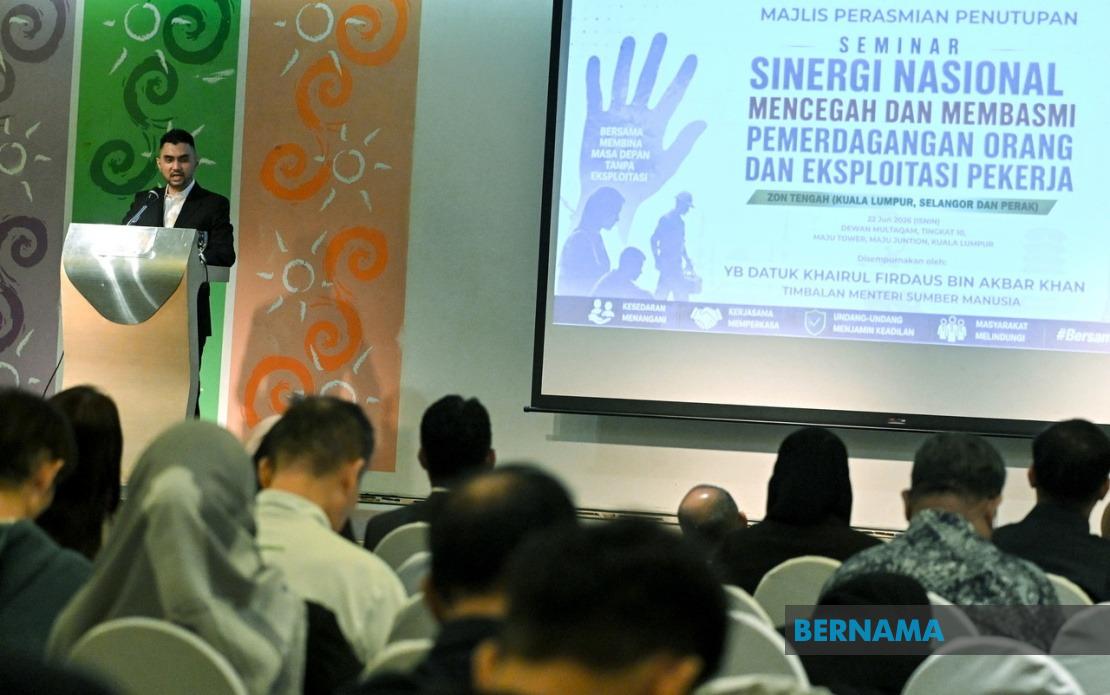
Malaysia's efforts to combat human trafficking and labour exploitation appear to be yielding tangible results, with the number of rescued victims showing a marked decline over the past two years. Deputy Human Resources Minister Datuk Khairul Firdaus Akbar Khan pointed to official data illustrating this positive trajectory, providing some measure of encouragement to policymakers concerned about the scale of modern slavery affecting vulnerable workers across the country.
According to figures compiled by the Peninsular Malaysia Manpower Department, the rescue numbers have shifted considerably in recent years. In 2023, authorities helped 70 trafficking victims escape exploitation. That figure fell sharply to just 10 in 2024, before rising again to 17 in 2025. By May of this year alone, only four victims had been formally rescued and assisted, suggesting the overall trend continues downward. The deputy minister attributed this improvement to comprehensive enforcement strategies and preventive measures rolled out by government agencies working in coordination across multiple levels.
Yet Khairul Firdaus tempered optimism with an important caveat. While officially recorded cases are declining, he acknowledged that the statistics likely conceal a darker reality—numerous trafficking situations operating beneath authorities' detection. This distinction between reported and actual trafficking remains a persistent challenge for enforcement bodies throughout Southeast Asia, where supply chains in agriculture, manufacturing, and domestic work frequently exploit vulnerable migrant workers whose circumstances go undocumented and unreported for months or years. The deputy minister's caution reflects professional awareness that statistical improvements do not necessarily indicate the problem has diminished in absolute terms.
The government's commitment to addressing forced labour gained formal expression through ratification of International Labour Organisation protocols, positioning Malaysia within a global framework of enforcement standards. This international dimension matters considerably, as trafficking networks frequently operate across borders and exploit regulatory gaps between jurisdictions. By aligning domestic efforts with ILO frameworks, Malaysian authorities create consistent standards that facilitate cooperation with neighbouring countries and increase costs for criminal organisations attempting to relocate operations to less stringent environments.
To operationalise this commitment, authorities have intensified workplace inspections and investigations nationwide. From January through May of this year, enforcement operations related to labour violations reached 386 separate incidents, with investigations initiated in 311 cases. These numbers suggest a systematic approach rather than reactive responses to isolated complaints. The scale of scrutiny reflects recognition that trafficking often masquerades as legitimate employment, with victims isolated in workplaces lacking transparency or meaningful oversight.
The government has also invested in public awareness through a structured campaign known as the National Synergy Seminar on Preventing and Eradicating Human Trafficking and Labour Exploitation. This initiative represents a departure from enforcement-only approaches, recognizing that sustainable progress requires education and community participation. The seminar series traverses Malaysia's geographical zones, with programmes held in the North Zone at Sungai Petani, Kedah on May 18, the South Zone in Kluang, Johor on June 8, and the Central Zone most recently. Nearly 1,000 participants across these sessions engaged directly with officials, practitioners, and advocacy organisations to discuss vulnerabilities and solutions.
The breadth of participation in these awareness programmes underscores growing recognition that trafficking prevention cannot rest solely with government agencies. Employers, workers, NGOs, and community leaders all possess information and leverage necessary to identify and interrupt exploitation. By creating forums where diverse stakeholders exchange views and strategies, authorities generate grassroots pressure complementing top-down enforcement.
For Malaysian readers and businesses, the significance of these initiatives extends beyond humanitarian concerns. International buyers and investors increasingly scrutinize supply chain practices, with many withdrawing from regions perceived as high-trafficking risk. Malaysia's demonstrated commitment to reducing labour exploitation therefore carries economic implications, enhancing the country's reputation among conscientious international partners and potentially attracting investment in responsible sectors.
The decline in officially recorded trafficking victims must be understood within broader regional context. Throughout Southeast Asia, countries face similar pressures from trafficking networks exploiting economic disparities and weak enforcement in origin areas. Malaysia's position as both a destination and transit country for migrants creates particular vulnerability. Falling rescue numbers could reflect genuine progress, but might alternatively indicate criminals have adapted methods to evade detection or that victims have reduced help-seeking behaviour due to immigration enforcement concerns.
Looking ahead, sustained progress will require balancing enforcement rigour with victim-centred approaches that encourage reporting without penalising trafficked persons. The government's investment in awareness seminars suggests recognition of this balance, though implementation challenges remain considerable. Authorities must also strengthen mechanisms identifying victims who present as voluntary migrants or undocumented workers, since fear of deportation often prevents these individuals from disclosing exploitation to officials.
The downward trend in rescue figures, when combined with intensified enforcement operations and expanded awareness initiatives, indicates Malaysia is implementing a more comprehensive anti-trafficking strategy than enforcement alone would suggest. However, Datuk Khairul Firdaus's explicit acknowledgment that hidden cases likely dwarf reported figures serves as appropriate reminder that statistical progress requires continuous verification through qualitative investigation and community feedback rather than assumption that declining numbers automatically indicate declining prevalence.