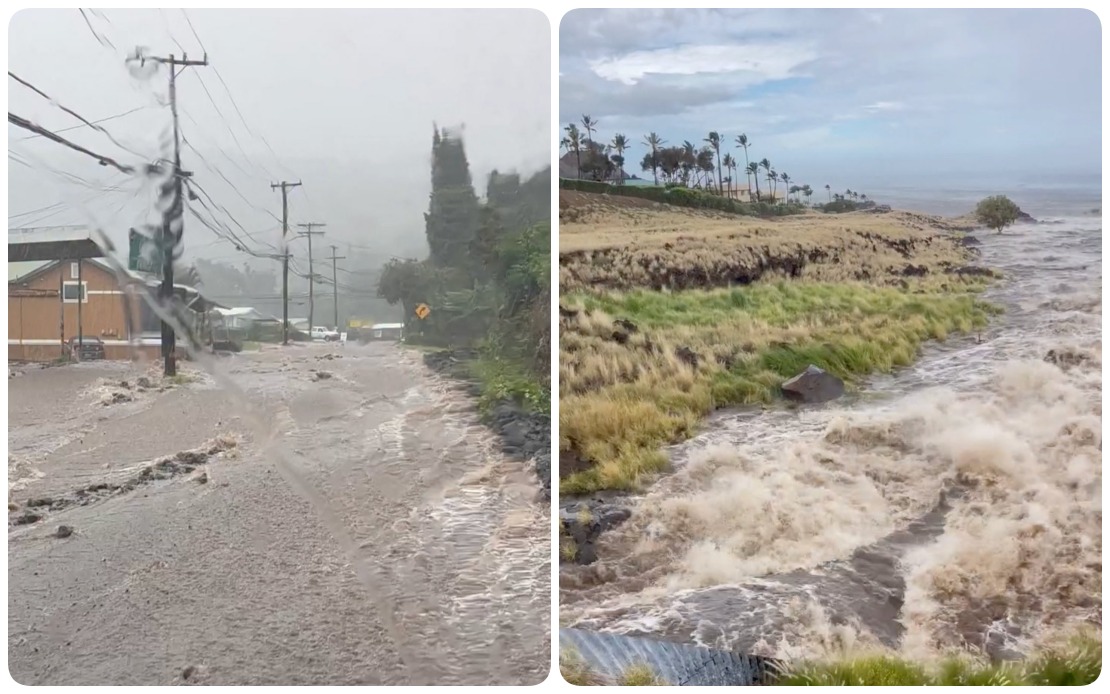
The Hawaiian Islands faced a severe battering from Hurricane Lala on Saturday, August 15, as the tropical storm system passed just to the south of Hawaii Island with destructive force. The tempest unleashed powerful gusts and intense precipitation across the archipelago, resulting in massive power disruptions that affected utility customers throughout the region. By evening on August 15, Hawaiian Electric reported that more than 88,000 customers had lost electricity, with the most severe outages concentrated on Hawaii Island, which experienced 63,270 individual outages. Maui County reported approximately 15,260 affected customers, while Oahu saw roughly 9,500 without power as evening fell.
Governor Josh Green characterized the storm's impacts as escalating throughout Saturday, noting that conditions on Hawaii Island were particularly severe. Wind speeds had reached dangerous levels in many locations, and rainfall accumulations had already surpassed 13 inches in certain areas by the time the governor issued his assessment. Beyond Hawaii Island, the weather pattern was deteriorating across other inhabited islands, with Maui County, Oahu, and Kauai all experiencing worsening conditions as Lala's outer bands moved over their territories. The progression of the storm meant that residents across the entire main island group faced compounding hazards from both wind and water throughout the day.
The Hawaii Emergency Management Agency documented the full spectrum of hurricane-related destruction unfolding across the islands. Wind damage manifested in fallen trees and structural failures, while the copious rainfall overwhelmed drainage systems and flooded roadways. The combination of downed trees and infrastructure failures led to widespread power outages that extended beyond the primary weather event itself. Transportation corridors became increasingly hazardous as debris accumulated and flooding rendered sections impassable. The agency's response involved coordinating evacuations and shelter provisions for residents in the most affected areas.
Transportation infrastructure bore the brunt of Lala's assault. Hawaii's Department of Transportation released documentation showing the scale of water accumulation, with footage depicting streams overflowing their banks and roadways transformed into temporary waterways. The agency systematically closed multiple routes across Hawaii Island, Maui, and Oahu, effectively restricting movement across the affected regions. Authorities issued urgent advisories directing residents to either remain sheltered in their homes or move to designated emergency shelters. This coordinated messaging underscored the severity of conditions and the risks posed by venturing outdoors during the height of the storm.
Local law enforcement agencies reported comprehensive disruption across residential and commercial districts on Hawaii Island. Flooding events closed critical access routes, including Kahikopele Street in Mountain View, which became completely impassable. Damage to Pauahi Street from water accumulation created additional transportation challenges. Mamalahoa Highway, a major thoroughfare, became extremely hazardous due to fallen trees and accumulated debris that blocked lanes and posed collision risks to any vehicles attempting passage. The closure of Plumeria Street resulted from downed power transmission lines that created electrocution hazards. These concurrent failures across different infrastructure systems created a cascading effect that immobilized portions of the islands.
Wind speeds documented by utility monitoring stations reflected the hurricane's intensity. Hawaiian Electric recorded gusts approaching 90 miles per hour in portions of Hawaii Island, where the most violent wind shear occurred. These extreme winds exceeded the structural capacity of aging transmission infrastructure, particularly affecting the Hamakua coast. A 42-mile stretch of transmission lines suffered catastrophic damage, with fallen trees bringing down multiple utility poles and associated structures. The linear nature of this damage pattern, extending across nearly 42 miles of the transmission network, suggested a concentrated corridor of maximum wind intensity that coincided with areas of highest population concentration.
The utility company faced formidable restoration challenges that extended well into the following days. Hawaiian Electric announced that customers on Hawaii Island and Maui would likely remain without electricity throughout the night following August 15, as hazardous conditions made any repair work impossible. The persistence of dangerous winds, flooding waters, and debris accumulation prevented line crews from accessing damage sites safely. The utility took the prudent approach of delaying restoration efforts until conditions stabilized sufficiently for workers to perform repairs without unacceptable risk. This acknowledgment of extended outages meant that residents faced an extended period without access to refrigeration, air conditioning, lighting, and other essential electrical services.
The timing and track of Hurricane Lala presented particular challenges for emergency management authorities across the Hawaiian Islands. Unlike storms that move quickly across the region, Lala's proximity to the islands meant sustained impacts over many hours. The southern track of the storm placed Hawaii Island directly in the zone of maximum wind and rainfall, while the broader circulation affected neighboring islands as well. The Saturday afternoon and evening timing coincided with business hours and regular activity patterns, potentially affecting response and shelter operations. The combination of factors created a complex emergency scenario requiring coordination across multiple counties and state agencies.
For Southeast Asian readers and observers monitoring hurricane patterns, the Hawaii situation reflects broader trends in tropical storm behavior. Hawaii's position in the Pacific means exposure to hurricane systems throughout the seasonal peak from August through October. Infrastructure hardening and emergency preparedness remain constant challenges for island communities facing tropical cyclones. The scale of power outages experienced during Lala—affecting nearly 100,000 customers across islands with a combined population exceeding 1 million—illustrates the vulnerability of modern island economies to weather-related disruptions. Regional comparisons with Pacific island nations and Southeast Asian coastal communities facing similar hurricane and typhoon risks reveal the universal challenge of protecting distributed populations and critical infrastructure from tropical storm impacts.

