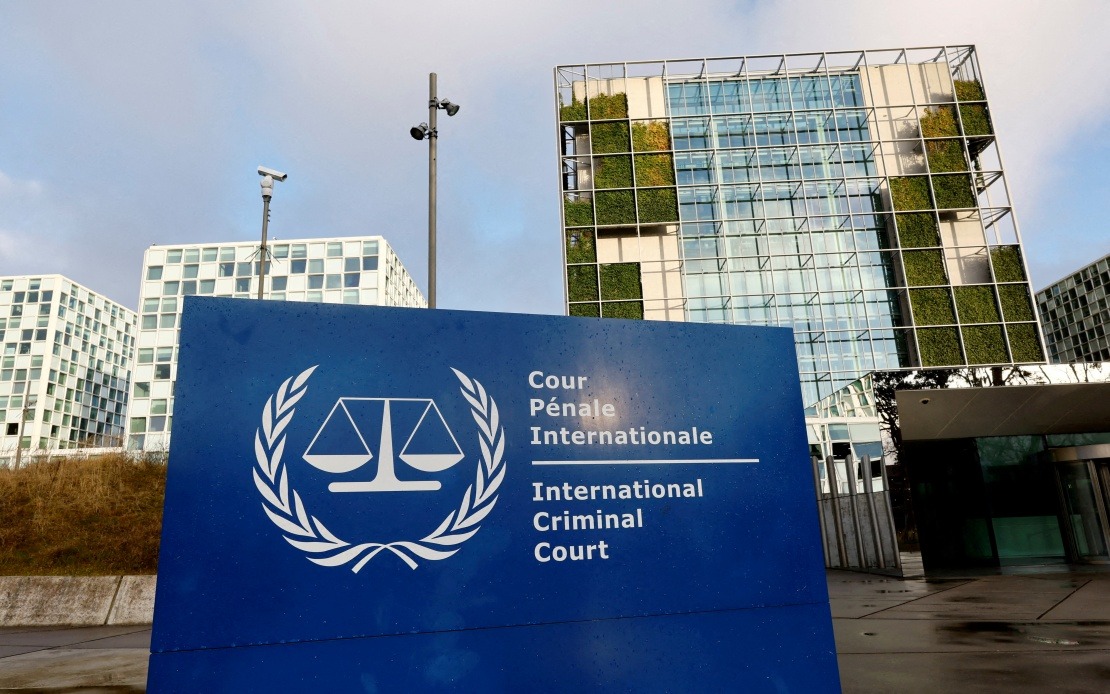
The International Criminal Court has mounted a robust defence of its institutional independence following the announcement of fresh sanctions by the United States, condemning the measures as a serious assault on the court's impartiality and integrity. The latest designations from Washington target ICC President Tomoko Akane of Japan and Abdoulaye Seye of Senegal, a senior trial lawyer at the Office of the Prosecutor, marking an escalation in American efforts to constrain the court's operations.
These newest sanctions represent a significant expansion of Washington's campaign against the The Hague-based institution. According to the ICC's statement, the actions mean that nine of the court's 18 judges, both deputy prosecutors, a former prosecutor, and one additional staff member are now subject to American sanctions. This breadth of targeting across the court's judicial and prosecutorial functions reflects a comprehensive pressure strategy that, in the ICC's view, seeks to paralyse its ability to function.
The court's response strikes a defiant tone, characterising the sanctions as a direct and fundamental challenge to the principles underpinning international justice. Officials emphasised that the ICC operates through a mandate expressly conferred by its States Parties, a coalition of nations spanning multiple regions that have voluntarily submitted to the court's jurisdiction. The institution argues that targeted sanctions against judges and prosecutors for executing their lawful duties represent an unprecedented attempt to manipulate judicial outcomes through economic coercion rather than legal argument.
At the heart of the dispute lies a tension between national sovereignty and international accountability. The United States has been particularly critical of ICC investigations and prosecutions that touch upon American interests or those of close allies. By sanctioning court officials, Washington seeks to create practical impediments to investigations it opposes, a tactic that the ICC contends fundamentally corrupts the justice process. The court maintains that allowing external pressure to influence judicial decisions would transform it from an impartial tribunal into a political instrument, thereby destroying its legitimacy and effectiveness.
The ICC's statement emphasises a broader concern about the international legal order itself. When powerful states resort to sanctions to discourage judicial investigations, the court argues, it signals to other nations that the rule of law is negotiable and that might can effectively challenge right. This message carries particular weight in Southeast Asia, where smaller nations without significant military or economic power have often relied on international institutions to protect their interests and ensure accountability for grave crimes. If the ICC can be undermined by great-power pressure, the protective function these institutions provide to developing nations becomes hollow.
The court further highlighted the impact of such sanctions on victims of international crimes. In many cases, individuals and communities turn to the ICC only after exhausting domestic remedies, finding no justice in their own national systems due to state capture, corruption, or collapse of governance. When international institutions face coercive pressure, the practical ability of these victims to pursue accountability diminishes sharply. Prosecutors may hesitate to initiate investigations if they fear sanctions; witnesses may become reluctant to cooperate; and the entire investigative apparatus may slow or stall. The result is that perpetrators of mass atrocities escape consequences, and survivors are denied closure and recognition of their suffering.
The ICC has received expressions of support from multiple quarters in response to the sanctions. States that are party to the Rome Statute, the treaty establishing the court, have generally defended the institution's independence. Civil society organisations focused on human rights and international justice have likewise condemned the American measures as counterproductive and inconsistent with the values the United States claims to champion. This coalition, though politically diverse, reflects a genuine concern that permitting any state to weaponise sanctions against international courts sets a dangerous precedent that could metastasise across the global legal landscape.
For Southeast Asian nations, this dispute carries strategic implications. Many regional countries have sought to build robust international legal frameworks precisely because they lack the military or diplomatic clout to enforce their interests unilaterally. An ICC weakened by sanctions becomes less capable of investigating crimes that affect these nations or their citizens. Additionally, the precedent that the United States is setting—using economic leverage to constrain judicial independence—could inspire other powerful states to adopt similar tactics, fragmenting the international legal order into competing spheres of influence rather than a unified system of justice.
The court has reaffirmed its commitment to discharging its mandate with full independence and impartiality in accordance with the Rome Statute. This statement of resolve, however, masks real challenges. Even if the ICC's leadership remains steadfast, sanctions create practical obstacles. Sanctioned officials may face personal financial hardship; the court's operations may become more costly as it navigates compliance complexities; and the psychological pressure on staff cannot be ignored. Over time, such measures, even if they do not achieve their immediate political objective, can degrade institutional capacity and morale.
The dispute also exposes deeper questions about the legitimacy and limits of international institutions in an era of great-power competition. The ICC was created with aspirations toward universal justice, yet it operates in a world where permanent members of the UN Security Council pursue narrowly defined national interests. The United States has never been a member of the ICC, having signed but not ratified the Rome Statute, yet it claims the authority to sanction the court's officials. This asymmetry underscores the fundamental vulnerability of international courts: they possess neither armies nor treasuries and depend ultimately on the goodwill of powerful states for their survival.
Moving forward, the path toward resolution remains unclear. The court cannot capitulate without surrendering the independence that defines its purpose. The United States shows no sign of reversing its sanctions policy, particularly regarding investigations related to American military personnel or allied nations. This impasse suggests that the ICC faces a prolonged period of constraint, during which its ability to investigate certain situations and prosecute certain perpetrators will be compromised. The ultimate losers in this geopolitical dispute are not the court's officials but the victims of mass atrocities around the world who depend on international justice mechanisms to hold accountable those responsible for unspeakable crimes.

