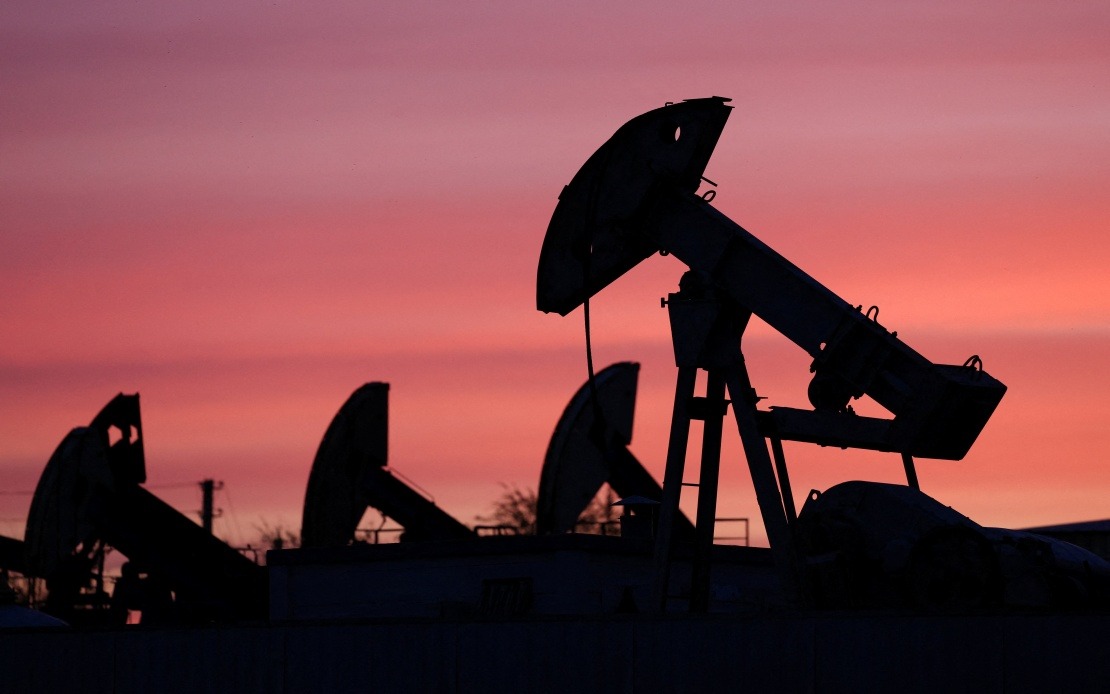
The International Energy Agency released revised projections on Friday that signal a slightly more bullish outlook for global oil markets in 2026, adjusting both its demand and supply forecasts upward from earlier assessments. The organisation now anticipates that worldwide crude consumption will reach 103.463 million barrels per day in 2026, a modest improvement from the 103.292 million barrels per day projected in its previous monthly report. This incremental upgrade, while appearing marginal in percentage terms, reflects the IEA's recalibration of demand trajectories as economic conditions and consumption patterns continue to evolve across major consuming nations.
The refinement in demand expectations carries particular significance for Southeast Asian energy markets and economies deeply tied to petroleum pricing. When global demand forecasts shift, even by fractions of a million barrels, the ripple effects extend through regional supply chains, manufacturing sectors, and transportation costs. For Malaysia and neighbouring economies with substantial petrochemical industries and transportation-dependent logistics networks, incremental changes in IEA forecasts can influence commodity prices, input costs, and ultimately consumer-facing inflation rates. The upgrade suggests that IEA analysts perceive slightly stronger global economic growth potential heading into 2026 than previously modelled.
Simultaneously, the agency revised downward its assessment of how sharply oil demand will contract this year. The IEA now expects current-year demand to decline by 1.047 million barrels per day, a reduction of 71,000 barrels per day compared to its previous forecast of 1.118 million barrels per day. This more moderate contraction figure indicates that demand destruction—the phenomenon where high prices or economic weakness suppress consumption—may not be as pronounced as the agency anticipated a month earlier. The implication is that global economic resilience may be somewhat stronger than initially feared, or that demand-side factors are proving less dampening than expected.
On the supply side, the IEA substantially elevated its production forecast for 2026. The agency upgraded its expected production increase by 0.22 million barrels per day, now projecting that total global oil production will reach 102.6 million barrels per day by 2026. This revision represents a significant turnaround from the previous assessment, which had projected a decline of 3.87 million barrels per day to 102.37 million barrels per day. The direction and magnitude of this change carry important implications for price stability and market dynamics. Rather than expecting production to contract, the IEA now anticipates growth, suggesting that either new capacity additions are coming online faster than expected, or that existing production facilities are maintaining output at higher-than-anticipated rates.
This reversal in production expectations reflects the complex interplay of multiple factors shaping global oil supply. Investment in new projects, technological improvements in extraction efficiency, and geopolitical developments all influence how quickly new barrels reach the market. For Malaysian policymakers and energy sector stakeholders, a more ample global supply picture theoretically offers some relief from price volatility, though the correlation between global supply and actual price movements remains mediated by numerous financial and market-structure variables. The upgrade also signals the IEA's current assessment that supply-side constraints may be easing compared to recent years of tight market conditions.
The comparative trajectory between demand and production forecasts carries strategic importance for understanding market balance. With demand projected at 103.463 million barrels per day and production at 102.6 million barrels per day in 2026, the IEA is essentially forecasting a modest supply deficit of approximately 0.86 million barrels per day. This projected shortfall would require inventory drawdowns or increased reliance on spare capacity to equilibrate markets. Understanding this balance point matters for regional energy security planning, as supply deficits typically correspond with higher price environments that can constrain economic growth in oil-importing nations.
The IEA's forecasting process incorporates assumptions about economic growth rates, industrial activity, vehicle electrification trends, and heating requirements across diverse global regions. Each revision of these forecasts reflects updated data about real-world economic performance, policy changes affecting energy consumption, and emerging demand or supply-side surprises. The upgrades announced Friday suggest that recent economic data and trends have painted a marginally more optimistic picture than was visible one month prior, whether through stronger-than-expected manufacturing activity, resilient transportation demand, or other consumption indicators.
For Malaysia's energy sector, these IEA revisions carry both direct and indirect relevance. As a net oil exporter with significant petroleum reserves and downstream refining capacity, Malaysia benefits from global market conditions that support crude prices and refining margins. The slightly improved demand outlook could support crude prices, potentially benefiting government revenues from petroleum exports and taxation. Conversely, as an economy with substantial energy-intensive manufacturing sectors and significant transportation requirements, Malaysia also experiences costs and economic impacts from higher oil prices, creating a complex policy balancing act.
The regional dimension of these forecasts also merits attention, as Southeast Asia's role in global energy markets continues evolving. The region faces increasing energy demand from rising middle-class consumption and industrial expansion, even as global demand growth moderates due to efficiency improvements and electrification in developed economies. IEA forecasts at the global level necessarily mask significant regional variations, with Asia-Pacific demand generally expected to outpace other regions while developed market demand stagnates or declines. These diverging trajectories create both opportunities and challenges for Southeast Asian energy producers and consumers.
Looking forward, the IEA's willingness to revise forecasts upward—after months of being cautious about demand—may signal confidence that near-term economic headwinds are moderating. However, oil markets remain susceptible to sudden disruptions from geopolitical events, unexpected supply interruptions, or demand shocks. The relatively narrow supply-demand margin projected for 2026 suggests limited buffer for accommodating unexpected tightness. For Malaysian stakeholders, monitoring how these forecasts continue to evolve, particularly any further revisions to demand or production paths, will be important for energy policy formulation and long-term investment decision-making in the energy sector.

