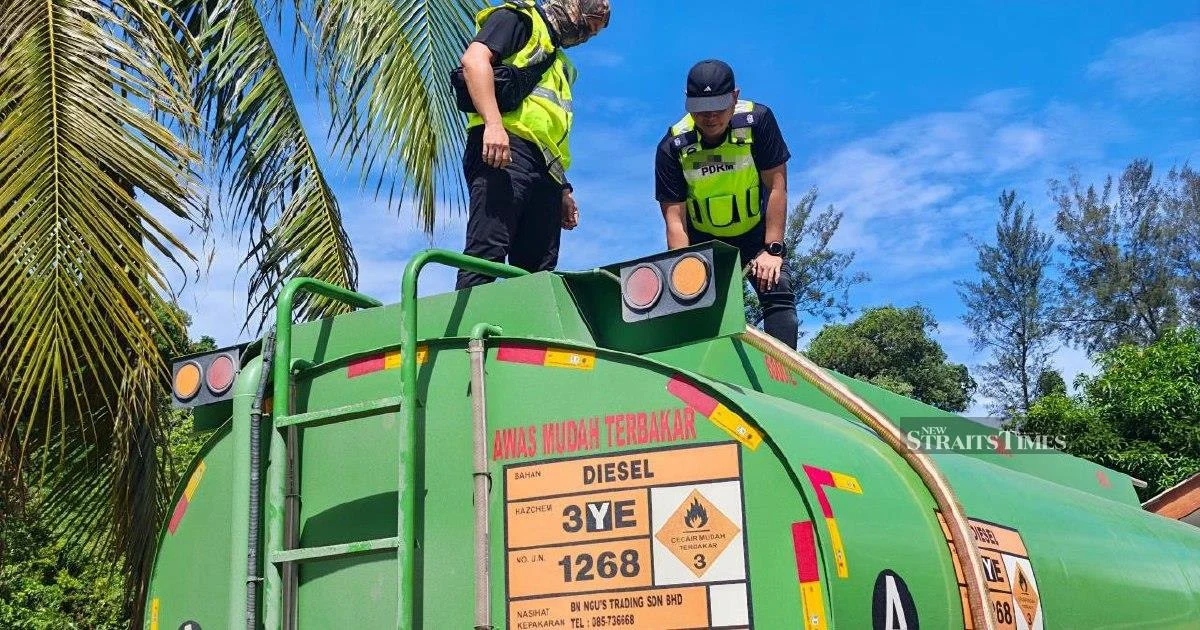
Authorities in Miri have successfully uncovered and dismantled a clandestine diesel distribution operation that had been operating from an unremarkable residential bungalow in the Tanjung Lobang area. The enforcement action resulted in the recovery of 15,000 litres of subsidised diesel fuel and led to the arrest of four men suspected of orchestrating the illegal scheme.
The discovery of this fuel depot represents a significant blow against organised fuel diversion networks operating in Sarawak. These operations typically target government-subsidised diesel supplies intended for essential public services and genuine commercial use, diverting them instead into black-market channels where they command substantially higher prices. The hiding of such operations within residential properties rather than in commercial or industrial zones indicates the level of sophistication and deliberateness with which these syndicates operate to avoid detection.
Fuel subsidies remain a critical element of Malaysia's economic policy, designed to keep energy costs manageable for households and small businesses. However, the persistent problem of diversion undermines this objective by creating artificial scarcity in legitimate markets and generating substantial illicit profits for criminal networks. The Tanjung Lobang case exemplifies how such schemes infiltrate ordinary neighbourhoods, making them harder for authorities to identify through routine surveillance.
The four suspects arrested during the operation are currently under investigation to determine their respective roles within the syndicate structure. Investigators will likely seek to establish whether they operated independently or as part of a larger, more complex distribution network spanning multiple locations. The logistics of moving 15,000 litres of fuel—even in portions—suggests a level of operational planning and infrastructure that typically extends beyond simple amateur smuggling.
The authorities' ability to locate this facility indicates improving intelligence-gathering capabilities and enhanced coordination between relevant enforcement agencies. The discovery that the operation utilised a civilian residence as its base reflects evolving tactics among fuel diversion networks to blend into everyday environments. This approach contrasts with earlier large-scale diesel theft operations that operated from more conspicuous industrial settings, suggesting these criminal groups are adapting their methods to maintain operational continuity.
For Malaysian and Southeast Asian readers, the case underscores the ongoing tension between maintaining affordable fuel subsidies and preventing their systematic exploitation by organised crime. Diversion operations impose hidden costs on the government by reducing actual subsidy benefits reaching intended beneficiaries whilst simultaneously creating inflationary pressure in black markets that affect prices across the wider economy.
The enforcement success in Tanjung Lobang will likely prompt similar operations by authorities elsewhere in Sarawak and across Peninsular Malaysia, where comparable schemes have been identified. Investigators often follow patterns of fuel movement and pricing anomalies to identify suspect locations, and the discovery of this particular depot may trigger review of supply patterns in the surrounding region.
The seizure of 15,000 litres represents a meaningful disruption to criminal operations, equivalent to the fuel consumption of multiple vehicles over extended periods or a week's supply for certain commercial operations. Preventing such diversion helps ensure that legitimate users—from public transport operators to small businesses dependent on stable energy costs—can access fuel at controlled prices as intended by government policy.
The investigation into the four arrested men will likely expand to examine financial records, communication networks, and supply chain connections that could expose additional participants in the syndicate. Authorities typically pursue these angles to dismantle entire operations rather than simply removing individual nodes, as this approach proves more effective in disrupting organised criminal activity long-term.
This bust reflects intensified enforcement focus on fuel-related crime in East Malaysia, where geographical factors and porous boundaries create particular vulnerabilities to smuggling and diversion schemes. The successful detection and neutralisation of this Miri operation demonstrates that despite the sophistication of modern criminal networks, strategic enforcement action combined with effective intelligence-sharing can yield tangible results in protecting Malaysia's fuel subsidy system.