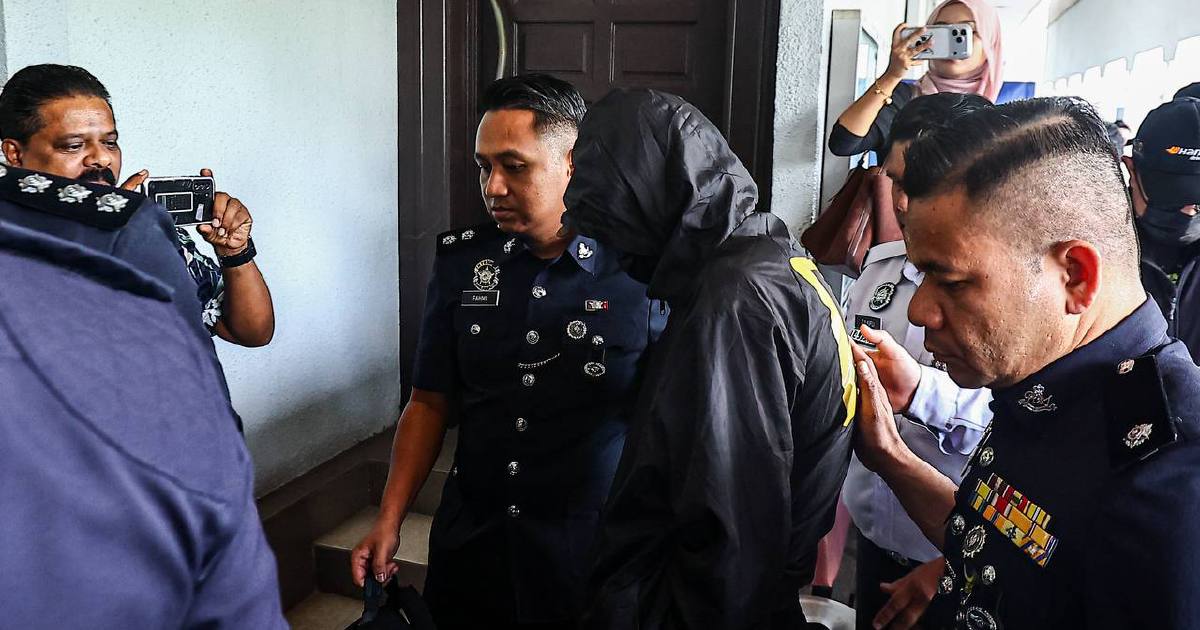
A driver employed by Malaysia's Immigration Department made his initial court appearance in Kuala Lumpur today, following a fatal traffic collision that occurred on Jalan Sultan Ismail yesterday. The accused arrived at the magistrates' court under substantial police security, drawing significant attention as the case entered the formal judicial process. This marks a critical juncture in the investigation into what authorities have described as a serious traffic incident in one of the capital's main commercial thoroughfares.
The incident on Jalan Sultan Ismail has raised renewed concerns about road safety in Kuala Lumpur's congested central business district, where heavy vehicle traffic shares lanes with private cars and motorcycles. The timing of the accident—occurring during what appears to have been standard business hours—suggests the collision may have involved multiple vehicles or pedestrians in the vicinity. Preliminary information indicates the Immigration Department's lorry was the primary vehicle involved in causing the fatal outcome, though full details of the circumstances remain under investigation.
The police's decision to provide heavy escort for the driver's court appearance reflects the sensitivity surrounding the incident and its fatal consequences. Such security measures are typically deployed when authorities anticipate significant public interest or concern over traffic fatalities, particularly those involving government vehicles. This approach also ensures the defendant's safe passage through what could otherwise be a challenging public ordeal, maintaining the integrity of the legal process.
The magistrates' court hearing represents the beginning of formal proceedings that will establish whether charges will be formally filed and what legal framework will apply. Malaysia's road traffic laws provide for various charges depending on circumstances, ranging from careless or rash driving causing death to more serious offences. The outcome of today's appearance will likely determine whether bail conditions are set, whether the case proceeds to a higher court, and the trajectory of the legal process ahead.
Jalan Sultan Ismail's history of traffic incidents underscores broader challenges facing Kuala Lumpur's transportation infrastructure. The arterial route connects major business districts and government offices, making it a heavily trafficked corridor where speed, congestion, and vehicle-pedestrian interactions create inherent risks. Traffic safety advocates have long highlighted the need for enhanced enforcement and infrastructure improvements along key routes in the city centre to reduce accident rates.
The involvement of a government vehicle in this fatal accident adds a layer of institutional accountability to the proceedings. The Immigration Department may face questions regarding vehicle maintenance standards, driver training protocols, and adherence to road safety regulations within its operations. Such incidents often prompt government agencies to review their fleet management and driver conduct policies to prevent recurrence.
For the immigration department specifically, this incident comes at a time when the agency manages significant responsibility in Malaysia's border security and visitor processing operations. Any reputational impact from this traffic fatality could influence public perception of the department's overall operational standards, though the judicial process will ultimately determine culpability based on evidence and legal assessment of the accident circumstances.
The investigation phase continues even as court proceedings commence, with traffic police likely still gathering forensic evidence, witness statements, and vehicle condition reports. The formal court process will operate in parallel with the police investigation, with both potentially contributing to the final determination of criminal responsibility. Expert analysis of accident reconstruction, vehicle conditions, and driver conduct will likely feature prominently in establishing the facts of the case.
This incident also highlights the occupational hazards faced by professional drivers in Malaysia, who operate heavy vehicles on increasingly congested urban roads. Training standards, fatigue management, and workplace safety protocols for government vehicle operators remain areas where continuous improvement is critical to preventing similar tragic outcomes.
The next court date and any bail determinations made today will be closely monitored by road safety advocates and civil society groups tracking traffic fatality cases in Malaysia. Such high-profile incidents often spark broader discussions about enforcement priorities, infrastructure investment, and whether current penalties adequately deter reckless driving behaviour. The eventual outcome of this case may influence how authorities and the public assess accountability in fatal traffic incidents involving public sector vehicles.
As the legal process unfolds over coming weeks and months, the focus will remain on ensuring justice for those affected by the accident while also extracting lessons that might improve road safety outcomes across Kuala Lumpur's busy arterial networks. The balance between holding the driver responsible and addressing systemic factors that contribute to traffic fatalities will be crucial to understanding how such incidents can be prevented in the future.

