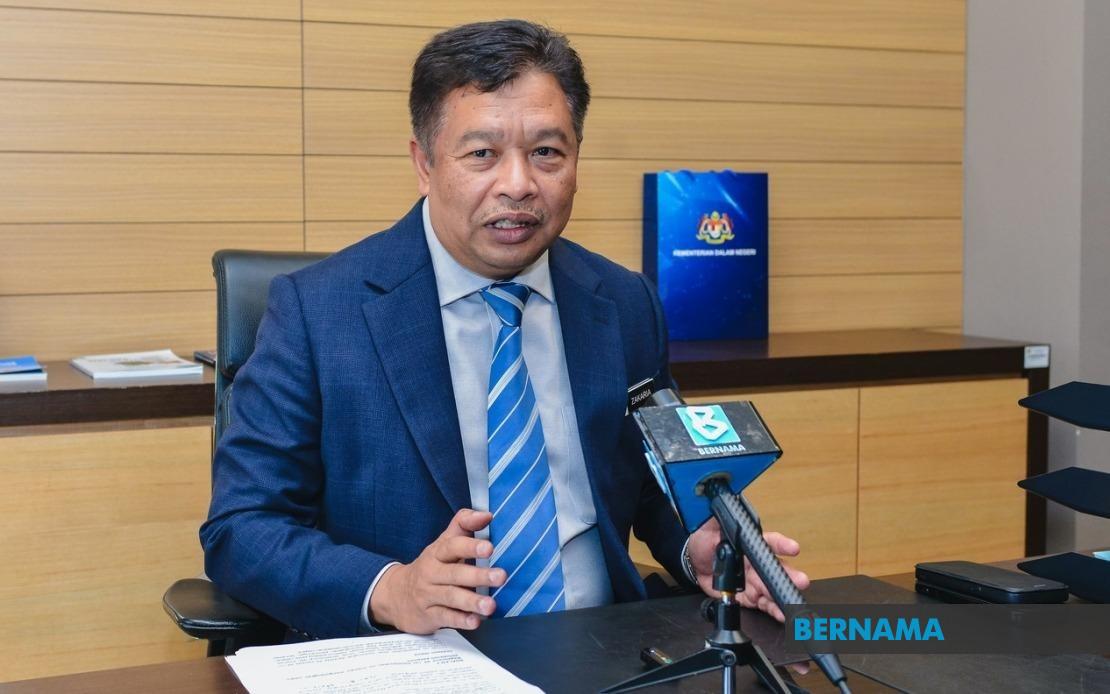
The Immigration Department of Malaysia is taking no chances with the logistics of the Johor State Election, having elevated its operational readiness to maximum levels as the polling date approaches. With an estimated 300,000 travellers crossing through Malaysia-Singapore border complexes daily, the department recognises that any system disruption could prevent thousands of registered voters from fulfilling their democratic duty. Datuk Zakaria Shaaban, the department's director-general, has personally overseen preparations, signalling the high priority placed on maintaining seamless border operations during what promises to be an exceptionally busy electoral period.
The two critical entry points receiving particular attention are the Sultan Abu Bakar Complex at Tanjung Kupang, which feeds into the Malaysia-Singapore Second Link infrastructure, and the Sultan Iskandar Building adjacent to JB Sentral, connecting to the Woodlands checkpoint. Both facilities rank among the world's most congested international gateways, a distinction that underscores both their importance to regional commerce and the considerable challenge they present for coordinating large-scale passenger movements. The sheer volume of daily foot traffic through these complexes—approaching 300,000 individuals—means that even marginal inefficiencies can cascade into substantial delays affecting commuters and voters alike.
Currently, the immigration inspection apparatus at both facilities is functioning within normal parameters, according to Zakaria's latest assessment. The department has chosen to maintain its existing technological infrastructure rather than implement new systems that might introduce unforeseen complications during the critical election period. This pragmatic approach prioritises operational stability over innovation, reflecting a clear understanding that the primary objective is reliable, uninterrupted processing rather than system modernisation. The decision demonstrates careful risk management, recognising that untested systems could prove counterproductive during a period of elevated passenger volumes.
Beyond the technology itself, the Immigration Department has implemented a comprehensive contingency framework. Should the primary inspection systems experience degradation or complete failure, trained personnel are prepared to transition immediately to manual processing procedures. This dual-layer approach ensures that travellers—particularly those intent on voting—face minimal delays even in adverse scenarios. The existence of such backup protocols offers reassurance that operational continuity is not dependent on any single technological component, a consideration that becomes critical when managing international borders during high-stakes national events.
The technical surveillance regime is notably intensive, with the department's engineering team maintaining round-the-clock vigilance over system performance metrics. This continuous monitoring allows problems to be detected and remedied with minimal lag time, preventing minor technical issues from escalating into widespread disruptions. By identifying potential faults before they manifest as passenger-facing delays, the department hopes to maintain the throughput necessary to accommodate the anticipated surge in cross-border movement.
The imperative driving this heightened operational posture is distinctly democratic in character. Malaysia has a substantial expatriate workforce in Singapore, with many maintaining voter registration in their home constituencies. The Johor election, scheduled for Saturday, July 11, with early voting commencing July 7, is expected to attract significant participation from this demographic. Zakaria's explicit statement that the department must "ensure a problem-free system on that day so that voters who are in Singapore can return to fulfil their civic responsibility without any difficulty" crystallises the broader national interest in enabling electoral participation, transcending the narrower technical dimensions of border management.
Home Minister Datuk Seri Saifuddin Nasution Ismail has reinforced this commitment through parallel assurances regarding travel facilitation for overseas workers. The Home Ministry's comprehensive mitigation strategy complements the Immigration Department's operational planning, ensuring that governmental response to potential disruptions extends beyond the immigration apparatus itself. This ministerial-level engagement signals that electoral accessibility for Malaysian voters abroad is receiving attention commensurate with its political significance.
The Johor State Election itself represents a substantial electoral undertaking, with 172 candidates competing across 56 state assembly constituencies. The scale of the contest, combined with the state's geographic position as a crucial link between Malaysia and Singapore, creates logistical complexities that justify the considerable preparatory effort. The fact that Johor contains major international border facilities means that any procedural failure would reverberate across multiple dimensions simultaneously—affecting not merely electoral participation but also broader cross-border commerce and movement.
For the Malaysian diaspora in Singapore, the election underscores ongoing questions about political engagement despite geographic separation. The accessibility of voting mechanisms directly influences electoral participation rates among transnational Malaysian communities. When border facilities operate smoothly, overseas voters can more readily discharge their democratic responsibilities; when disruptions occur, even motivated voters may find participation logistically prohibitive. The Immigration Department's meticulous preparations reflect recognition that electoral systems function adequately only when the underlying infrastructure supporting voter access performs reliably.
The situation also illuminates the broader infrastructure dimension of Southeast Asian governance. As a region characterised by substantial cross-border labour mobility and economic integration, the capacity to maintain efficient international borders during periods of heightened demand becomes a marker of state capacity and administrative competence. Malaysia's approach to managing the Johor election's cross-border dimensions serves as a case study in coordinating multiple governmental agencies—immigration, customs, health authorities—to achieve unified operational objectives.
Looking forward, the performance of Malaysia's border facilities during the Johor election period will likely inform subsequent electoral planning. Should the operations proceed smoothly, the established protocols may become a model for future elections in states with significant overseas constituencies. Conversely, any disruptions would prompt comprehensive review and potentially necessitate infrastructure investment. Either trajectory carries implications for how Southeast Asian nations manage electoral participation among their transnational populations, a demographic dimension that will only grow as regional labour mobility increases.

