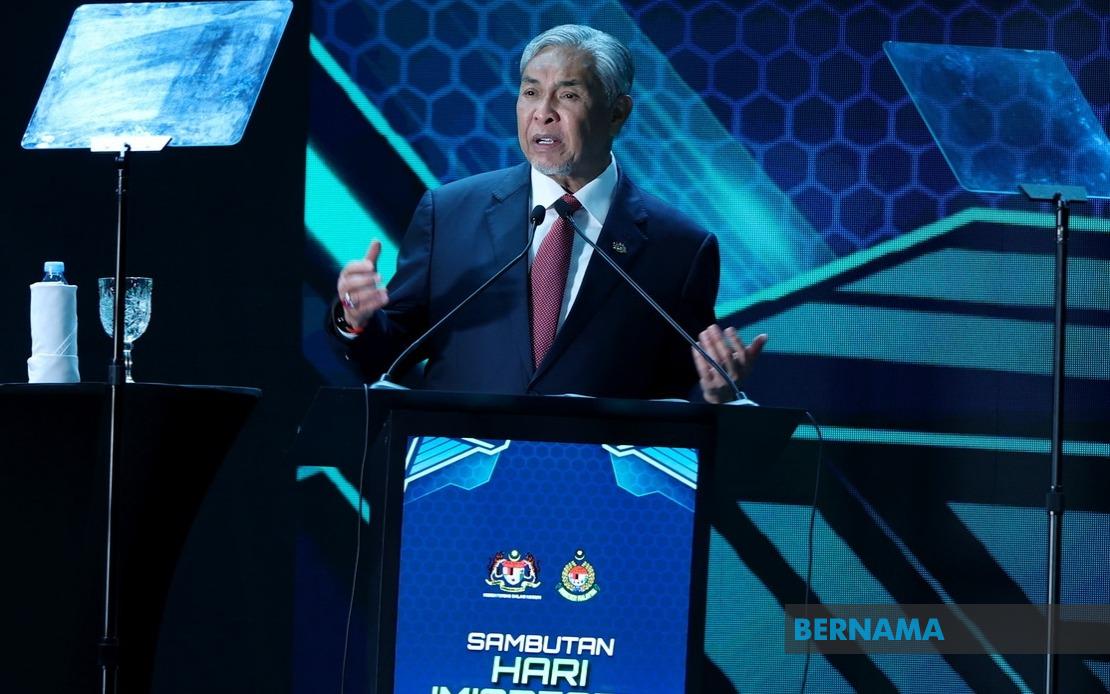
Deputy Prime Minister Datuk Seri Dr Ahmad Zahid Hamidi has declared his backing for an overhaul of the Immigration Officer Service Scheme, asserting that frontline immigration personnel merit enhanced career prospects and improved working conditions commensurate with their responsibilities. Speaking at the 2026 Immigration Day celebration in Cyberjaya on July 21, Zahid endorsed Home Minister Datuk Seri Saifuddin Nasution Ismail's earlier proposal, which advocates restructuring key positions within the service and creating more opportunities for professional advancement among officers.
The push for reform reflects growing recognition that immigration services occupy a critical yet often underappreciated space within Malaysia's governance architecture. By positioning these improvements as overdue recognition rather than mere administrative adjustment, Zahid signalled that the initiative carries cabinet-level priority. He specifically called upon Chief Secretary to the Government Tan Sri Shamsul Azri Abu Bakar and Public Service director-general Tan Sri Wan Ahmad Dahlan Abdul Aziz to treat the proposal with appropriate seriousness, effectively directing the civil service machinery to move forward with implementation planning.
A key justification underpinning the call for enhanced service conditions centres on the Immigration Department's substantial contribution to national finances. Zahid explicitly noted that the department ranks as the country's third-largest revenue-generating agency, a distinction that underscores its economic importance beyond its security mandate. This framing reframes the immigration portfolio from a purely administrative function into a significant commercial operation, suggesting that officer compensation and career progression should reflect this economic value creation.
The timing of this advocacy reflects broader shifts in how Malaysia's leadership perceives border management and immigration administration. As Southeast Asia grapples with irregular migration flows, human trafficking, and transnational security threats, the quality and motivation of frontline immigration officers have become increasingly material to national outcomes. Enhanced career pathways and improved service schemes serve practical purposes beyond morale-building—they facilitate retention of experienced personnel and attract higher-calibre recruits to roles requiring judgment, integrity, and technological competency.
Zahid's emphasis on restructuring strategic posts suggests that current organisational arrangements may not optimally match responsibilities with career incentives. In many civil service schemes, hierarchical constraints and limited promotional bandwidth can create bottlenecks where experienced, capable officers plateau in their roles, potentially leading to brain drain toward private sector opportunities or overseas positions. Expanding career pathways addresses this structural constraint by creating lateral opportunities and specialist tracks that allow progression without requiring every advancement to follow traditional pyramidal routes.
Beyond administrative reform, Zahid's remarks during the Immigration Day address underscored the ethical dimensions of public service within this sensitive domain. He urged immigration personnel to execute their duties guided by integrity, positioning them as the nation's frontline guardians responsible for protecting sovereignty. This rhetorical framing acknowledges that immigration work involves significant discretionary judgment—officers make daily decisions affecting individual freedoms and national interests simultaneously, requiring both technical competence and moral clarity.
Zahid's exhortation to officers to serve because of internal commitment rather than external supervision speaks to a professionalism challenge that extended improvement schemes may help address. When personnel feel undervalued relative to their contributions and responsibilities, institutional performance can suffer through reduced initiative and compromised morale. Conversely, service schemes that genuinely reflect role demands foster the internal motivation Zahid invoked, potentially reducing regulatory drift and enhancing consistency in policy implementation across different entry points and facilities.
The Immigration Department's frontline role in processing travellers, managing asylum seekers, and intercepting irregular migrants positions it as a crucial interface between Malaysia and global mobility patterns. Enhanced career prospects for officers translate into improved service delivery for travellers and increased technical capability for managing complex migration phenomena. For Malaysian citizens and businesses engaging with immigration services, this reform indirectly promises more responsive, professional interactions with a better-resourced institutional apparatus.
Regionally, Malaysia's commitment to upgrading its immigration service capacity signals responsiveness to evolving transnational challenges that demand sophisticated coordination with counterpart agencies across Southeast Asia and beyond. Countries with professionalised, well-motivated immigration workforces participate more effectively in information-sharing arrangements and coordinated enforcement operations that address shared security concerns. By investing in service scheme improvements, Malaysia positions itself as a serious partner in regional migration governance frameworks.
The proposal also reflects recognition that public sector reform cannot ignore comparative salary and benefits structures across the civil service. If immigration roles involve distinct security responsibilities and revenue-generation functions yet offer career progression inferior to other departments, recruitment and retention challenges inevitably follow. Service scheme restructuring creates opportunity to recalibrate compensation frameworks to reflect actual job demands rather than historical precedent, potentially allowing the department to compete more effectively for talent.
Implementation of these improvements will require coordination across multiple government agencies and careful budget allocation. The deference to departmental heads like the Chief Secretary and Public Service director-general suggests formal proposal processes remain pending, meaning the current timeline for actual reform remains uncertain. Nonetheless, having Deputy Prime Minister endorsement substantially increases the likelihood that proposals will receive serious consideration and resources within the next budget cycle.
For immigration officers themselves, Zahid's public backing provides political cover for advancing their organisational interests and may energise union or association advocacy for concrete improvements. The visibility of high-level political support can shift internal government dynamics, transforming service scheme enhancement from a departmental request into a whole-of-government priority. This political momentum will likely prove instrumental in translating Zahid's words into actual policy changes affecting recruitment, compensation, and career structures within Malaysia's immigration apparatus.

