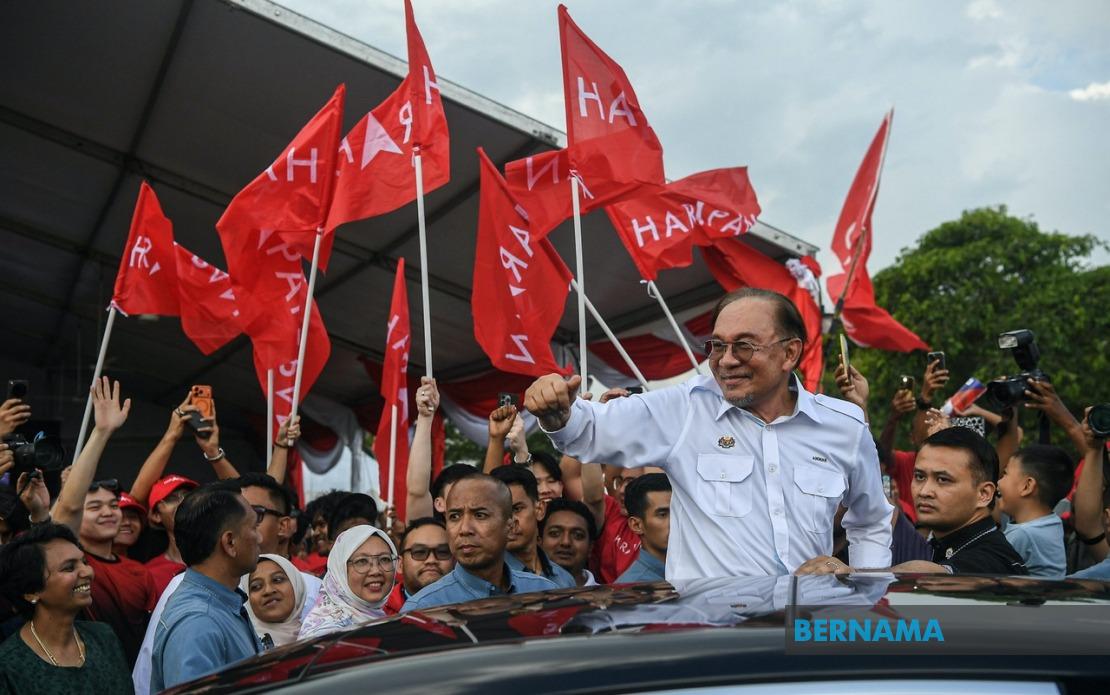
The 16th Johor State Election has unleashed a flood of TikTok videos, Facebook content, and digital messaging strategies across Malaysia's southern state, yet conversations with older voters in constituencies across Johor reveal a persistent truth: nothing quite substitutes for the flesh-and-blood experience of meeting a political candidate in person. This insight emerged from a Bernama survey conducted as campaigning intensified across the state ahead of voting day, when 2.7 million registered voters will choose 56 representatives to govern the state.
For many senior citizens in Johor, the ability to observe a candidate's physical bearing, assess their demeanour in real time, and gauge what they describe as their "aura" remains the gold standard for evaluating political trustworthiness. A. Chandra, a 70-year-old retired teacher from the Perling constituency, articulated this preference bluntly: attending campaign rallies offers an immersive atmosphere impossible to replicate through a smartphone screen. The communal energy of gathering with fellow citizens to hear candidates speak directly creates a sense of shared civic participation that livestreams and social media feeds simply cannot replicate. For Chandra and others like him, the experience of walking into a campaign venue and encountering political leaders in an unmediated way reinforces their sense that they are making an informed electoral choice.
Maimunah Ismail, a 73-year-old housewife in the Sedeli constituency, reflects a more nuanced reality: while she deeply values the intimacy of in-person campaign events as opportunities to evaluate character, she has quietly integrated digital tools into her information-gathering routine. She follows campaign developments on her mobile phone via Facebook and other social platforms while managing household tasks, demonstrating that older voters are not uniformly rejecting digital media but rather incorporating it as a supplementary layer of engagement. This hybrid consumption pattern suggests that the generational divide often assumed by political strategists may be more complex than stereotypes suggest.
The appeal of physical campaigning extends beyond mere nostalgia or habit. Saadon Mohamad, a 72-year-old voter, notes that while political information now flows abundantly through online channels, the tangible excitement and human connection inherent in face-to-face encounters create an emotional resonance that digital platforms struggle to achieve. This speaks to a deeper truth about electoral behaviour: voters do not process political messaging as pure information to be consumed and evaluated rationally. Instead, they integrate emotional, social, and relational dimensions into their decision-making processes, and older voters in particular appear to weight these experiential factors heavily.
Conversely, some older voters have embraced digital platforms out of necessity rather than choice. M. Sivathramani, a 73-year-old retired civil servant with limited mobility due to physical injuries, explicitly credits platforms like TikTok with enabling him to remain politically informed without enduring the physical strain of navigating crowded rally venues. His situation underscores an important function of digital campaigning: it democratises access for voters facing barriers to physical participation, whether due to age-related health constraints, work obligations, or geographic remoteness. Yet even Sivathramani, if mobility permitted, would prefer the directness of meeting candidates in person, suggesting that digital engagement serves as an acceptable alternative rather than a preferred choice.
Fairuz Saif, a 59-year-old Kempas voter, challenges assumptions about digital literacy among mature voters while simultaneously highlighting a critical insight about campaign effectiveness. He argues that social media's impact depends fundamentally on how political parties craft and present their messages, using language and brevity accessible across age groups rather than deploying sophisticated digital techniques that alienate older audiences. This distinction matters significantly in a state like Johor, where voter demographics span from young urban professionals to retirees in smaller towns. Saif further contends that face-to-face campaigning retains superior persuasive power precisely because it enables real-time dialogue—candidates answer questions directly, respond to concerns authentically, and build personal rapport that generates voter confidence.
Lee Lian Chen, a 58-year-old shop owner in Bukit Permai, illustrates how working adults adopt a sequential approach to voter decision-making: she uses social media as a first filter to review candidates' manifestos and policy positions, then moves to direct observation to assess their capacity for implementation. For her, the crucial question concerns not campaign messaging but execution—whether candidates can actually deliver promises made to the electorate. This perspective, refined by five-year electoral cycles that penalise unfulfilled commitments, demonstrates that older and middle-aged voters often approach political information strategically, using digital tools instrumentally to shortlist candidates before final in-person assessment.
Dr Nazreena Mohammed Yasin, a senior lecturer in social sciences at Universiti Tun Hussein Onn Malaysia, provides academic framework for understanding these patterns. She observes that physical and digital campaigning have evolved from competing methodologies into complementary channels, each serving distinct voter segments and reinforcing engagement across different touchpoints. While social media increasingly functions as a primary political information source for many Johoreans, physical campaigns retain sentimental and relational value by enabling voters to experience elections as civic events rather than isolated media consumption.
Dr Yasin notes further that information-seeking behaviour varies significantly by generational and educational background. Some older voters maintain primary reliance on traditional media—newspapers, television news broadcasts—while others have adopted Facebook, WhatsApp groups, and even TikTok for convenience and accessibility. Working-age adults frequently cite time constraints and job demands as drivers toward social media engagement, treating online platforms as pragmatic solutions to the logistical challenges of attending physical campaign events. This heterogeneity within age cohorts complicates any simplistic digital-versus-traditional narrative.
The emerging picture across Johor's constituencies reveals a sophisticated electorate that employs what Dr Yasin terms a "hybrid approach"—combining firsthand experiences at campaign venues with information harvested through social media before entering the voting booth. This integration reflects neither technological determinism nor nostalgic attachment to outdated campaigning, but rather rational voter behaviour adapted to modern communication ecosystems. Older Johorean voters, far from being passive subjects of political messaging, actively curate their information sources and blend multiple forms of engagement to reach electoral decisions.
As campaigning intensifies toward voting day, when 2.7 million voters will cast ballots for the 56 state representatives, political strategists in Johor would be mistaken to interpret digital dominance as diminishing the role of traditional campaigning. The survey findings suggest instead that parties which effectively deploy both channels—maintaining visible, accessible physical presence while managing sophisticated digital messaging—will most successfully reach Johor's diverse voter base. For elderly voters particularly, the candidate who appears at the community hall, shakes hands, answers questions directly, and demonstrates engagement in real time remains the most convincing advocate for their vote.

