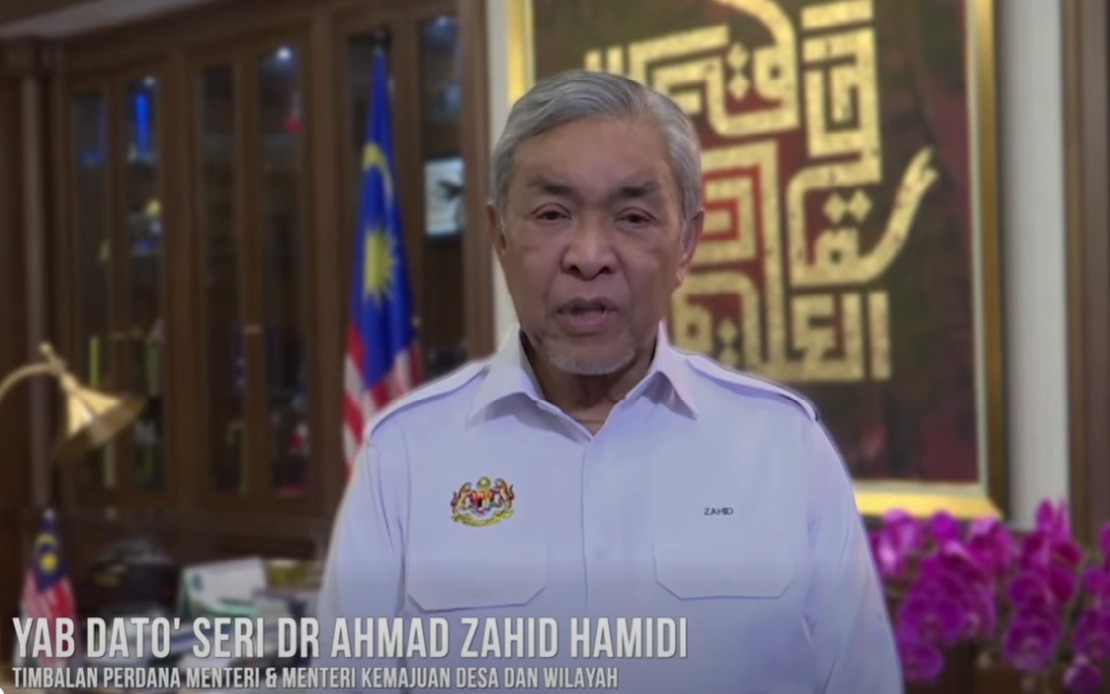
As Malaysia marked its 69th year of independence, Deputy Prime Minister Datuk Seri Dr Ahmad Zahid Hamidi articulated a vision where the meaning of the nation's freedom extends far beyond the historical achievement of breaking free from colonial rule. Speaking through a National Day message, he contended that contemporary independence must be evidenced in the everyday realities of ordinary Malaysians—through access to quality skills development, meaningful employment opportunities and an assurance that no citizen is consigned to the margins of national progress.
Ahmad Zahid's framing of independence as an ongoing endeavour rather than a fixed historical event carries particular resonance for a developing nation grappling with persistent economic inequalities. His emphasis on vocational and technical education skills reflects a pragmatic recognition that formal university credentials alone cannot address the employment challenges facing Malaysian youth. By prioritising technical and vocational education and training, commonly known as TVET, the government signals an attempt to bridge the gap between labour market demands and the skills possessed by school leavers—a persistent challenge across Southeast Asia that has left many young people underemployed or jobless despite educational attainment.
The Deputy Prime Minister's assertion that small entrepreneurs must be empowered to expand their operations speaks to a deeper acknowledgment of the role that small and medium enterprises play in Malaysia's economic resilience. Small businesses remain a significant employment generator, yet they frequently struggle with access to capital, market information and institutional support. By positioning entrepreneurial growth as integral to independence's meaning, Ahmad Zahid signals governmental commitment to dismantling structural barriers that constrain business expansion, particularly among first-generation entrepreneurs from lower-income households.
As Rural and Regional Development Minister, Ahmad Zahid placed particular emphasis on ensuring that national development penetrates beyond urban concentrations to reach villages and remote districts. This commitment addresses a longstanding grievance in Malaysian politics—the perception that rural and indigenous communities have been left behind in prosperity gains. Infrastructure projects, from roads to electricity to educational facilities, serve as the sinews connecting geographically distant populations to economic opportunity. His observation that "a nation does not become great merely because of what it builds, but because of who it brings along" articulates an inclusive development philosophy that stands in contrast to growth-centric models that prioritise headline GDP figures over equitable distribution of benefits.
The halal industry featured prominently in Ahmad Zahid's independence narrative, underscoring Malaysia's strategic positioning as a global halal hub. This sector transcends religious significance; it represents a concrete economic opportunity through which Malaysian entrepreneurs and workers can compete internationally. By linking halal industry development to independence, the government seeks to reframe religious and cultural identity as economic assets rather than peripheral concerns, thereby expanding market access and employment pathways for Malaysian citizens in a values-aligned manner.
Speaking separately, Deputy Prime Minister Datuk Seri Fadillah Yusof introduced a complementary dimension to the independence discourse by emphasising internal spiritual and psychological liberation. He urged Malaysians to emancipate themselves from division, hatred, prejudice and extremism—internal forces that, he argued, corrode national harmony more insidiously than external threats. This conceptualisation of independence as also requiring freedom from prejudice and sectarian thinking reflects the ongoing challenge of maintaining social cohesion in a multi-ethnic, multi-religious society where periodic tensions threaten communal peace.
Fadillah's invocation of Malaysia's constitutional framework and the Rukun Negara principles signals continuity with established institutional and philosophical foundations for national unity. Yet his warnings about identity erosion and social fragmentation in the face of technological disruption and rapid information flows acknowledge contemporary challenges that the nation's founding documents could not have anticipated. The speed at which misinformation spreads through social media, the polarising effect of algorithmic content curation, and the way globalisation destabilises traditional communities all pose novel threats to the unity consciousness that the founding generation sought to enshrine.
The 2024 National Day theme, "Malaysia MADANI: Well-being for All," encapsulates the government's stated aspiration to move beyond purely economic metrics of development toward holistic well-being encompassing physical health, social cohesion, environmental sustainability and psychological resilience. This represents a philosophical pivot, acknowledging that GDP growth unaccompanied by improvements in life satisfaction, community trust and personal security proves ultimately hollow. For Malaysian policymakers, this thematic choice suggests receptiveness to the body of international research demonstrating that beyond a certain income threshold, subjective well-being correlates more strongly with factors such as social capital, institutional trust and perceived fairness than with absolute income levels.
Both Ahmad Zahid and Fadillah framed independence as a generational trust—a responsibility to hand down a nation improved from what was received. This intergenerational framing carries weight in a society where demographic transition is accelerating and where younger cohorts increasingly question whether the social contract underlying the independence settlement remains fit for contemporary circumstances. By explicitly committing to leaving future generations a more prosperous, just and harmonious nation, senior government figures attempt to renew legitimacy around the independence project itself, repositioning it not as a historical artefact but as an unfinished work requiring sustained commitment.
The emphasis on citizen agency and individual responsibility—evident in Fadillah's call for Malaysians to "give meaning to independence through their actions"—represents an attempt to distribute the burden of nation-building beyond government institutions. This distribution of responsibility, if genuinely embraced, could strengthen social resilience by cultivating a sense of shared ownership in national outcomes. However, such distributed responsibility requires that institutional performance merits citizen confidence, and that governance structures genuinely enable meaningful participation rather than merely soliciting symbolic endorsement.
For Malaysian readers and those observing Southeast Asian politics, these National Day pronouncements reveal an administration attempting to negotiate between celebrating historical achievements and confronting present challenges. The repeated insistence that independence must manifest in tangible improvements to living standards, opportunities and social harmony suggests recognition that the legitimacy of the political order increasingly depends less on historical accomplishment and more on demonstrable delivery of contemporary benefits. This represents a subtle but significant rhetorical shift from celebrating what was achieved in 1957 to defending what is being achieved in 2024—a move that reflects both governmental confidence and underlying vulnerability.

