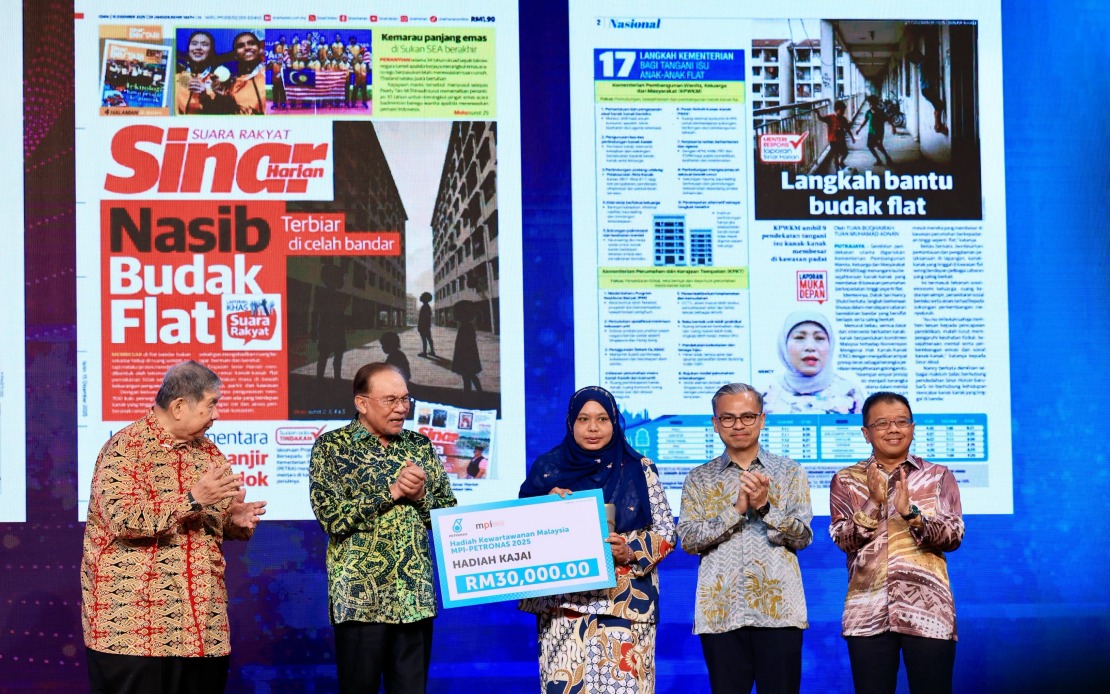
At the Malaysian Journalists' Night (MWM) 2026 held in Kuala Lumpur on July 17, Communications Minister Datuk Seri Fahmi Fadzil stressed that media integrity and independence form the cornerstone of a functioning democracy and an engaged public sphere. Accompanying Prime Minister Datuk Seri Anwar Ibrahim to the prestigious gathering, Fahmi acknowledged the profession's essential contribution to national development and social cohesion, particularly during an era defined by information saturation and deliberate falsehoods.
The minister's remarks arrive at a moment when Malaysia's media landscape faces mounting pressure from competing narratives and the proliferation of unverified content across digital platforms. His emphasis on ethical journalism resonates with broader regional concerns about how democracies can maintain institutional credibility when citizens encounter contradictory information sources simultaneously. The challenge extends beyond mere quantity of news; it encompasses the fundamental question of how societies distinguish reliable reporting from manufactured or distorted accounts designed to mislead.
The Malaysian Journalists' Night served as a platform to honour journalistic excellence through the MPI-PETRONAS Malaysian Journalism Awards 2025, recognising practitioners and organisations that have demonstrated exceptional standards in their work. This annual recognition programme reflects the Malaysian Press Institute's commitment to elevating professional standards and celebrating those who advance the industry's credibility during turbulent information times. The awards ceremony underscores an important principle: that excellence in journalism requires deliberate effort, professional discipline, and institutional support.
Fahmi's call for continued commitment to integrity and truth-telling carries particular significance for Malaysia's evolving media ecosystem. The nation has experienced substantial digital transformation over the past decade, expanding the channels through which information reaches citizens while simultaneously creating vulnerabilities to coordinated misinformation campaigns. Independent journalism, properly resourced and editorially autonomous, functions as a counterweight to these distortions, grounding public discourse in verifiable facts rather than speculation or propaganda.
The event drew approximately one thousand participants from across Malaysia's media sector, including editors, journalists, and representatives from government institutions, commercial enterprises, and academic bodies. This cross-sector attendance demonstrates recognition that media responsibility extends beyond newsrooms alone; government agencies, corporations, and educational institutions all bear responsibility for supporting and protecting independent journalism. The gathering itself embodied this principle through its inclusive composition, bringing together stakeholders with divergent interests but shared interest in democratic stability.
The relationship between government and media represents a delicate equilibrium in any functioning democracy. Fahmi's attendance and public statements represent an acknowledgment from the executive branch that press freedom, properly understood, serves national interests rather than threatening them. An informed electorate, equipped with accurate information about policy decisions and their consequences, can engage more meaningfully in democratic processes. Conversely, societies where misinformation dominates public discourse experience degraded decision-making across all levels of governance and civic participation.
Malaysia's media practitioners face particular challenges in the Southeast Asian context. Competing regional powers and interests often deploy information warfare tactics designed to influence Malaysian public opinion on issues ranging from geopolitics to domestic policy. Independent, professional journalism provides crucial resistance to these external manipulation attempts, grounding national discourse in locally-relevant facts and analysis rather than foreign propaganda. The Malaysian media industry's capacity to resist such pressures depends substantially on maintaining editorial independence and professional standards.
The Malaysian Press Institute's role as organiser of the annual journalists' night reflects the profession's capacity for self-regulation and internal standard-setting. Professional associations that maintain ethical codes and recognition systems help sustain industry credibility even during periods when individual outlets or journalists might fall short of public expectations. This self-regulatory dimension proves especially important in an era when government regulation of media, while sometimes necessary, can easily cross into censorship if not carefully constrained by countervailing professional norms.
Looking forward, Malaysian journalism faces evolving technical and economic challenges that will test both professional commitment and institutional resilience. Digital transformation has disrupted traditional revenue models, forcing newsrooms to innovate while maintaining editorial quality. Economic pressures on media organisations can inadvertently compromise independence, as outlets struggle to remain financially viable while resisting advertiser or owner interference in editorial decisions. Supporting sustainable business models for quality journalism therefore becomes not merely an industry concern but a democratic imperative.
Fahmi's emphasis on misinformation and fake news recognises a reality that has become impossible to ignore across the region: deliberately false information spreads with alarming speed through social media platforms, often outpacing official corrections and fact-checking efforts. This dynamic particularly threatens democratic institutions during electoral periods, when manipulated narratives can meaningfully influence voter behaviour and outcome legitimacy. Professional, independent media serves as crucial counterbalance, though its effectiveness depends on adequate resources and public trust in journalistic institutions.
The recognition extended to journalism excellence through the MPI-PETRONAS awards programme sends an important signal about what constitutes professional success in contemporary Malaysia. Beyond commercial metrics or audience size, the profession measures itself against standards of accuracy, fairness, independence, and social impact. Individual journalists and organisations that adhere rigorously to these principles despite economic and political pressures deserve recognition and support. Public acknowledgment of excellence helps reinforce professional identity and commitment among practitioners.
Ultimately, Fahmi's remarks articulate a vision of Malaysian democracy that depends on media institutions capable of performing their watchdog and informational functions without interference or distortion. Strengthening democracy in Malaysia requires sustained investment in professional journalism, protection of editorial independence, and public demand for reliable information sources. The Malaysian media industry's commitment to these principles, visibly reaffirmed through events like the Journalists' Night, provides foundation for a public sphere capable of supporting robust democratic discourse and informed citizenship across the nation.

