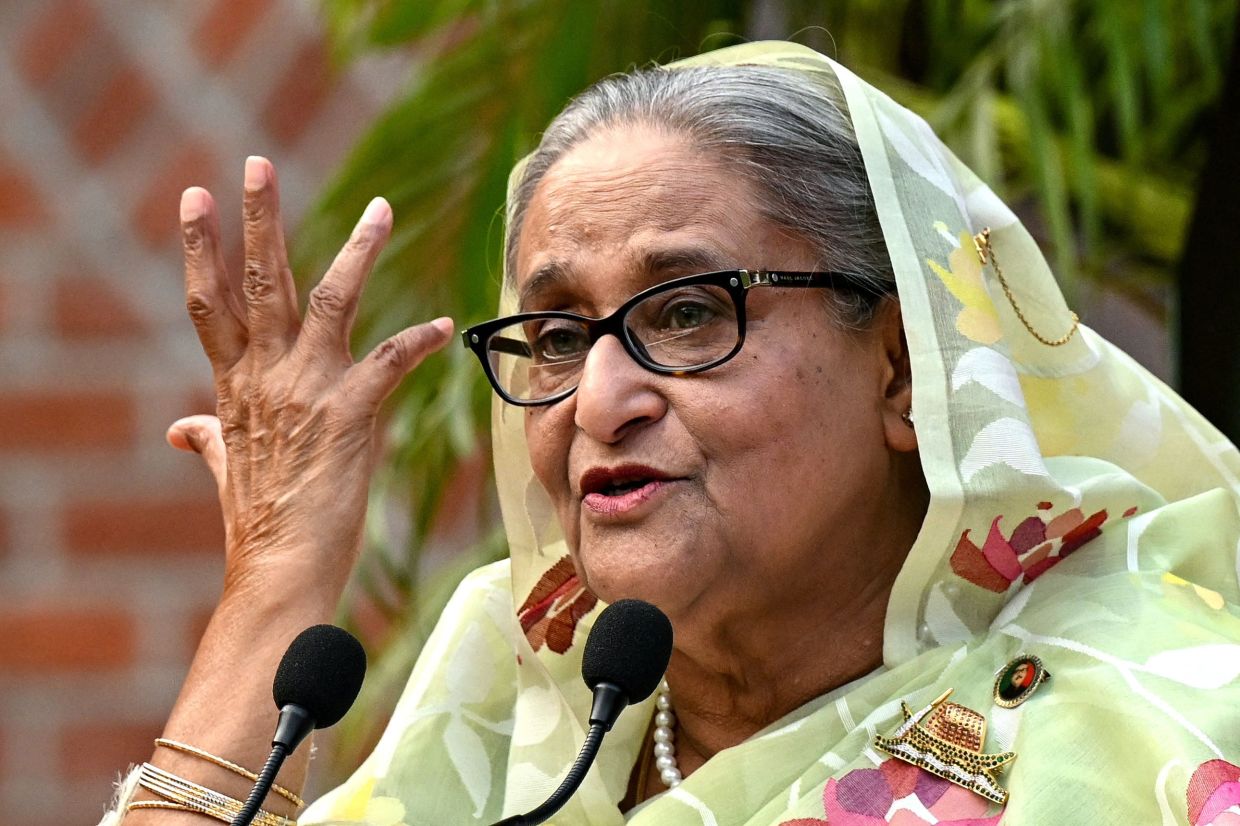
India's foreign ministry has moved to distance the New Delhi government from a planned virtual address by Bangladesh's exiled former Prime Minister Sheikh Hasina, stating that the event is entirely a private media undertaking with no state involvement or endorsement. The clarification came after Bangladesh formally requested India to explain its position on the August 5 gathering, organised by the Foreign Correspondents' Club of South Asia, where Hasina is expected to speak via video link to mark two years since the student-led uprising that swept her from office in 2024.
Speaker Randhir Jaiswal told journalists on Wednesday that the event is being hosted by a private media entity and that neither the Indian government nor any of its agencies are involved in its organisation. He emphasised that India does not endorse any statements or positions that may be articulated at the forum, a careful statement designed to address Dhaka's concerns without explicitly banning the event. This carefully calibrated response reflects the delicate diplomatic balance New Delhi must maintain between respecting freedom of expression and avoiding friction with its neighbour.
The virtual appearance will be Hasina's first public statement since she fled Bangladesh in August 2024, though it comes as she remains physically in India, where she has found refuge following the dramatic collapse of her administration. Her son, Sajeeb Wazed Joy, and other speakers are scheduled to participate in the New Delhi event. Details of what Hasina intends to say remain undisclosed, though her advisers have indicated the address will likely touch on political matters relevant to her situation and her party's future.
Bangladesh's authorities have responded with firm measures to prevent domestic media from publicising Hasina's remarks. The country's Information Adviser Zahed Ur Rahman warned all news outlets and social media platforms that broadcasting or publishing any part of Hasina's speech would breach an International Crimes Tribunal order issued in December 2024, which prohibits the dissemination of her statements, interviews, and video content. This prohibition underscores the tensions remaining between the interim government and the ousted premier.
The former Prime Minister faces serious legal jeopardy in her homeland. In 2025, Hasina was sentenced to death for crimes against humanity, a conviction relating to her government's violent suppression of the 2024 student demonstrations. She has dismissed the verdict as legally invalid and politically motivated. Her team has suggested that she and other Awami League members plan to return from exile around December and present themselves before the courts, a move that would test whether Prime Minister Tarique Rahman's administration can handle its most prominent political opponent with fairness and restraint.
Hasina's aide Abu Obaidha Arin has declared that the New Delhi event will proceed regardless of Dhaka's objections, stating that the government's attempts to suppress dissent cannot silence voices operating beyond Bangladesh's borders. This defiant stance reflects the fundamental disagreement between the exiled faction and the current Bangladeshi administration over the legitimacy of her ouster and the subsequent legal proceedings against her.
Bangladesh's diplomatic pressure on India reveals underlying anxieties about allowing political opponents to mount campaigns from foreign soil. State Minister for Foreign Affairs Shama Obaed Islam has repeatedly raised concerns with New Delhi about Hasina and other Awami League leaders conducting political activities from Indian territory. Dhaka has also lodged a formal extradition request, seeking Hasina's return to face trial, though India has not indicated whether it will accede to this demand.
The broader context is one of strained bilateral relations that deteriorated significantly following Hasina's departure. Since the February election brought Tarique Rahman to power, however, both governments have signalled a desire to reset their relationship and move beyond the turmoil of recent years. This apparent warming of ties makes the timing of Hasina's public reemergence particularly sensitive, as it risks reigniting tensions just as the neighbours are attempting reconciliation.
For Malaysia and the region, this situation highlights the challenges that arise when neighbouring countries experience radical political transitions and produce exiled leaders. The handling of such situations—balancing freedom of expression against diplomatic sensitivities—remains a perennial test for governments across Southeast Asia. India's measured response, neither hosting nor explicitly condoning the event, represents one approach to managing such complications. How Bangladesh's new government proceeds with its legal cases and whether it can demonstrate adherence to rule of law will be closely watched by observers concerned with political stability and democratic norms in South Asia.

