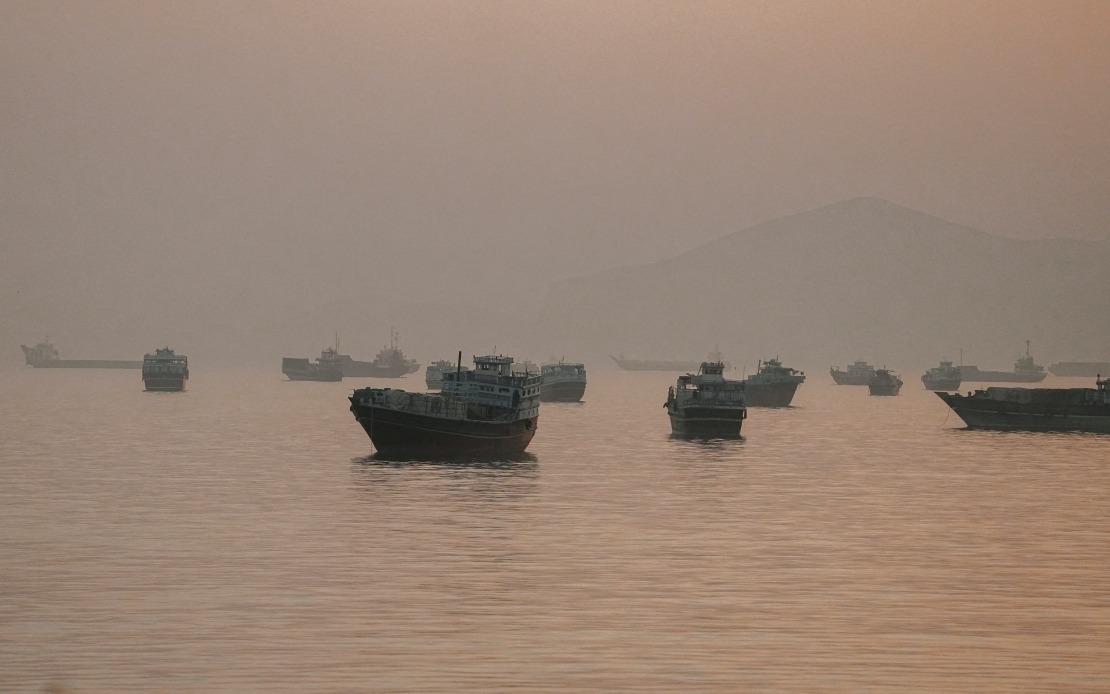
India's maritime regulator has taken the unprecedented step of barring domestic seafarers from working aboard vessels that navigate through the Strait of Hormuz, one of the world's most economically vital but increasingly perilous shipping corridors. The Directorate General of Shipping, India's principal maritime authority, issued the directive late Wednesday to shipowners, vessel managers, and recruitment agencies, effectively sidelining thousands of Indian mariners from lucrative contracts on routes that transit this contested waterway separating Iran and Oman.
The extraordinary measure reflects deepening alarm over the security situation in the Strait of Hormuz, a chokepoint through which roughly one-third of the world's seaborne-traded oil passes annually. Recent days have witnessed a disturbing escalation in hostile incidents targeting commercial vessels, prompting New Delhi to conclude that the risks to its seafaring workforce have become unacceptable. The authority determined that the confluence of regional instability and active attacks on merchant shipping creates an operating environment incompatible with crew safety obligations.
India's decision carries particular weight given the nation's outsized role in global maritime labour markets. Indian seafarers comprise a significant proportion of the world's merchant marine workforce, with tens of thousands deployed globally at any given moment. The restriction affects not merely individual mariners but reverberates through an entire ecosystem of ship management companies, recruitment firms, and logistics operators that depend on placing Indian nationals aboard commercial vessels. For many Indian seafaring families, maritime employment represents a primary income source, making such prohibitions economically consequential.
The immediate trigger for this action lies in a cluster of violent incidents unfolding across the Strait of Hormuz over recent days. At least two Indian seafarers have lost their lives in these attacks, whilst several others sustained injuries when vessels came under assault. These fatalities represent a sobering reminder of the concrete human cost of escalating regional tensions. The attacks underscore how geopolitical conflict translates into tangible danger for ordinary workers navigating global supply chains, many of whom have limited choice regarding their employment locations.
Underlying this maritime crisis is the intensifying confrontation between the United States and Iran, a rivalry that has progressively destabilised the broader West Asian region. The Strait of Hormuz has emerged as a flashpoint where this competition manifests most acutely, with both powers and their proxies engaging in provocative actions that threaten commercial shipping. The strategic importance of this waterway—through which energy exports sustaining the global economy flow—means that any disruption carries implications far beyond the immediate region, affecting commodity prices, supply chains, and economic growth across Asia and beyond.
For Malaysia and other Southeast Asian maritime nations, India's directive carries important implications. The decision underscores how regional instability in West Asia creates cascading effects throughout global shipping networks. Malaysian ports, as major regional hubs, may experience shifts in traffic patterns if Indian crews become unavailable for certain routes. Additionally, the move signals to other labour-exporting nations that extreme security deterioration can justify protecting their workforces, potentially prompting similar measures from Bangladesh, Philippines, or other countries that supply substantial maritime labour.
The restriction also highlights vulnerabilities within the global maritime industry's approach to crew safety during geopolitical crises. Unlike passengers who can be evacuated from dangerous zones, maritime workers remain aboard vessels for extended periods, bound by employment contracts and practical limitations on emergency departures. The industry's reliance on contractual workers from developing nations, whilst economically efficient, creates moral hazards when geopolitical conflicts intensify. India's action represents a government asserting its responsibility to protect its citizens employed in hazardous overseas situations, a principle that increasingly pressures shipping companies to navigate complex labour regulations.
The Strait of Hormuz's significance to energy markets means that sustained restrictions on shipping or elevated security costs could push energy prices upward, affecting economies throughout Asia. Malaysia, as an energy importer with significant refining capacity, faces indirect exposure to any disruptions in oil flows through this critical passage. Moreover, Malaysian-affiliated shipping companies may encounter complications if they previously relied on Indian crew placements, forcing operational adjustments and potentially increasing labour costs.
India's measure also reflects broader anxieties about the fragility of global trade infrastructure when regional conflicts intensify. The Strait of Hormuz, despite its overwhelming economic importance, remains inadequately protected by international mechanisms. Whilst major powers maintain naval presences there, coordination remains limited and gaps persist. The reliance on commercial mariners to traverse this dangerous zone without robust international protection frameworks exposes a significant weakness in contemporary global maritime security architecture.
The directive creates immediate complications for shipping companies operating on these routes, who must now source alternative crews or face route diversification costs. Some may attempt to circumnavigate the Strait of Hormuz entirely, adding weeks to voyages and substantially increasing operational expenses. Others might accelerate negotiations with alternative crew-supplying nations or invest in automation technologies. These cascading adjustments will ultimately affect shipping costs borne by consumers globally.
India's stance also carries diplomatic undertones. By prioritising crew safety over commercial interests, New Delhi demonstrates responsiveness to domestic concerns about workers in dangerous environments—a position that resonates across labour-conscious Asian nations. However, it simultaneously creates friction with shipping industry stakeholders and potentially complicates India's own trading relationships, as routes through the Strait of Hormuz remain unavoidable for many cargo flows between Asia and Europe or Africa.
The restrictions will likely persist until security conditions improve substantially, meaning the shipping industry must adapt to a medium-term reality where major labour suppliers restrict participation in certain routes. This could incentivise investment in crew safety technologies, improved naval escort arrangements, or international agreements strengthening maritime security. Alternatively, it may simply push risk onto alternative crew sources or drive maritime operations toward unsustainable practices. How the industry and international community respond to India's action will shape maritime labour policies and shipping practices for years ahead.

