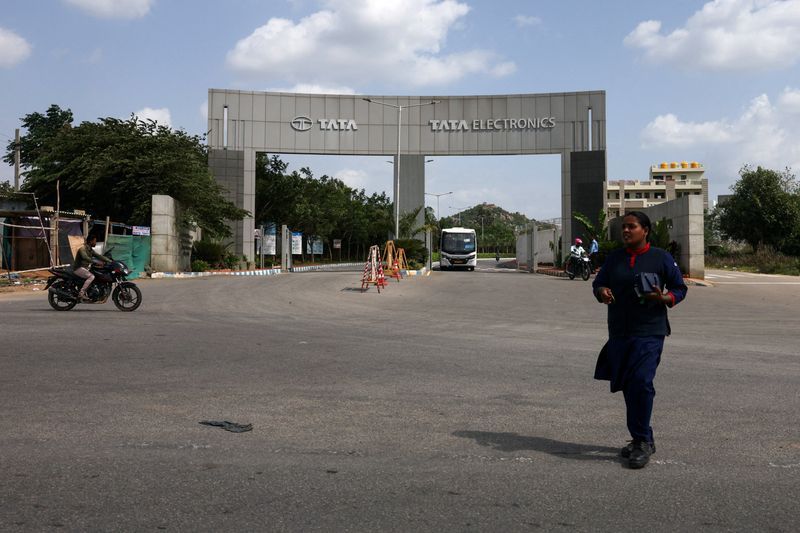
India's federal authorities have launched a formal investigation into a significant data breach affecting Tata Electronics, a major manufacturer partnering with Apple, after confidential documents related to the upcoming iPhone 18 Pro were publicly disclosed online. The Ministry of Electronics and Information Technology confirmed the probe on Thursday, marking the Indian government's first official statement on the incident. S. Krishnan, the ministry's secretary, disclosed that the breach has been escalated to India's Computer Emergency Response Team, the country's primary agency handling cybersecurity threats and digital infrastructure protection.
The compromised data represents a substantial security incident for one of the technology industry's most closely guarded operations. Files posted on the dark web by an unidentified ransomware collective include detailed component specifications, supplier identification lists, and photographic documentation of iPhone 18 Pro units in various stages of assembly. This material provides competitors and bad actors with granular insight into Apple's supply chain architecture—information the company has historically kept under strict confidentiality to maintain competitive advantage and protect proprietary manufacturing processes.
The leaked documentation contains at least six separate files that identify which manufacturers are producing specific components destined for the iPhone 18 Pro and Pro Max variants. This level of supply chain transparency is particularly damaging because Apple does not voluntarily publicize such detailed supplier relationships in its official corporate disclosures. The company maintains a published list of broad supplier categories, but the specificity of the Tata breach exposes commercial arrangements that Apple guards as trade secrets. Such granular sourcing data enables rivals to reverse-engineer supply chains, pressure suppliers with competitive offers, or identify production bottlenecks before product launch.
Apple's global manufacturing ecosystem has become increasingly complex and geographically distributed as the company seeks to diversify production away from China. India has emerged as a critical secondary manufacturing hub over the past five years, with Tata Electronics serving as a flagship partner responsible for iPhone assembly operations. The breach therefore strikes at infrastructure that is fundamental to Apple's strategic manufacturing rebalancing. Tata Electronics manufactures multiple iPhone models at facilities across India, making it one of the most significant links in Apple's supply network. Compromising security at this node jeopardizes not only the iPhone 18 Pro launch in September, but potentially future production planning and competitive positioning.
The ransomware group responsible for the theft has demonstrated a pattern of targeting high-value technology suppliers. The same actors previously posted confidential documents from Tesla, Qualcomm, and TSMC on dark web marketplaces, indicating a coordinated campaign against the semiconductor and electronics manufacturing sector. This broader pattern suggests the breach may have been part of a sophisticated, multi-target operation rather than an opportunistic attack. Ransomware groups typically employ a dual-extortion model, wherein stolen data is threatened with public release unless the target company pays a ransom demand. Apple and Tata have not publicly disclosed whether ransom demands accompanied the threat.
Tata Electronics has engaged international forensic specialists to investigate the scope and mechanics of the breach. The hiring of external consultants suggests Tata determined that internal investigation capabilities may be insufficient given the complexity of the attack and the high-profile targets involved. Forensic analysis will attempt to determine how the attackers initially penetrated Tata's network, what data they accessed, the duration of their presence within systems, and whether additional confidential information beyond what has been publicly posted remains in the attackers' possession. The timeline of the breach and whether Tata's security teams detected the intrusion themselves or learned of it only after documents appeared on the dark web remains unclear.
For Malaysia and other Southeast Asian nations with emerging semiconductor and electronics manufacturing sectors, the Tata breach carries important cautionary implications. As companies across the region position themselves as alternative manufacturing hubs to China, they will inevitably attract similar cybersecurity attention from state-sponsored and criminal actors. Countries including Malaysia, Vietnam, and Thailand are actively courting foreign technology investment, yet the Tata incident highlights that inadequate cybersecurity infrastructure at manufacturing partners can rapidly become a liability. Supply chain security has become a geopolitical and commercial battleground, and companies relocating production to new regions must ensure partners maintain world-class security protocols.
The timing of the breach is particularly significant given Apple's product cycle. The iPhone 18 Pro and Pro Max are scheduled for September launch, meaning the company faces a narrow window to assess whether the breach might compromise product security, user privacy, or competitive advantage. Any material delay in launch timelines would have substantial financial implications for Apple and reverberate through its supplier network. For Tata and other Indian manufacturers, the incident raises questions about whether India's regulatory environment and cybersecurity standards are adequate for handling the world's most sensitive technology manufacturing operations. The involvement of India's Computer Emergency Response Team signals government awareness that national technological capacity is being tested at scale.
The breach also underscores ongoing tensions between commercial secrecy and cybersecurity resilience. Apple's highly confidential approach to supplier relationships, while commercially rational, may inadvertently reduce transparency that could help identify security gaps. Competitors and security researchers cannot independently audit Tata's systems if they do not know such systems exist or handle such sensitive material. This creates a structural security paradox where legitimate competitive interest in supply chain security must be balanced against the company's desire to maintain operational secrecy. Resolving this tension will likely require industry-wide collaboration on security standards without necessitating full commercial transparency.
The investigation's outcome will have ramifications extending far beyond this single breach. If Indian authorities determine that Tata failed to meet reasonable security standards, it could trigger stricter compliance requirements for all technology manufacturers operating in India. Conversely, if the breach is attributed to sophisticated, state-level attackers using advanced techniques, it might prompt recognition that even well-resourced companies face near-impossible defense challenges. Either conclusion will influence how multinational technology companies evaluate India as a manufacturing destination and whether they demand higher security investments from local partners. For Tata Electronics, reputational recovery will depend on demonstrating both transparency about what occurred and tangible improvements to prevent recurrence.

