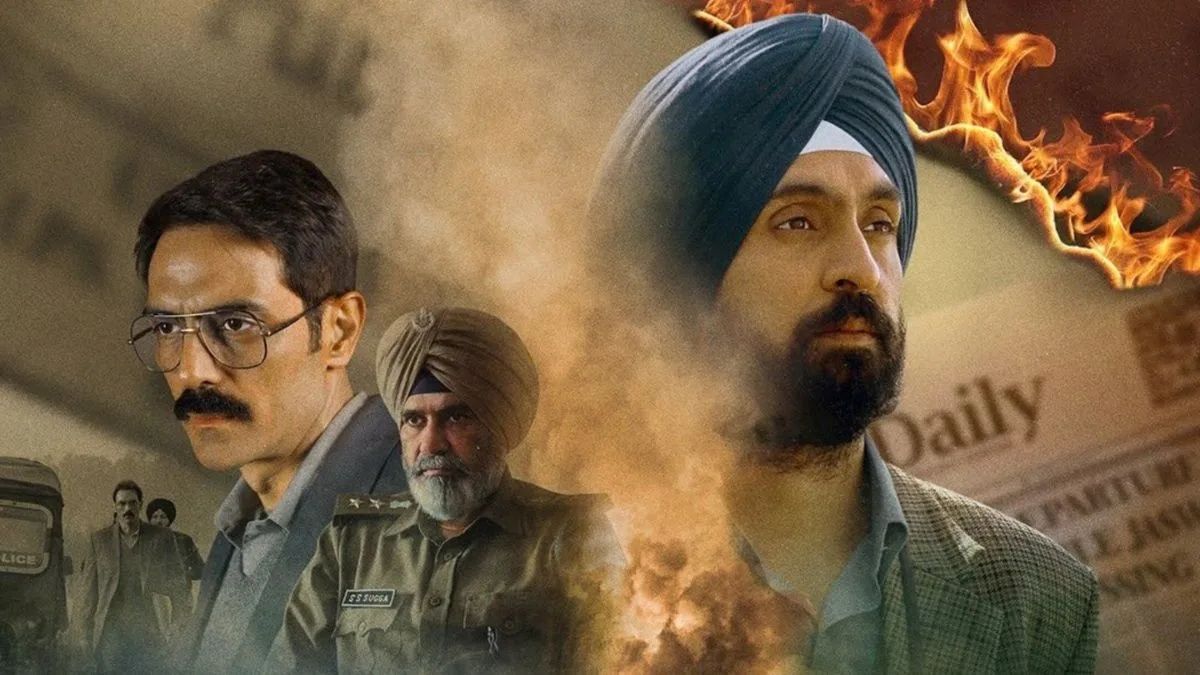
The disappearance of a film celebrating a Sikh human rights advocate from a major Indian streaming service has crystallized mounting concerns among filmmakers about state control over artistic expression in India's vast entertainment industry. Producer Honey Trehan spent four grueling years negotiating with Indian film authorities over his biographical film "Satluj," which chronicles the life of Jaswant Singh Khalra, a Sikh activist who exposed extrajudicial killings and police brutality in Punjab during the 1980s and 1990s. The censorship board demanded 127 alterations to the script before Trehan eventually abandoned theatrical release and moved the project to streaming platform ZEE5. Within two days of its upload, the film vanished from the platform, with ZEE5 citing unspecified "current developments" while media reports attributed the removal to government pressure on alleged security grounds.
Trehan's experience represents far more than a single filmmaker's frustration. Parliamentary figures reveal that India's Central Board of Film Certification imposed cuts or modifications on 3,033 films during the 2024-2025 fiscal year, more than double the number from four years prior. This dramatic increase suggests a systematic tightening of controls over creative content at a moment when India produces the world's largest volume of films annually. The absence of detailed public records explaining why these alterations were mandated compounds concerns about transparency and accountability in the certification process. The film board has not published a comprehensive annual report documenting its decision-making standards since 2017, leaving filmmakers and audiences without clear visibility into the criteria guiding official interventions.
India's approach to film regulation stands apart from most major democracies. While countries such as the United States and those across Europe employ age-based rating systems that classify content according to suitability for different audiences, India grants its government-appointed certification body direct authority to demand script and footage modifications before public exhibition. This structural power distinguishes Indian regulation from classification systems elsewhere, where decisions about content ultimately remain with creators and distributors. The Indian model essentially permits state actors to reshape artistic works before they reach viewers, a mechanism that critics argue crosses the boundary between rating and censorship.
Filmmaker Onir, who operates under a single name, articulated the creative consequences of this environment during recent interviews. He described the current period as "one of the worst phases of Indian cinema" because the diversity of narratives and storytelling approaches available to audiences is progressively narrowing. Onir himself encountered demands to remove the word "gay" from a scene involving a child character in his 2023 film "Pine Cone," ultimately complying only after significant revision. His testimony echoes broader frustrations among creative professionals who find themselves navigating an unpredictable and expanding set of restrictions on thematic and linguistic choices.
The political context underpinning these restrictions cannot be separated from India's governance trajectory since Narendra Modi assumed the prime ministership in 2014. Sadanand Dhume, a senior fellow at the Council on Foreign Relations specializing in South Asian politics, observed that the nation's political orientation has "taken a sharp turn" during this period, with downstream effects rippling through Bollywood production. The Modi government and his ruling Bharatiya Janata Party maintain particular wariness toward narratives touching on separatism, religious minorities, and caste hierarchies—precisely the thematic territories that independent filmmakers often wish to explore. The Sikh independence movement, dormant for decades following the 1980s-1990s counterinsurgency campaign, has regained geopolitical salience following Canada's 2023 allegations of Indian government involvement in the assassination of a Sikh activist in Vancouver, rendering projects like "Satluj" especially sensitive from New Delhi's perspective.
Trehan himself attributed the escalating demands placed on his film directly to political motivations rather than objective content standards. He characterized the Ministry of Information and Broadcasting's interventions as a "backdoor entry" into industry control and narrative management. The board's official position, articulated by Chairperson Shashi Shekhar Vempati, maintains that modifications are sought only when content allegedly violates India's sovereignty, security, public order, decency, morality, or other specified criteria. Yet the vagueness of these categories, combined with the absence of detailed public justifications for individual decisions, creates substantial room for subjective interpretation aligned with political priorities.
Pattern recognition across recent cases reveals apparent targeting of films addressing sensitive communal histories and social hierarchies. The Malayalam-language blockbuster "L2: Empuraan" underwent 24 post-release modifications in 2025 after Hindu nationalist groups objected to its portrayal of 2002 religious riots. The film "Phule," a biographical drama about 19th-century caste reformers, required the removal of caste-related language, while "Homebound," India's submission for the 2026 Academy Awards, cleared certification only after 11 cuts targeting caste and religious references. By contrast, films celebrating nationalist themes and military prowess encounter minimal friction: the 2025 spy thriller "Dhurandhar," depicting Indian intelligence operations against Pakistan, secured certification with routine technical trims and went on to become the highest-grossing Hindi-language film ever.
The stark disparity between treatment of nationalist versus critical narratives suggests an underlying strategic orientation toward controlling which stories gain mass visibility. Trehan noted that patriotic cinema "has little trouble passing censors," whereas films questioning state actions or exploring minority grievances face escalating demands. This selective enforcement effectively shapes the national conversation by privileging certain perspectives while marginalizing others. The result approximates what might be termed curated pluralism—the appearance of diverse filmmaking within boundaries carefully drawn by state authorities.
Despite official obstruction, "Satluj" has paradoxically achieved wider circulation than conventional theatrical release might have permitted. Trehan held a private screening at the Cannes Film Festival in May, reviving international attention after the film's withdrawal from the Toronto International Film Festival in 2023 during the protracted certification battle. More significantly, the film has become a phenomenon within Punjab itself, screened in Sikh temples, community centers, and village squares by audiences who downloaded copies before the streaming removal. Trehan described this grassroots circulation as a "celebration" bringing together Punjabis across religious and class lines, transforming a censorship obstruction into an unexpected community mobilization.
The case illuminates a fundamental tension within Indian democracy. As the world's largest film-producing nation and a functioning multiparty democracy, India theoretically accommodates pluralistic expression. Yet the concentration of regulatory authority in government hands, combined with political pressure filtering down through institutional structures, progressively constrains the boundaries of acceptable artistic speech. Filmmakers increasingly self-censor or abandon projects rather than endure protracted negotiation with state authorities. The doubling of certification demands within four years suggests this dynamic is intensifying rather than stabilizing.
For Malaysian observers and Southeast Asian audiences, the Indian case carries instructive implications about the mechanisms through which democratic governments can gradually narrow creative space without formally abolishing freedom of expression. India's certification apparatus demonstrates how institutional regulation, deployed selectively according to political preferences, can function as a form of soft censorship. The absence of transparent criteria and public accountability mechanisms compounds this risk. Filmmakers navigating such environments must choose between artistic compromise and potential marginalization. As entertainment industries assume increasing cultural and economic significance across Asia, the question of whether creative professionals maintain genuine autonomy in their storytelling choices becomes consequential for national cultural health and soft power.

