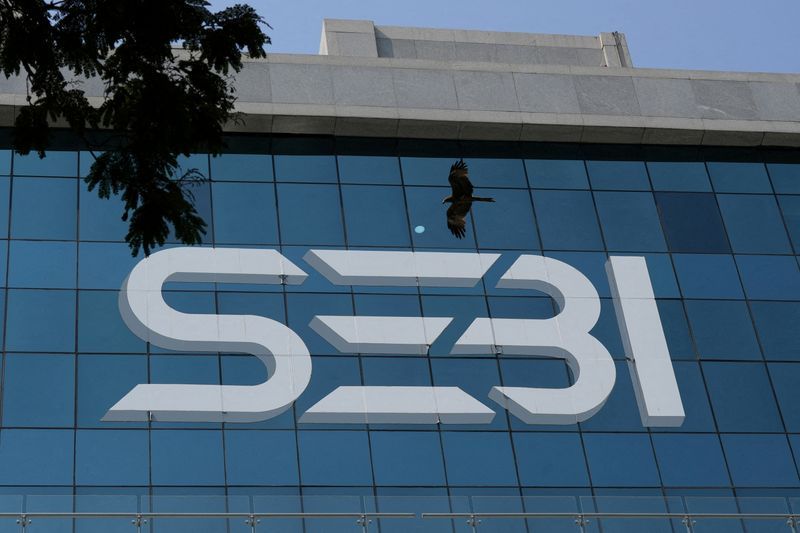
India's top financial markets regulator has raised alarm over a sophisticated cyber fraud scheme that exploits corporate hierarchies by impersonating chief executives and senior management to extract large sums from unsuspecting employees. The Securities and Exchange Board of India (SEBI) issued its warning on Friday following a surge in reports filed by the Indian Cyber Crime Coordination Centre, signalling that the threat has reached levels serious enough to warrant direct regulatory intervention across the financial services sector.
The scam, colloquially known as the 'boss scam', operates through a deceptively simple but highly effective social engineering strategy. Fraudsters create convincing digital facades of company leaders, then leverage widely-used communication platforms including email, WhatsApp, Microsoft Teams, and various social media channels to contact finance teams and accounting personnel. The urgency conveyed in these impersonated messages—often demanding immediate fund transfers—exploits the natural deference employees show towards senior leadership, making victims less likely to question suspicious requests before acting.
Once fraudsters establish contact, they issue specific instructions directing victims to transfer company funds to designated bank accounts. These recipient accounts, colloquially referred to as 'mule accounts', serve as temporary repositories before the stolen money is moved across multiple banking channels in rapid succession, making tracing and recovery increasingly difficult. The simplicity of this direct approach has proven remarkably effective, suggesting that many organisations may still lack robust verification protocols for large financial transactions initiated through informal digital channels.
A more technically sophisticated variation of this fraud involves distributing malware-laden files to employees under the pretext of business documents or attachments. When employees download and open these files, malicious code executes in the background, potentially compromising entire devices or establishing persistent access to messaging applications. A particularly insidious tactic involves hijacking WhatsApp Web sessions, through which fraudsters can impersonate the finance officer or executive themselves to convince other accounting staff members to process unauthorized payments to predetermined accounts.
The mechanics of account compromise demonstrate the multi-layered nature of modern corporate fraud. Rather than simply stealing credentials, attackers focus on gaining access to widely-trusted communication channels already integrated into corporate workflows. WhatsApp, in particular, presents an attractive vector because many organisations have not yet implemented the same verification controls for messages received through this platform as they maintain for official banking channels or formal transaction authorisation systems. This creates a critical vulnerability at the intersection of convenience and security.
SEBI's intervention reflects growing concern among regulators that corporate India may be underestimating the vulnerability of its finance operations to social engineering attacks. The regulator has explicitly instructed all entities under its supervision to ensure that staff members do not execute fund transfers based solely on instructions received through social media platforms or messaging applications, regardless of the apparent sender's identity. This directive effectively treats unverified digital communication as inherently suspect unless corroborated through established internal authorisation procedures.
For Malaysian companies and financial institutions, the emergence and rapid proliferation of this fraud scheme in India presents an urgent cautionary case study. Southeast Asian corporations operating across India, or maintaining significant financial transactions with Indian counterparts, face elevated exposure to these attacks. Many organisations in the region have adopted similar communication infrastructure—WhatsApp for team coordination, Microsoft Teams for remote collaboration—creating equivalent vulnerability windows. The relatively low technical barrier to executing these frauds means that criminal syndicates experienced in Indian market conditions may readily expand their operations across regional borders.
The 'boss scam' also highlights how formal hierarchical structures, while essential for corporate governance, can paradoxically become security liabilities in digital environments where identity verification remains imperfect. Employees trained to obey senior management directives face genuine psychological pressure when apparently receiving instructions through multiple channels from what appears to be leadership. This tension between operational efficiency—where trust accelerates decision-making—and security hygiene represents an ongoing challenge for the modern enterprise.
Organisations seeking to protect themselves must implement layered verification protocols that operate independently of communication platform reliability. This might include establishing secure callback procedures, creating transaction approval thresholds that require multiple independent authorisations, and maintaining segregation between the systems used for informal communication and those handling financial instruction. Training programmes must specifically address the psychological tactics these fraudsters employ rather than assuming staff will instinctively suspect impersonation.
Regulators across Southeast Asia should take note of SEBI's proactive stance in publicly acknowledging the threat. Silent regulatory approaches to emerging frauds often result in delayed defence implementation across entire sectors. Public warnings accelerate industry-wide awareness and force firms to conduct urgent internal security audits. Malaysia's own regulators may wish to issue comparable guidance before such schemes become endemic in the local corporate sector.
The incident also underscores how cyber threats increasingly originate not from technical vulnerabilities but from human psychology and organisational culture. The most sophisticated firewall becomes irrelevant when an employee willingly transfers funds based on a message that appears to come from leadership. As digital communication becomes ever more central to corporate operations, financial institutions and large enterprises must fundamentally reconceptualise how they authenticate instructions for high-value transactions, moving away from reliance on platform identity alone towards process-based verification systems that operate orthogonally to communication channels.

