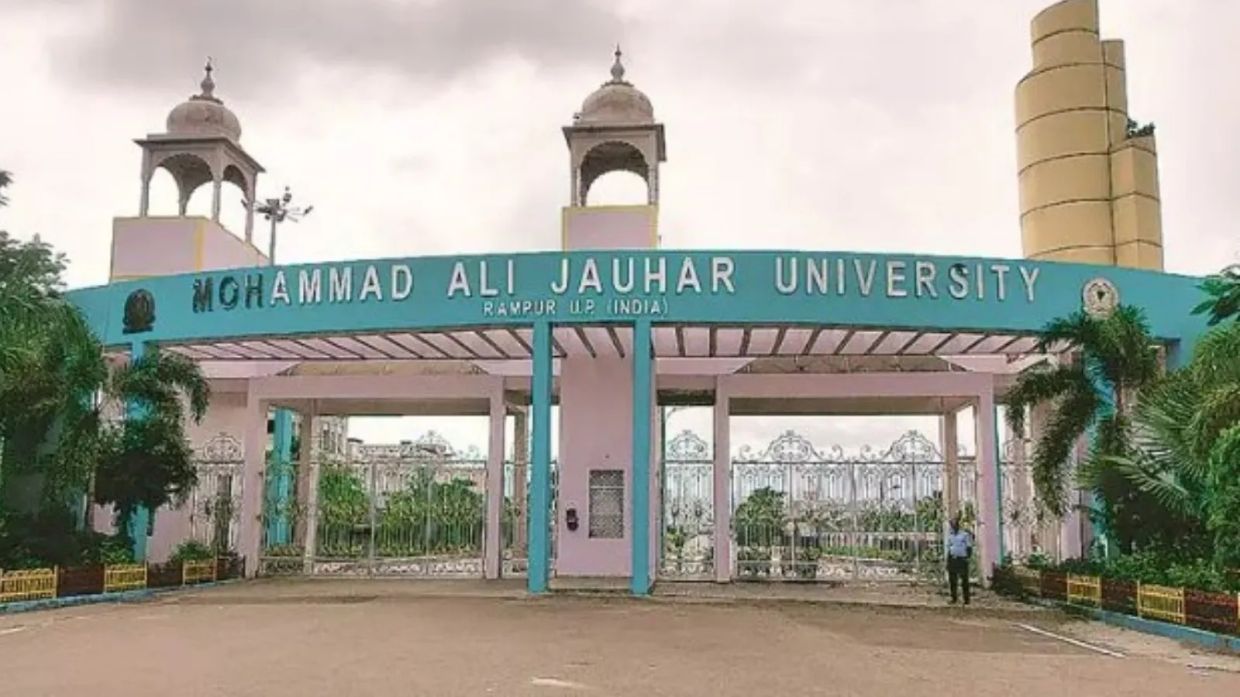
The Rampur Development Authority in Uttar Pradesh has issued a sweeping demolition order targeting 38 buildings across the 250-acre campus of Mohammad Ali Jauhar University, sparking fresh controversy around one of northern India's most politically sensitive educational institutions. The demolition directive, issued on Wednesday (July 15), affects nearly the entire built infrastructure of the university, which was established in 2006 by Azam Khan, a prominent figure in Indian politics and a senior member of the Samajwadi Party.
The scale of the demolition order underscores the intensity of regulatory action against the institution, which has become a focal point of political contestation in Uttar Pradesh. The campus, spanning 250 acres in Rampur city, houses facilities that have served thousands of students across multiple academic disciplines. Local media reports indicate that the Rampur Development Authority cited unauthorised construction as the primary grounds for the sweeping order, though specifics regarding which structures violated building codes remain unclear.
Mohammad Ali Jauhar University carries particular historical significance, named after a towering intellectual and political figure of India's independence era. The institution was envisioned as a centre of higher learning when Khan, then wielding considerable influence as a state minister, established it in 2006. The university has since operated as a private educational facility, though its governance and financial practices have attracted scrutiny from various quarters.
Azam Khan's political trajectory provides essential context for understanding the current crisis. The Samajwadi Party, which Khan represents, governed Uttar Pradesh from 2012 to 2017 before losing decisively to the Bharatiya Janata Party. This electoral reversal coincided with a dramatic shift in Khan's fortunes. Once celebrated as an influential orator and prominent community leader, Khan is now incarcerated following a court conviction related to forged documents. His son, Abdullah, shares his imprisonment, having been convicted in the same case.
The family's legal troubles extend beyond the document forgery conviction. Khan's wife, Tazeen Fatima, was arrested in connection with a birth certificate case but subsequently secured bail, allowing her temporary release. The succession of court cases affecting multiple family members has created a narrative of systematic legal action that Khan's supporters characterise as political persecution. The family maintains that the cases represent a coordinated vendetta rather than impartial administration of justice, a claim that reflects deeper anxieties about the politicisation of the Indian judicial system.
For regional observers, particularly those in Southeast Asia watching Indian institutional dynamics, the Mohammad Ali Jauhar University demolition offers instructive lessons about the vulnerability of privately founded educational institutions to political fluctuations. The university's existence has become inseparable from its founder's political standing, a dependency that leaves its future precarious when that founder loses power and subsequently faces legal jeopardy. This dynamic highlights risks that educational entrepreneurs across the region should carefully consider when establishing institutions in politically volatile environments.
The demolition order raises significant questions about procedural fairness and the timeline of regulatory enforcement. If construction irregularities existed at the university, the question naturally arises why authorities did not initiate corrective action during the Samajwadi Party's rule, when Khan wielded greater political capital. The timing of the demolition order, arriving after Khan's incarceration and his party's electoral defeat, invites scrutiny regarding whether regulatory decisions reflect genuine public safety concerns or politically motivated administrative action.
The university's current operational status remains uncertain. With 38 out of 40 buildings targeted for demolition, the institution faces an existential crisis. Students currently enrolled may require relocation to alternative facilities, administrative operations will be severely disrupted, and the institution's long-term viability appears questionable. This situation creates humanitarian complications beyond the political dimensions, as thousands of individuals—students, faculty, and staff—confront disruption to their educational and professional pursuits.
The demolition order also illustrates tensions within India's federal system, where state-level authorities wield substantial power over local infrastructure and regulatory enforcement. The Rampur Development Authority's decision represents local administration asserting control over a major institutional presence within its jurisdiction. However, the concentration of such sweeping action against a single institution founded by a now-imprisoned political figure raises concerns about administrative overreach and whether regulatory mechanisms are being deployed as tools of political settlement.
For Malaysia and other Southeast Asian nations monitoring institutional governance and rule of law developments in India, the Mohammad Ali Jauhar University case exemplifies how changes in political power can trigger cascading institutional consequences. Educational institutions, particularly those with strong founder associations, require governance structures that can survive political transitions. The vulnerability demonstrated here suggests that institutional resilience depends not merely on financial resources or academic excellence, but on establishing governance frameworks independent from individual political patrons.
The broader implications for private higher education across South Asia merit consideration. Institutions established by politically connected founders may enjoy regulatory flexibility and resource advantages during their benefactors' tenure but face heightened vulnerability once those patrons lose influence. This asymmetry creates incentive structures that discourage truly independent institutional development, potentially undermining the quality and autonomy of private educational provision throughout the region.

