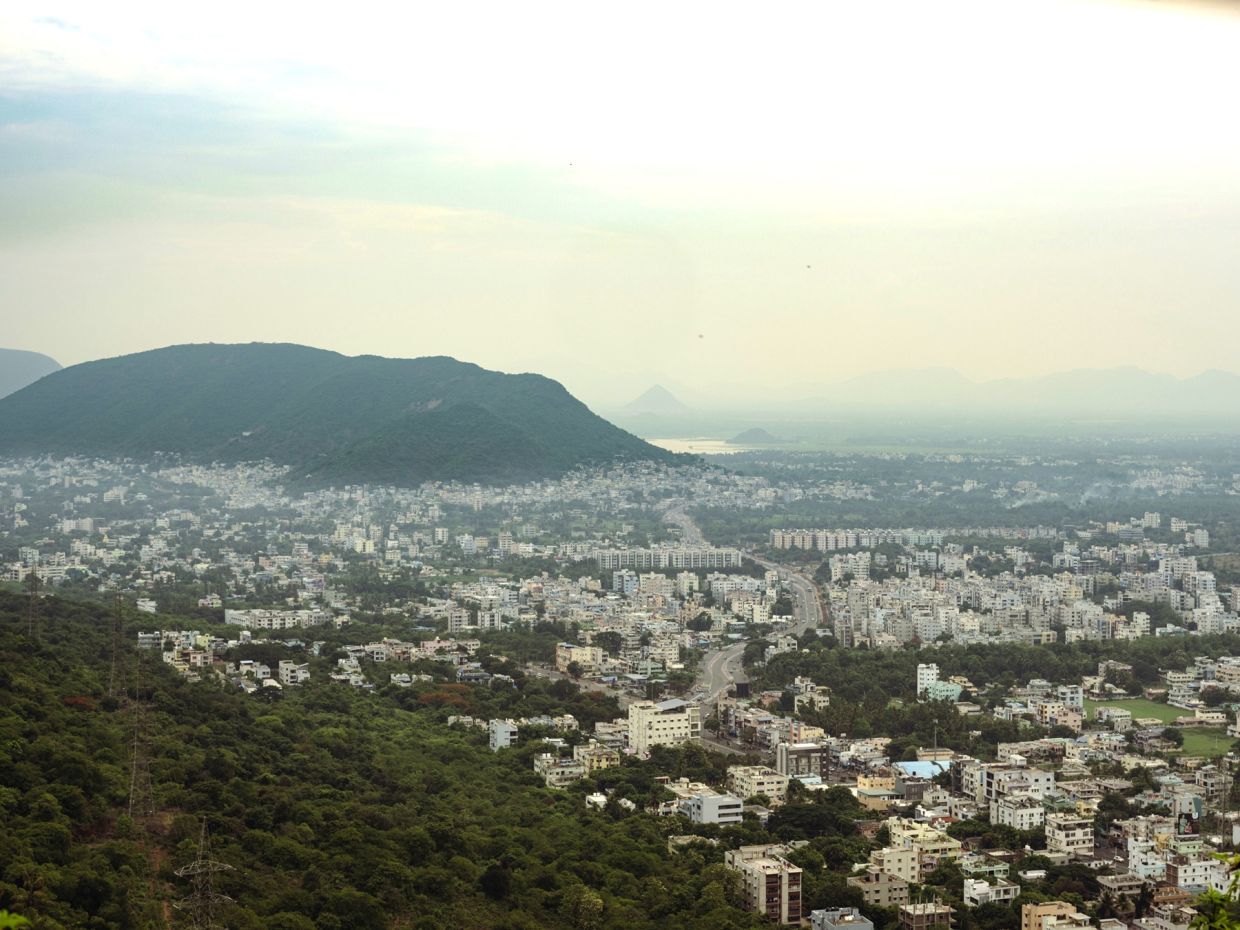
India's ambition to join the frontlines of artificial intelligence development has landed squarely in Tarluvada, a village on the outskirts of Visakhapatnam on India's southeastern coast, where billboards featuring the faces of national and regional politicians proclaim a cheerful welcome to Google. Behind those cheerful proclamations, however, lies a more complicated story about the tensions between rapid technological advancement and the welfare of local communities bearing the infrastructure burden. Excavators have already begun levelling terrain for a one-gigawatt data centre as part of Google's US$15 billion investment in the region, a cornerstone of India's strategy to secure its position in the global artificial intelligence ecosystem.
The Indian government views data centres as critical infrastructure for its AI ambitions, with state and national officials promoting the projects as catalysts for broader economic development. Nara Lokesh, the information technology minister of Andhra Pradesh, frames the Google initiative not merely as a single facility but as an anchor for an entire ecosystem of related industries. He envisions power electronics manufacturers, air conditioning suppliers, and building materials producers establishing operations in the state, transforming Visakhapatnam into a technology hub. Alongside Google's project, which includes investment in new submarine cable infrastructure, a complementary data centre of similar scale is under construction through a joint venture involving Brookfield Asset Management and India's Reliance Industries. Once both facilities are operational, they will more than double India's existing data centre capacity relative to 2024 levels, representing a dramatic shift in the country's technological infrastructure.
Yet this rapid expansion has generated considerable scepticism among Visakhapatnam residents about whether promised benefits will actually materialise. Hyperscale data centres consume enormous quantities of electricity and water while generating relatively few permanent jobs, a contradiction that has already sparked fierce opposition in American communities. Several major data centre projects worth tens of billions of dollars have been delayed or abandoned in the United States following organised local resistance. India is essentially importing a model that developed nations are increasingly rejecting, offering substantial incentives including discounted land, reduced energy and water rates, and extensive tax concessions to lure Google and the Adani Group to a region already classified as water-stressed, where summer supply shortages are common.
Critics contend that the accelerated timeline and secrecy surrounding the projects suggest that India's desperation to catch up in artificial intelligence is overriding standard environmental and social safeguards. Environmental clearance procedures may have been compromised to permit construction in ecologically sensitive areas, according to activists and former officials familiar with the approval process. The opacity surrounding fundamental details—such as the specific sources of water and electricity, how much local communities will subsidise through public spending, and the true nature of environmental risks—has deepened public anxiety. VS Krishna, a campaigner with the Human Rights Forum operating in the region, frames the situation as a fundamental democratic failure: developmental decisions of massive scale are being imposed without meaningful public consultation or transparency, forcing entire communities to absorb infrastructure costs and environmental hazards without consent or debate.
The partnership between Google and billionaire Gautam Adani, who leads the conglomerate providing land and local partnership, adds another layer of concern for sceptics. Adani's wealth has expanded dramatically during Prime Minister Narendra Modi's 12-year tenure in office, and his business group has earned a reputation for successfully navigating regulatory obstacles to complete ambitious projects. The alignment between India's political leadership and one of the country's most powerful industrialists raises questions about whether standard procedures are being followed or merely appearing to be followed. Both Google executives and Adani representatives assert that the project has been carefully designed to avoid burdening local communities with water or energy costs, but these assurances conflict with the documented environmental challenges and the history of cost-shifting in similar infrastructure projects across India.
India's competitive position in artificial intelligence remains sobering despite its substantial advantages. The nation possesses a billion-person market, world-leading technical talent, and generates roughly one-fifth of the world's data. Yet a Morgan Stanley assessment classified India as a "laggard" in developing genuine artificial intelligence capabilities, with billions of investment capital flowing instead to competitors like Taiwan and South Korea that manufacture cutting-edge AI chips and foundational technologies. India is positioned not as an innovation hub but as a technology deployer, adopting and adapting tools developed elsewhere rather than pioneering new approaches. This subordinate position motivates aggressive infrastructure development: while India generates approximately 20 percent of global data, its data centre capacity represents only a fraction of that proportion, a gap that officials argue must be closed rapidly.
The employment promises made by project promoters are already attracting scrutiny from labour economists and development analysts. Lokesh and government advisers claim the Google initiative will generate approximately 120,000 jobs during construction and 60,000 permanent positions thereafter. However, these figures contradict international experience with comparable data centre facilities, which typically employ far fewer people permanently. Environmental clearance documents submitted for regulatory approval provide more granular details about facility operations—parking space requirements, daily water consumption for sanitation—that suggest actual permanent employment will represent only a small fraction of official estimates. This discrepancy raises concerns about whether politicians are inflating employment benefits to justify public subsidies that may ultimately prove economically inefficient.
The employment question intersects with a deeper economic challenge facing India's leadership. The country's population exceeds 1.4 billion people, yet automated infrastructure and artificial intelligence deployment risk severely disrupting labour markets, particularly in technology support services that have traditionally employed millions of Indians in global supply chains. The International Monetary Fund has warned that artificial intelligence adoption could produce a "tsunami hitting the labour market," potentially shrinking employment in sectors crucial to India's economic model. Building massive automated data centres without addressing these structural challenges risks exacerbating inequality and unemployment despite apparent economic growth.
Google representatives emphasise that cooling technology will minimise water consumption and operate independently from the local potable water supply, while the company is also investing in clean energy generation. They further commit that costs will be borne exclusively by Google, with no expense transferred to local residents, businesses, or the state government. However, the credibility of these assurances has been undermined by the broader pattern of opacity and by India's track record of shifting infrastructure costs to ordinary citizens. Former senior official EAS Sarma, who holds a doctorate in energy planning and previously served in India's finance and energy ministries, argues that transmission line construction alone will ultimately burden local electricity consumers. Every subsidy represents a cost absorbed by society, whether immediately visible or diffused across future utility bills and tax obligations.
The Visakhapatnam data centre projects ultimately represent a collision between India's urgent need to develop artificial intelligence infrastructure and the legitimate concerns of communities bearing the environmental and financial risks. The speed with which decisions are being implemented, combined with the political connections of major partners and the historical pattern of marginalized communities absorbing infrastructure costs, suggests that India is replicating development failures from its own past rather than learning from international experience. Whether the promised job creation, technological advancement, and economic development will materialise as claimed remains uncertain, but the environmental stress and potential cost-shifting are already evident. For Malaysia and other Southeast Asian nations watching India's AI infrastructure strategy, the Visakhapatnam experience offers important lessons about ensuring that rapid technological development includes meaningful stakeholder consultation, transparent cost accounting, and genuine environmental protection rather than merely the appearance of due process.

