Hundreds of technology workers pour onto the streets of Indian tech hubs during afternoon coffee breaks, their corporate identification badges swinging from their necks as they seek respite from monotonous screen time. Others operate from their homes on weekends, positioning iPhones to record themselves performing mundane household tasks—chopping vegetables, folding bedding—in exchange for modest hourly pay. This emerging workforce is part of India's data annotation sector, a rapidly expanding domain within artificial intelligence that still depends critically on human judgment and attention to detail. For millions of young Indians entering an already congested job market, these positions represent a tangible pathway to employment, even as economists and government officials debate whether such opportunities will endure.
Data annotation has become the human scaffolding upon which modern AI systems rest. Workers in this field examine video footage frame by frame, identify objects in images, correct errors in machine learning models, and provide the granular feedback that helps autonomous vehicles navigate roads, robotic systems perform assembly tasks, and retail inventory management systems operate with precision. The work demands patience and consistency rather than advanced technical training, making it accessible to graduates whose qualifications might otherwise exceed available positions. Yet this accessibility masks a deeper complexity: annotators must understand AI principles well enough to recognise when models make mistakes, requiring a blend of technical literacy and practical problem-solving that distinguishes the field from traditional data entry roles.
Objectways Technologies, headquartered in the southern Indian city of Karur, exemplifies this sector's explosive growth. The company, which primarily serves American clients developing AI-powered products, employed 2,600 workers as of recent reporting, with 300 new hires added within a single month. Aiswarya Palaniswamy, a 25-year-old holding a master's degree in data analytics, joined Objectways last year and has watched colleagues process footage from self-driving vehicles and humanoid robots, meticulously documenting how well artificial intelligence performs assigned tasks. Her confidence in the field's resilience reflects a common sentiment among younger Indians who view data annotation as more stable than traditional roles—such as payroll and data entry processing—that automation has already displaced.
Compensation in this sector reveals stark geographic disparities. Entry-level office positions at firms like Objectways pay between 210 and 260 US dollars monthly, a salary that affords reasonable comfort in Karur's economy of 440,000 residents. Weekend freelance work—the type involving home video recording—compensates annotators at roughly 2.50 US dollars per hour for usable footage. These wage levels underscore why India's large young population represents an economic asset for companies seeking cost-effective annotation services, yet also highlight the vulnerability of workers whose labor competes globally on price.
For India's government, data annotation jobs carry particular significance amid broader employment pressures. Approximately two million Indians turn 18 each month, swelling an already substantial cohort of graduates competing for limited positions. Prime Minister Narendra Modi and his Bharatiya Janata Party face mounting pressure on youth unemployment, illustrated by recent "cockroach" protests over education quality and job scarcity. The government responded by replacing its education minister, yet this symbolic gesture cannot address the structural mismatch between graduate skill levels and available opportunities. Data annotation positions, while modest in scope, at least absorb some portion of this demographic tide and provide stepping stones for workers seeking career advancement.
Yet India's federal information technology ministry harbors ambitions that extend beyond annotation work. S. Krishnan, who leads this portfolio, articulated a vision wherein India leverages its 1.4 billion population to capture higher-value segments of the AI economy. He cited examples including translation across India's diverse linguistic landscape and clinical monitoring in intensive care settings—domains where local knowledge and cultural understanding provide competitive advantages. Krishnan explicitly cautioned against replicating India's previous trajectory as a global back-office, warning that annotation roles, like earlier data entry and payroll positions, could evaporate as technology matures. Government research estimates that artificial intelligence may displace as many as 1.5 million information technology workers by 2025, a prospect that concentrates official minds on developing sustainable, technically advanced employment categories.
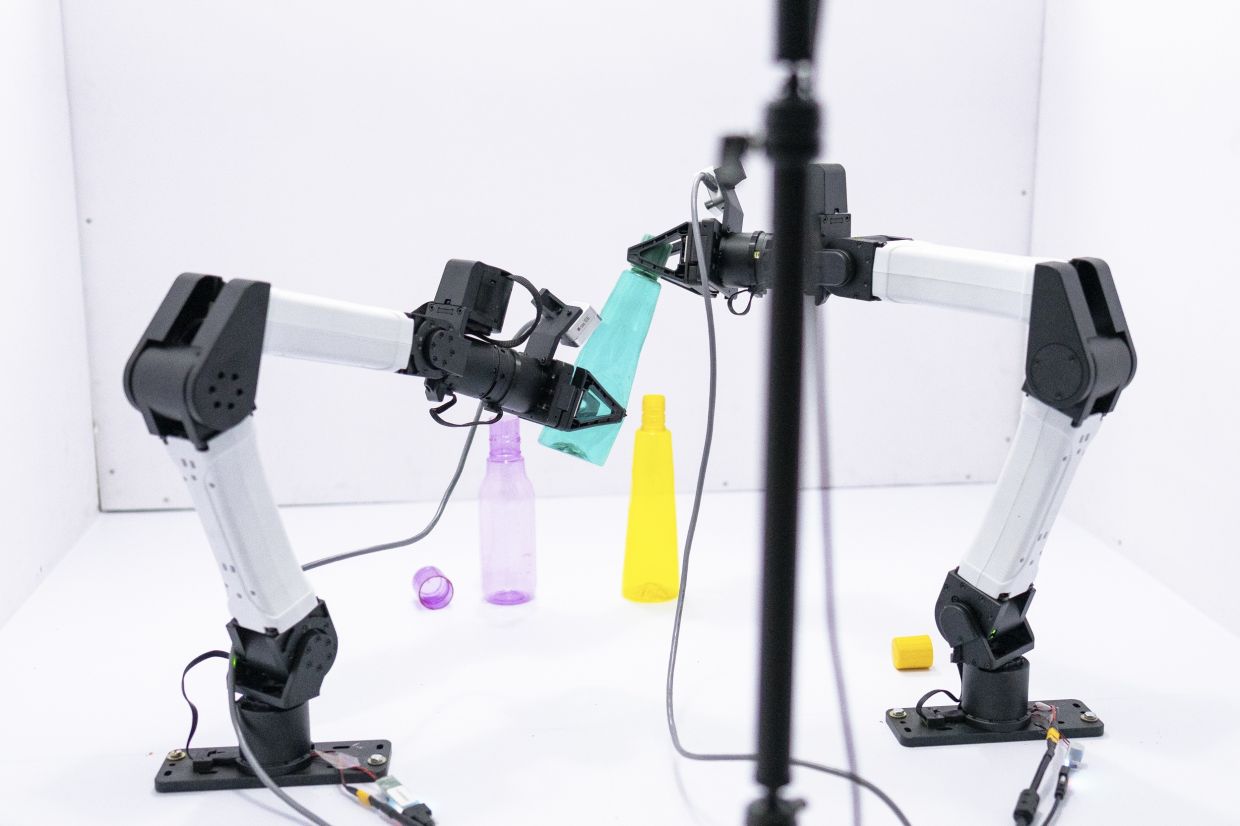
Objectways' operations in Karur and Coimbatore reveal the practical mechanics of this emerging industry. The company maintains test kitchens, bathrooms, and bedrooms where employees operate robotic systems equipped with cameras, performing repetitive household tasks that become training data for artificial intelligence systems. Workers pick up plates with robotic grippers, unscrew bottle caps, pour liquids, and arrange food items—all while cameras record their efforts. This footage then provides the raw material from which machine learning models learn to recognise objects, understand spatial relationships, and predict outcomes. Founder Ravi Rajalingam, who established Objectways in 2019 after streamlining a lending company's AI-assisted application process, deliberately located the company in his hometown to provide employment for recent graduates. His wife hired the first 20 employees; today, the payroll has grown exponentially.
Career progression within annotation firms demonstrates that entry-level roles need not represent employment dead-ends. Mohamed Afsar, 29, began as an annotator and now supervises 600 employees across an office in Coimbatore, located roughly two hours west of Karur. As the first member of his family to attend university, Afsar's trajectory reflects upward mobility possibilities within the sector. His teams process approximately 70 hours of robotic or autonomous vehicle footage daily, yet this volume falls short of the incoming 1,000 hours from company clients—a shortfall that drives continued hiring. This gap between supply and demand suggests the sector's immediate future remains robust, even as longer-term sustainability questions persist.
Industry analysts project that data annotation could contribute up to 10 billion US dollars to India's economy by decade's end, a figure that would position the sector as a meaningful economic contributor. However, this contribution remains modest relative to India's overall information technology services industry and insufficient to alter expert consensus about the sector's limitations. While annotation employment addresses immediate youth joblessness and provides income-generating opportunities, most economists and policymakers remain unconvinced that such work will furnish India with genuine competitive advantage in the global AI race. The concern reflects a deeper tension: annotation jobs may represent a transitional phenomenon rather than a stable employment category, leaving younger workers vulnerable to displacement once technology advances sufficiently.
Young workers currently entering this field seem largely untroubled by such long-term prognostications. Hari Prasad, 25, earned an engineering degree last year and initially imagined pursuing traditional software development roles. Instead, he now spends his days ensuring that robots can learn to perform household tasks—a job that seemed like science fiction mere years ago. "We need a man to train the robot," he observed, capturing the peculiar irony of artificial intelligence's current moment: as machines grow more capable, they increasingly require human guidance and refinement. For Prasad and thousands of colleagues, data annotation represents not a dream career but a pragmatic response to India's employment realities—a bridge across the gap between education and opportunity, one annotated frame at a time.

